

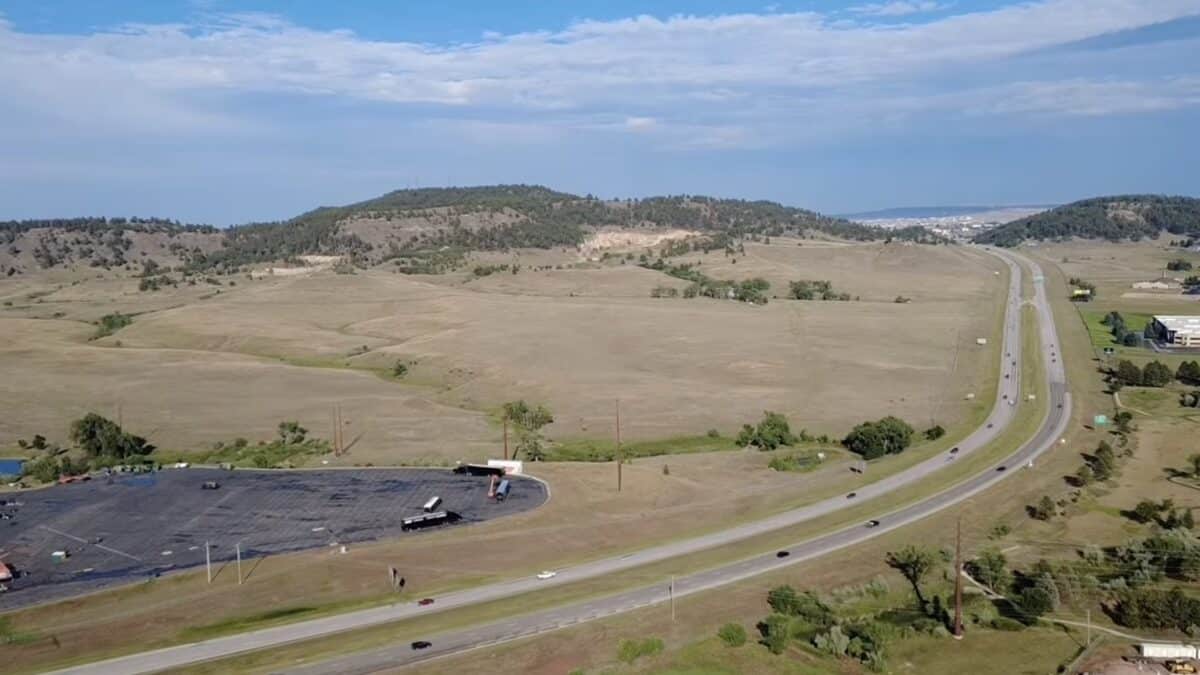
Western South Dakota might not be the first place that comes to mind when thinking about America’s most unusual landscapes, but the region packs an impressive collection of geological features, tourist attractions, historic towns, and cultural landmarks into a relatively small area. A new video from Beaver Geography explores why the western portion of the state feels so geographically out of place and why so many people end up stopping there.
The Black Hills and Badlands Stand Apart
The Black Hills are particularly unusual because they rise dramatically from the surrounding Great Plains, far from the main Rocky Mountain ranges. According to Beaver Geography, the Black Hills formed through an uplift that pushed ancient rock from deep within the Earth’s crust toward the surface.
The resulting geological formation created the distinctive granite formations and hills that define the region. The uplift occurred around the same broad period when the Rockies were developing, but the Black Hills formed independently.
The nearby Badlands have a completely different geological story. The landscape developed from sediments left behind by an ancient inland sea. Over time, erosion carved the soft sediment into the dramatic canyons, ridges, and formations seen today.
A Road Trip Packed With Attractions
The geological oddities are only part of what makes western South Dakota unusual. The region has developed a major tourism economy around attractions that line Interstate 90 and other popular driving routes.
Mount Rushmore is the most recognizable landmark, but visitors can also explore Custer State Park, Wind Cave National Park, Black Hills National Forest, and the nearby Devils Tower in Wyoming.
The area is also filled with roadside attractions. Wall Drug has become one of the country’s most recognizable highway stops, while Sturgis is famous for its motorcycle culture and annual events.
Rapid City serves as the region’s economic center and has experienced significant population growth in recent years. The area also sits near Ellsworth Air Force Base and provides access to many of western South Dakota’s major attractions.
A Region With More Than Geography
Beaver Geography also highlights the deep Indigenous history of the Black Hills and the region’s reservations, including Pine Ridge. The Black Hills hold profound cultural and spiritual importance for the Lakota people, making the area’s history far more complicated than its tourism industry might suggest.
Ultimately, western South Dakota’s combination of isolated geology, major tourist attractions, roadside oddities, and its position along a major cross-country highway helps explain why such a remote region attracts so many visitors.