

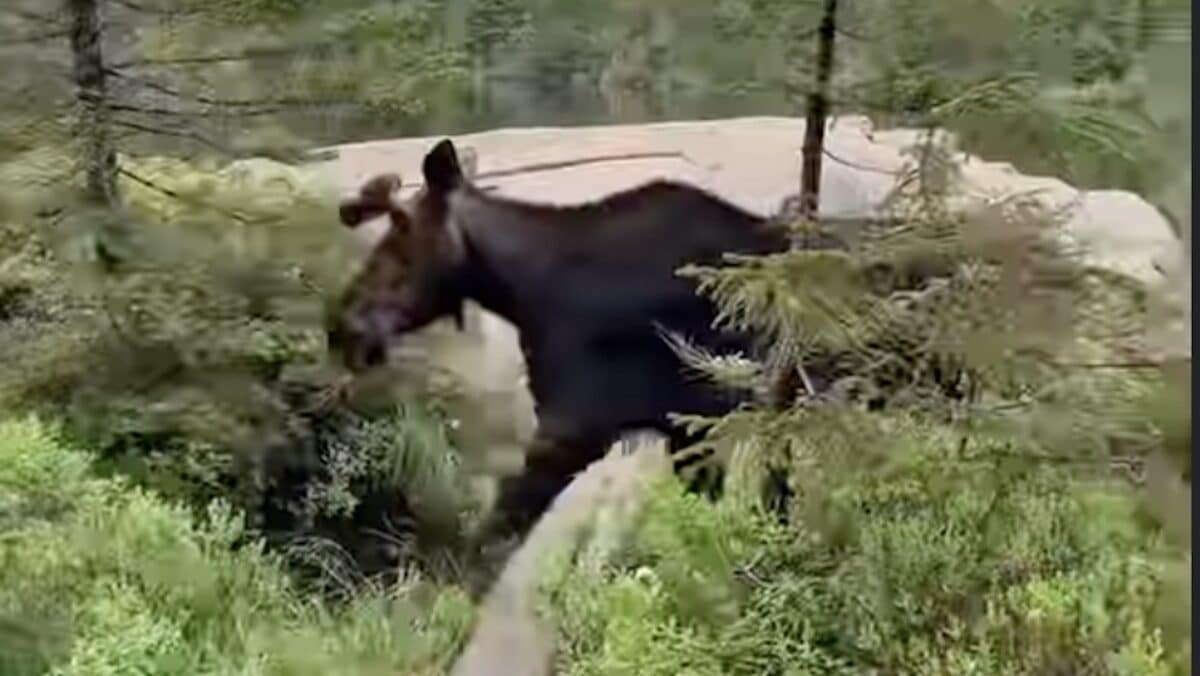
Maine is home to the largest population of moose in the lower 48 United States, with an estimated 40,000-60,000 living throughout the state. The commercial harvesting of trees in the northern forest lands provide a continuous supply of young trees and shrubs that moose depend on for food, and the numerous wetlands, rivers, ponds, and lakes make for perfect habitats. With the abundant population, hikers like the one in the video below encounter these massive beasts on a fairly frequent basis.
What To Do If You Encounter A Moose
According to guidance from the Appalachian Mountain Club, knowing how to read a moose’s behavior can mean the difference between a safe passing and a dangerous confrontation on the trail.
When a moose feels threatened, it typically does one of two things. Often it simply leaves the area. In other cases, it responds aggressively in an attempt to drive the perceived threat away. If a moose changes its behavior because of your presence, you are already too close. Hikers and recreators should always maintain enough distance to reach cover before a charging moose could close the gap.
Moose tend to display specific warning signs when they’re agitated, including:
- Ears pinned back
- Raised hair along the neck and hips
- Lip smacking
- Whites of the eyes showing
- Head tossing
- Urinating on its back legs
These behaviors can escalate to a charge within seconds, leaving little time to react. If a moose does charge, do not stand your ground. Back away immediately, and if it charges, run, putting a tree or other object between yourself and the animal. Moose typically strike with their front hooves. If it manages to knock you down, continue efforts to escape.
Fatal moose attacks do remain extremely rare, with no recorded human deaths from moose attacks in the Northeast. Risk increases in early summer with cows protecting calves, and again in fall during bull breeding season, but this safety advice remains consistent across season. Keep your distance and give moose room to move.