

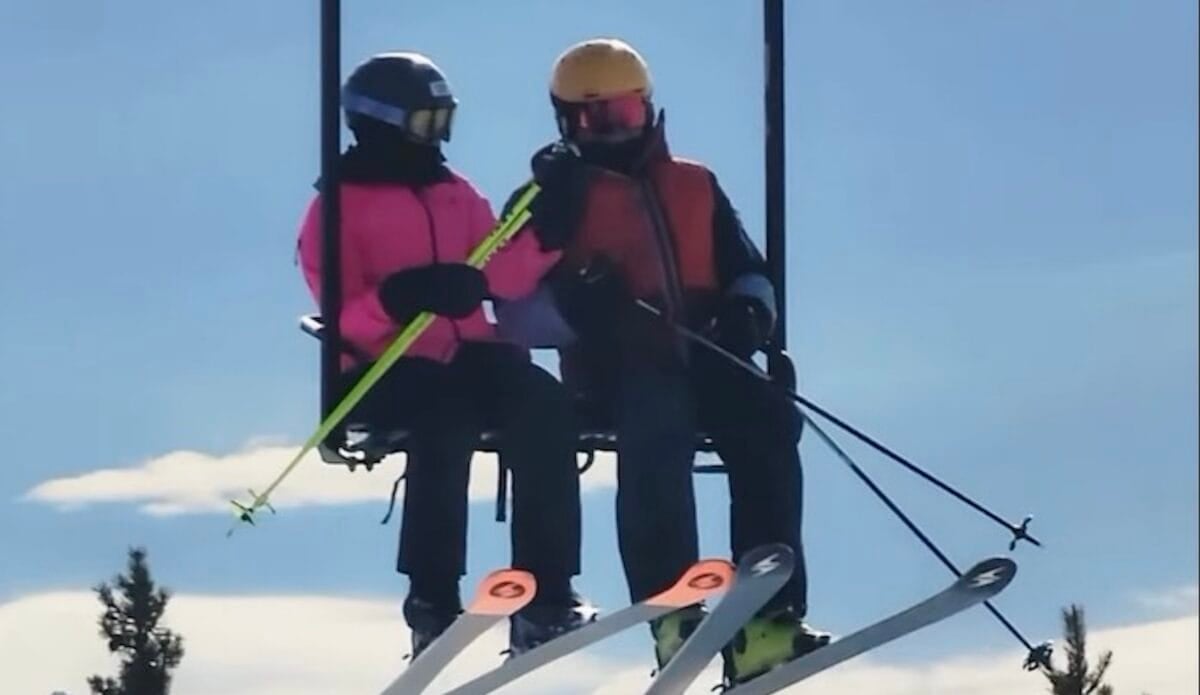
High atop the Continental Divide, straddling the border of Montana and Idaho, sits a family-owned ski area that operates a fleet of five chairlifts without a connection to the electrical grid. There are no utility power lines supplying electricity to the mountain, and even the ski area’s webcam goes dark when the generators are shut down.
Lost Trail Powder Mountain generates its own power to operate its lifts, lodge and other mountain facilities. The setup has allowed the independently owned ski area to maintain a surprisingly sizable operation in a remote stretch of the Northern Rockies, where more than 300 inches of snow fall in an average winter.
With 1,800 acres of skiable terrain spread across two mountains, Lost Trail offers considerably more skiing than one might expect from an entirely off-grid operation.
How Lost Trail Operates Off the Grid
While most American ski resorts rely on electricity from utility companies, with diesel generators serving as backup power sources, Lost Trail relies on its own system of generators for everyday operations.
The ski area’s five double chairlifts and three rope tows are powered through its independent generator system. It’s a vastly different approach from that of larger ski resorts, some of which are now exploring alternatives to traditional diesel backup systems. Colorado’s Snowmass recently installed what it calls the world’s first battery-backed chairlift.
Lost Trail’s reliance on independent power is even reflected in its online operations. Fun fact, the ski area’s power is switched on at 7 a.m. and their mountain webcam does not operate when the mountain’s electricity is shut off.
A Throwback to American Skiing
Established in 1938, Lost Trail has been under the stewardship of the Grasser family for more than half a century. Bill Grasser acquired an ownership stake in the ski area in 1967 before eventually taking full ownership. His vision was to provide affordable skiing for the surrounding communities rather than transform the mountain into an expensive destination resort.
That philosophy remains a central part of Lost Trail’s identity. The mountain has retained its fleet of double chairlifts, operates on a limited weekly schedule and is known for its abundance of natural snow.
The ski area’s traditional operating schedule has given rise to a local skiing tradition known as Powder Thursday. With the mountain historically closed during the first three days of the week, storms arriving between operating periods can leave several days’ worth of untouched snow waiting for skiers when the lifts start spinning again.
For the 2026-27 season, Lost Trail has expanded its planned operating schedule to include Mondays in January and February.
Lost Trail Powder Mountain Stats
- Location: Montana-Idaho border
- Year established: 1938
- Skiable terrain: 1,800 acres
- Vertical drop: 1,800 feet
- Summit elevation: 8,200 feet
- Average annual snowfall: More than 300 inches
- Named trails: 69
- Chairlifts: Five doubles
- Surface lifts: Three rope tows
- Longest run: 1.2 miles
- Terrain parks: Two
- Pass affiliation: Indy Pass
The ski area’s official trail map reveals a substantial network of groomed runs, glades and steep terrain spread across the Continental Divide.
At a time when much of the American ski industry is focused on high-speed chairlifts, luxury accommodations and increasingly sophisticated infrastructure, Lost Trail remains a refreshing example of how much a ski area can offer without many of the amenities associated with modern destination resorts. It doesn’t even need a connection to the power grid.
