

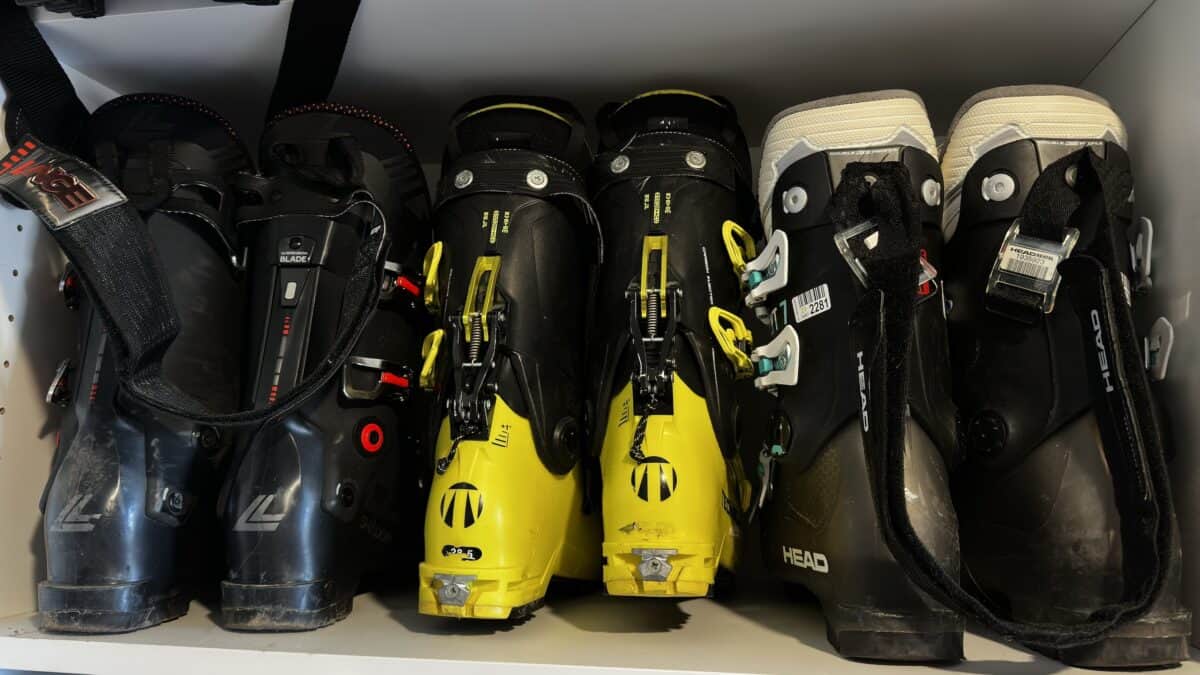
Ski boots are one of the most important investments in your ski equipment. A pair of boots that fits poorly can destroy your day faster than most other pieces of equipment, leaving you in pain or with numb feet. They’re also one of the easiest pieces of gear to neglect. Whether you’re putting them away for the summer or just storing them between ski trips, taking a few minutes to properly care for your boots can help extend their lifespan, preserve their fit, and keep them comfortable for several seasons.
Leaving wet, dirty ski boots sitting in a closet or in your garage can lead to stinky smells, material deterioration, and wear that you can otherwise easily avoid. Fortunately it doesn’t take much to maintain them.
Remove the Liners and Let Everything Dry
One of the most important things to do for ski boot maintenance is simply making sure everything is completely dry before storage. Ski boots can accumulate moisture from snow and sweat, and trapping that moisture inside for extended periods can damage your liner material ad create a great spot for mold and gnarly smells.
All you have to do is remove the liners from the plastic shells and, if possible, remove the footbeds from the liners. Let everything air-dry to completion. Avoid putting the liners directly on radiators, heaters, or other sources of intense heat, as that can damage materials and potentially deform your molded liners.
Clean Your Boots Before Putting Them Away
Once you’ve got everything removed, take a loot at the shells, liners, and footbeds, searching for dirt, grit, and other debris. A damp cloth is probably enough to clear the shell, but you can use some mild cleanser, warm water, and a soft brush if necessary.
If your liners are smelling especially bad, you can use an appropriate disinfectant or spray. You likely won’t need to fully wash the liner. Make sure everything is completely dry before putting everything back together.

Check for Damage and Wear
Before putting your boots away, take a moment to inspect them. Pay specific attention to the soles, treads, buckles, straps, and any ski/walk mechanisms. Excessive wear, cracks, damaged buckles, or loose components can all cause problems the next time you’re out on the snow.
Worn boot soles should not be ignored, as they can affect how a boot clips into the bindings. If the boots look questionable, bring them to a professional ski shop to have them looked at.
Buckle Them Before Storage
A rather simple and commonly overlooked step is to buckle your boots before putting them away. You don’t need to crank them down tightly, but fastening them at their lowest tension setting will help maintain the shell’s intended shape and prevents distortion.
Find the Right Storage Location
The last thing to remember is to store your boots somewhere dry, cool, and away from direct sunlight. Damp basements, garages with moisture problems, and areas near heaters or radiators should be avoided. Extreme temperatures, humidity, and UV exposure can all cause premature material deterioration.
A dedicated boot bag is a great place to store your boots, keeping them away from dust and accidental damage. Of course making sure your boots are completely dry before hand is vital.
Proper ski boot care is pretty simple, but it can make a pretty noticeable difference overtime. There’s a good chance you spent a lot of money on your boots, and you want to make sure they last as long as possible.