

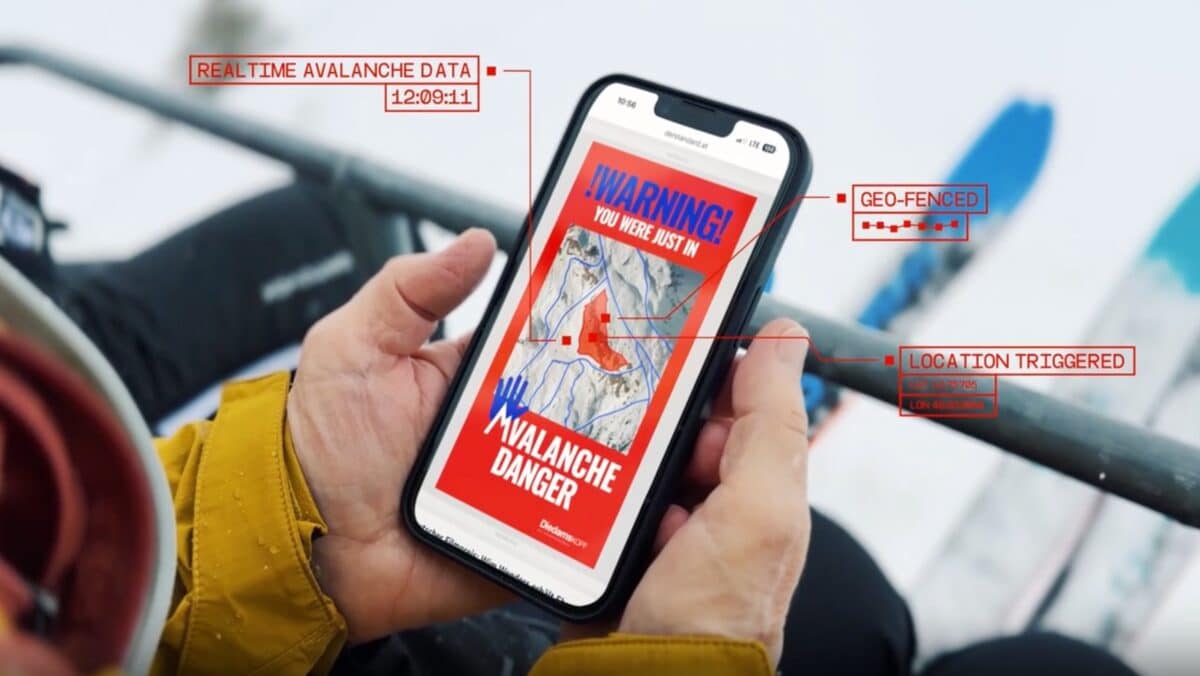
An Austrian ski resort is using geofencing technology to warn skiers and snowboarders when they enter avalanche-prone terrain, and it does not require downloading an app or creating an account.
Diedamskopf in Austria’s Bregenzerwald region is using a digital system called Avalanche Alerts that can deliver location-specific avalanche warnings to smartphones inside designated high-risk zones. The system was tested for two months before being rolled out across the ski area near the end of the 2025-26 winter.
What makes the system particularly interesting is how it reaches skiers. Rather than relying on a dedicated avalanche app, Avalanche Alerts repurposes existing online advertising technology. When a smartphone is detected within a designated risk zone, participating digital ad space can be used to display an avalanche warning instead of a normal advertisement.
Turning Online Ads Into Avalanche Warnings
The mountain is divided into digital safety zones created using current avalanche bulletins, topographic analysis and input from local avalanche experts and slope-safety teams. When conditions make one of those areas particularly dangerous, the system can target smartphones located inside the zone with information specific to that location.
The warnings can also be delivered after someone has traveled through a hazardous area. Developers say that feature is intended to discourage skiers from repeatedly entering closed or avalanche-prone terrain simply because they completed an earlier descent without triggering a slide.
Because the basic system uses existing online advertising infrastructure, users do not need to download a separate Avalanche Alerts app, register for the service or activate it beforehand. Austria Tourism says the technology can currently reach roughly 90% of smartphones in German-speaking countries.
There is an important distinction, however. The basic warnings are delivered through available online advertising placements rather than functioning exactly like a traditional emergency push notification. An optional opt-in system is being developed for additional functionality, including earlier alerts when conditions change and potential support for emergency responders.
The System Is Designed For More Than Resort Trails
Diedamskopf is a relatively compact ski area with approximately 25 miles of maintained trails and nine lifts. The mountain reaches about 6,857 feet and includes a roughly 6.2-mile descent that drops nearly 3,940 vertical feet from the upper mountain toward the valley.
The resort also has plenty of terrain beyond its groomed slopes. Diedamskopf specifically warns visitors that terrain outside its maintained areas is unsecured, uncontrolled and unmarked, with users entering at their own risk.
Avalanche Alerts is designed for both resort guests and people traveling through open alpine terrain. The system’s developers say the same technology could eventually be used by ski tourers and backcountry travelers in locations where permanent warning signs may not exist.
The concept is another example of ski areas experimenting with technology around avalanche terrain. At Sunshine Village in Alberta, for example, skiers entering Delirium Dive must pass through a gate that detects whether they are carrying an active avalanche beacon before accessing the expert freeride zone.
Diedamskopf’s approach is different. Instead of controlling access through a physical gate, Avalanche Alerts attempts to put current hazard information directly in front of someone who has entered a particular area.
It Does Not Replace Avalanche Gear Or Training
The technology adds another way to communicate risk, but it does not make avalanche terrain safe.
Weather, wind, snowfall and temperature can change snow stability quickly, and someone traveling outside controlled resort terrain still needs to understand the current avalanche forecast, recognize avalanche terrain and carry the appropriate rescue equipment.
That distinction is especially important because a smartphone warning can only supplement the safety information already available to a skier. It cannot determine whether an individual slope is safe to ski or replace the judgment required when traveling through avalanche terrain.
Diedamskopf’s system is intended to address a different problem: getting a warning in front of someone at the moment the information may matter most.
Other Ski Areas Could Use The Same Technology
Avalanche Alerts was developed as an open-source system rather than proprietary technology reserved exclusively for Diedamskopf. That means other mountain regions could eventually adopt and modify the platform for their own terrain.
Diedamskopf Managing Director Stefan Lucchini said the resort does not view avalanche safety technology as something that should be kept to itself.
“Avalanche safety should never be a competitive advantage.”
For now, Diedamskopf remains the first Austrian ski resort identified by Austria Tourism as using the system. The coming 2026-27 winter should provide another season of real-world use as the developers continue evaluating whether digital geofencing and advertising infrastructure can become another tool for keeping skiers informed in avalanche terrain.
