

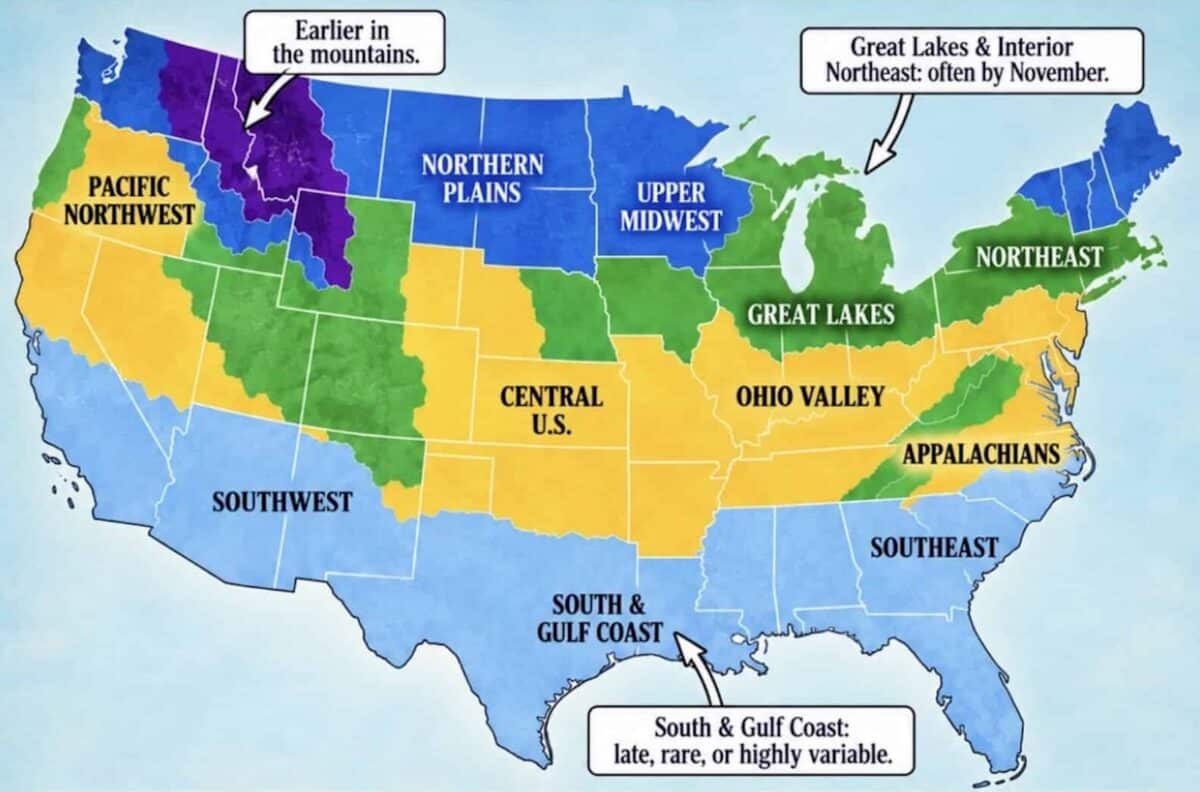
For skiers and snowboarders across the country, the arrival of the first snow is one of the most anticipated moments of the year. While some high mountain peaks can see snow as early as August or September, other parts of the United States may have to wait until December or later for their first measurable snowfall.
The Farmers’ Almanac recently updated its guide showing when different parts of the country typically receive their first snow of the season. The map provides a broad look at when winter weather and potentially the first ski season snow can arrive across the United States.
When Does The First Snow Usually Arrive
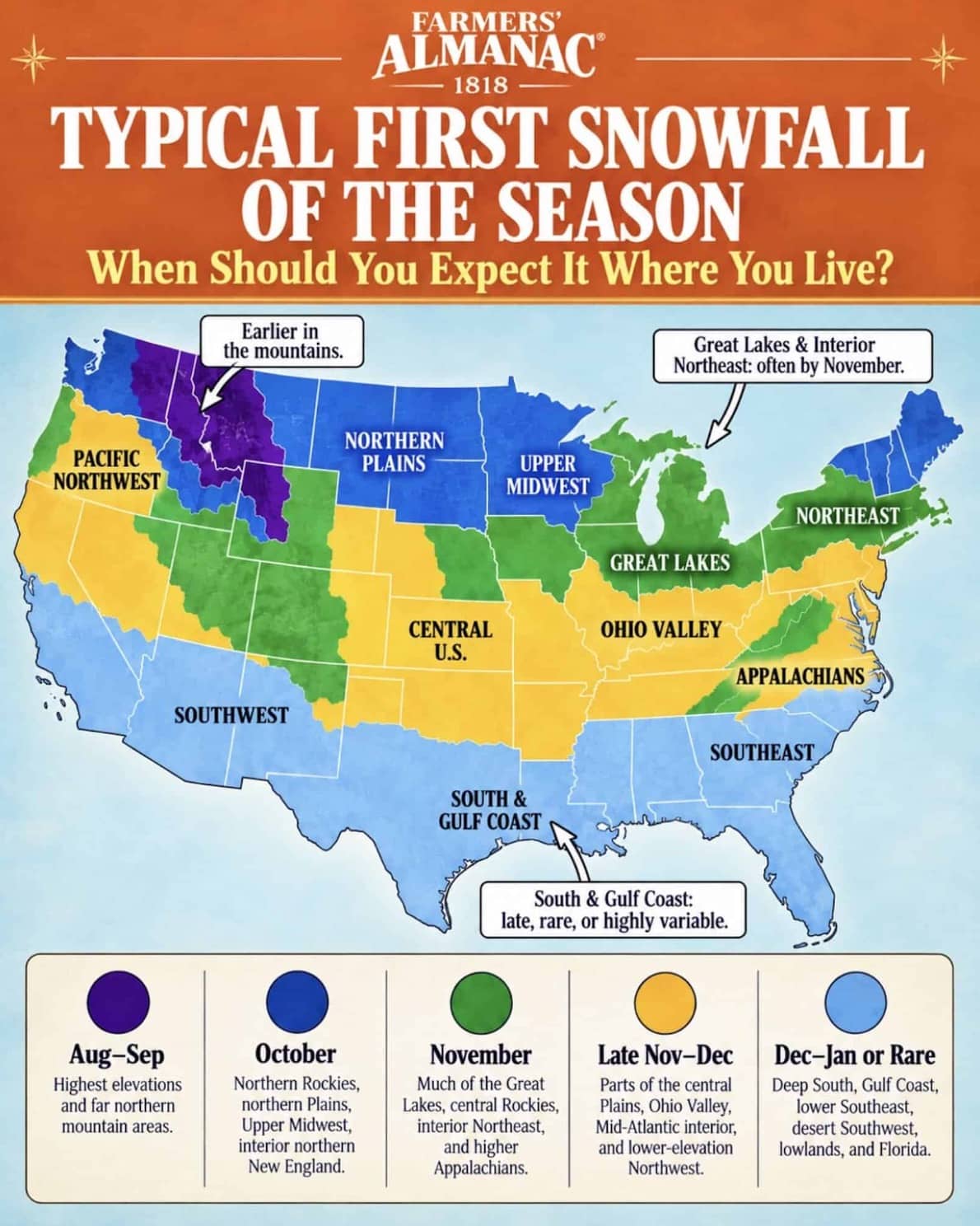
The timing of the first snowfall varies dramatically across the country. Elevation, latitude, nearby bodies of water and the prevailing weather pattern can all influence when snow first reaches the ground.
The highest elevations of the northern Rockies can see their first snow during August or September. For skiers these early storms can provide the first signs that the upcoming season is approaching, although early snowfall often melts before winter settles in.
By October, snow becomes increasingly common across the northern Rockies, northern Plains and Upper Midwest. This is also when many ski areas at higher elevations can begin seeing meaningful natural snowfall.
November is one of the most common months for the first measurable snowfall across the Great Lakes, interior Northeast, central Rockies and higher elevations of the Appalachians. This is when snowpack development becomes increasingly important at ski resorts heading toward opening day.
First Snowfall Dates Can Vary
The Farmers’ Almanac emphasizes that its map should be viewed as a general guide rather than a prediction for a particular storm.
Denver, for example, has an average first measurable snowfall date around October 18th according to the National Weather Service. However, the city has recorded its first measurable snow as early as September 3rd and as late as December.
For skiers the first snow in a nearby city does not necessarily mean the local ski resort is ready to open. Higher elevations can receive snow considerably earlier than surrounding communities, while ski areas also depend on sustained cold temperatures and snowmaking conditions.
Why Some Areas See Snow First
Elevation is one of the biggest factors behind early snowfall. Temperatures generally decrease as elevation increases, allowing mountain peaks to receive snow while nearby valleys remain above freezing.
This is particularly important for the ski industry. Resorts located at higher elevations can begin building a snowpack while lower elevations are still experiencing fall conditions.
Latitude also plays an important role. Northern locations lose daylight more quickly during autumn and are more frequently exposed to cold air moving south from Canada.
What To Expect In 2026
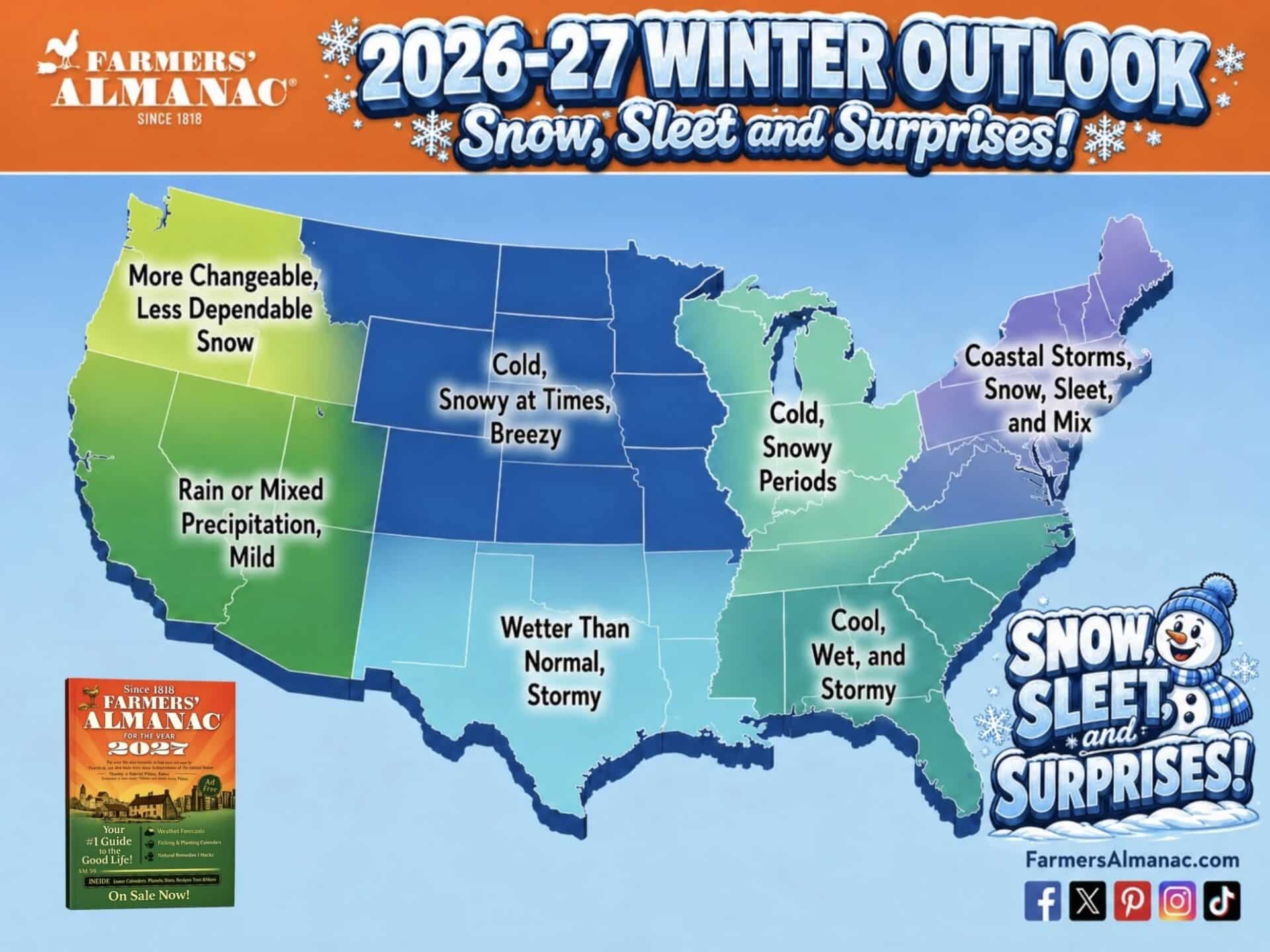
The Farmers’ Almanac map provides a useful starting point for skiers wondering when the first snow could arrive during the 2026 to 2027 winter season.
September snow is most likely in the highest northern mountains, while October brings increasing snow chances to the northern Rockies and northern Plains. November typically expands the snow threat across the Midwest, Great Lakes and Northeast.
For much of the central and southern United States, the first snow may not arrive until late November, December or even January.
The exact timing will depend on the weather patterns that develop this fall. An early cold snap could bring snow weeks ahead of schedule, while a mild autumn could delay the first flakes and potentially the start of the ski season.
