

Glacier National Park‘s over 700 miles of hiking trails provide stunning views of melting glaciers, valleys, alpine meadows, and spectacular lakes, but the landscape and wildlife both present real dangers that visitors should understand before hitting the trail.
The Montana national park is home to 71 species of mammals, ranging from the tiny pygmy shrew, which weighs about the same as a dime, to massive elk that can weigh more than 500 pounds. Most of these animals are completely harmless to people, but some can become defensive if they feel threatened or believe their young are in danger.
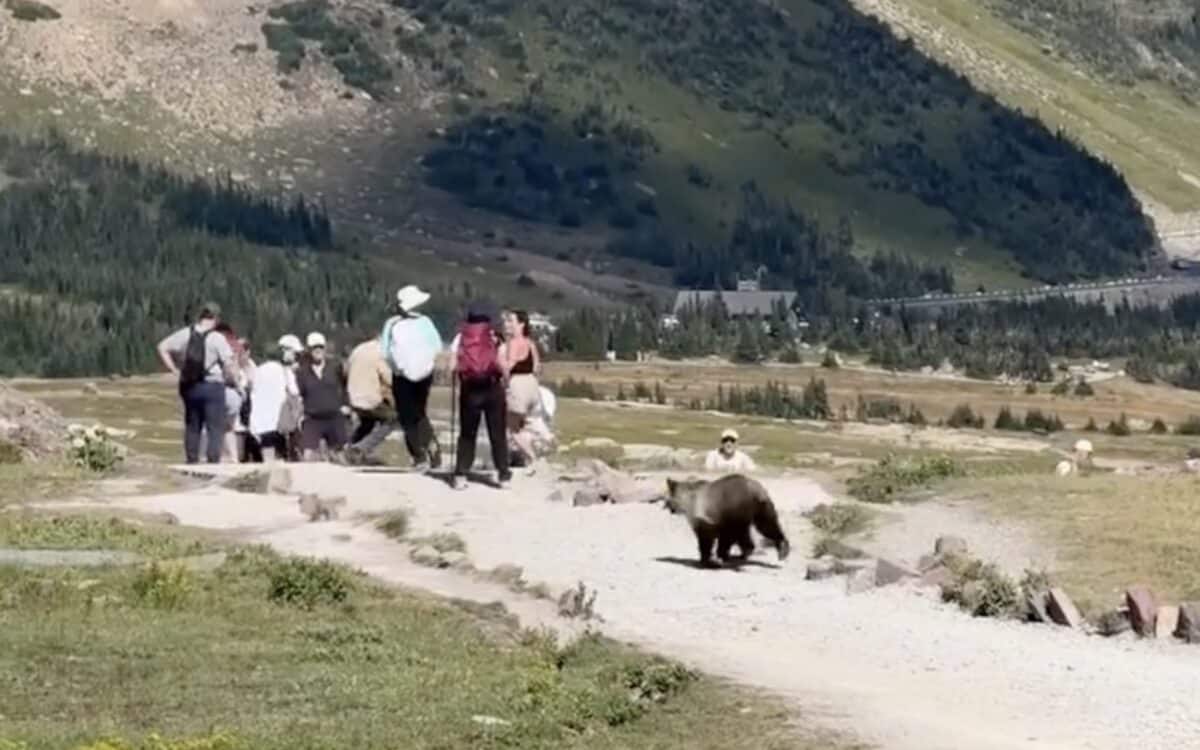
Glacier National Park’s bears are a decently common sight, with around 1,000 living throughout the area. Both black bears and grizzly bears call the park their home, and encounters do happen along the many trails. Oftentimes these encounters are completely harmless but sometimes a bear will charge at a group of hikers causing some level of panic and chaos as highlighted in the video below.
While a bear charging at you is certainly a concerning sight, Glacier National Park safety guidelines encourage groups to stick together, make noise, and stand their ground. All hikers and visitors to the park are encouraged to carry bear spray as an effective deterrent. Read more about bear safety at Glacier National Park below.
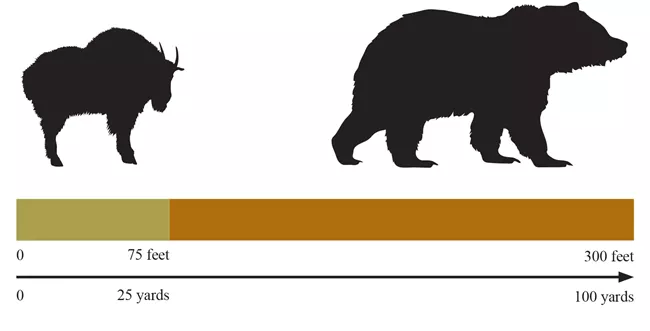
Glacier National Park Bear Country Hiking Safety Guidelines:
Make Noise
Bears usually move out of the way if they hear people approaching. Bear bells are not adequate or effective. Calling out and clapping at regular intervals are better ways to make your presence known. Do your best never to surprise a bear.
Hike in Groups
Hiking in groups significantly decreases your chances of having a negative bear encounter. There have not been any reported attacks on groups of four or more in Glacier. If you’re a solo hiker looking for company, check the Ranger-led Activity page for guided hikes.
Don’t Run on Trails
Joggers and runners risk surprising a bear on the trail. Trail running is strongly discouraged.
Carry Bear Spray
Bear spray is an inexpensive way to deter bear attacks and has been shown to be the most effective deterrent. Be sure you know how to use it and that you are carrying it in an accessible place. Check the Ranger-led Activity page for summer demonstrations.
Be Aware of Surroundings
Some environmental conditions make it hard for bears to see, hear, or smell approaching hikers. Be particularly careful by streams, against the wind, or in dense vegetation. A blind corner or a rise in the trail also requires special attention. Look for scat and tracks. Bears spend a lot of time eating, so be extra alert when hiking in obvious feeding areas like berry patches, cow parsnip thickets, or fields of glacier lilies. Always keep children close. Avoid hiking very early in the morning, very late in the day, or after dark.
Secure Food and Garbage
Never leave food, garbage, or anything used to prepare, consume, store, or transport food unattended. This includes your backpack or day pack. Secure all food and odorous items safely and pack out all garbage. Other scented items include toiletries, feminine products, sunscreen, etc.
