

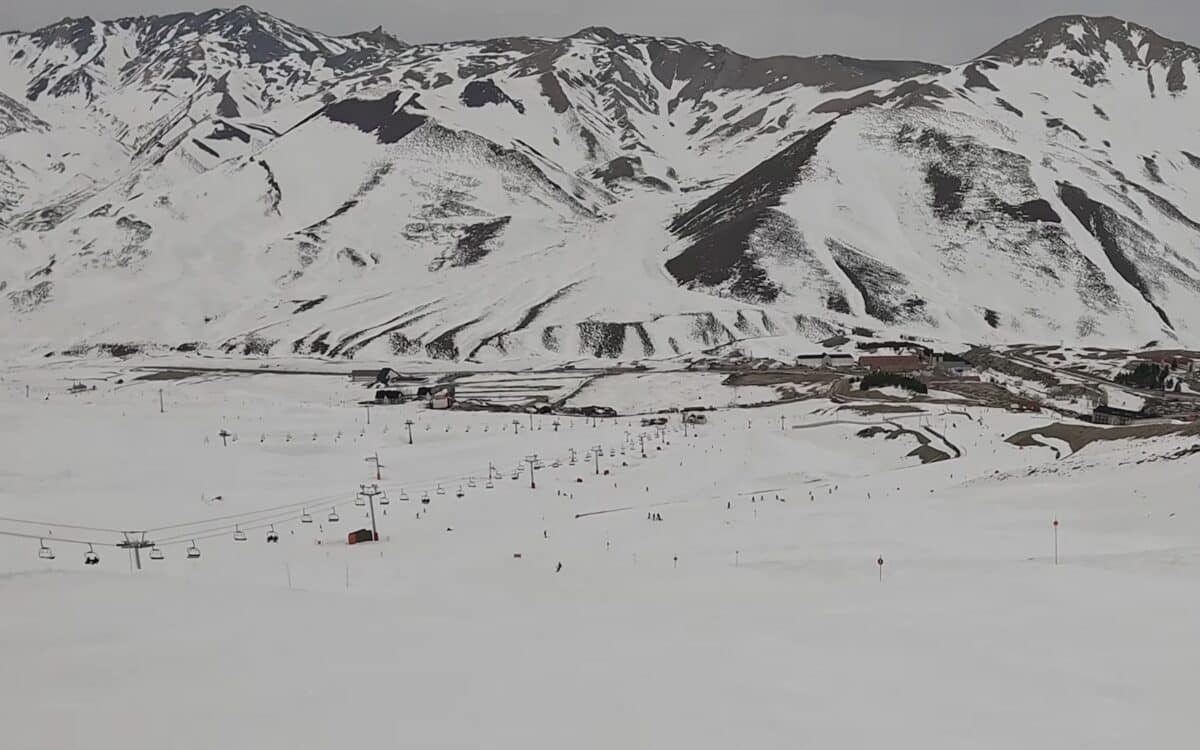
The Andes are home to some of the most dramatic ski terrain on Earth, but building and operating ski resorts across the mountain range presents a unique set of challenges. PeakRankings recently examined why South American ski infrastructure has been so difficult to develop, finding that geography plays a significant role.
A Narrow Window for Skiing
One of the biggest challenges comes from the Andes’ latitude. Santiago sits at 33 degrees south, roughly the same distance from the equator as San Diego. At that latitude, natural snowfall would normally be extremely limited.
The Andes overcome that problem through elevation. Reliable snow begins around 7,500 to 9,000 feet in the central Andes, forcing ski resorts to operate far above nearby population centers. The result is a dramatic elevation gap of roughly 6,000 vertical feet between cities and the mountains where skiing is possible.
That creates major challenges for roads, transportation and resort development. Accessing ski areas requires crossing steep and rapidly rising terrain before reaching the snow.
Too Low or Too High
The Andes also create problems at the opposite end of the elevation spectrum. The mountain range is among the tallest on Earth, with extensive terrain rising far beyond the roughly 13,000-foot elevation where lifts generally stop at major ski resorts in the Rockies and Alps.
While that extreme elevation might appear ideal for creating massive ski areas, oxygen levels become a serious limitation. Above roughly 13,000 feet, the thin air makes skiing difficult for many people and creates additional challenges for overnight accommodations.
This leaves the Andes caught between two geographic extremes. Lower elevations are generally too warm for reliable snow, while the highest terrain is too thin-aired for conventional resort development.