


Glacier National Park’s Highline Trail is closed today between Grinnell Glacier Overlook and Logan Pass due to bear activity surrounding an animal caracass on the trail Park officials said they will assess the bear activity Saturday morning before deciding whether or not to reopen.
Bear activity around carcasses is treated with particular caution by park officials, since grizzlies and black bears will aggressively defend a food source and can act unpredictably if approached. Glacier National Park is home to both species, and closures like this one are a standard part of the park’s bear management protocol, giving animals space to feed undisturbed while rangers monitor the situation. Fall and late summer months often see increased bear activity as the animals enter hyperphagia, a period of intense feeding to build fat reserves ahead of hibernation, making carcass sites especially attractive and potentially volatile.
The Highline Trail is considered one of the crown jewels of Glacier National Park, prized for its sweeping views along the Garden Wall and frequent wildlife sightings, including mountain goats and bighorn sheep. Its popularity, combined with narrow sections of trail and limited visibility in places, is part of why park officials move quickly to close areas with confirmed bear activity. Hikers planning to use the trail once it reopens are reminded to travel in groups, make noise on blind corners, and carry accessible bear spray, standard precautions in a park where visitors are expected to encounter bears at any time.
Hiking in Bear Country
Make Noise
Bears usually move out of the way if they hear people approaching. Bear bells are not adequate or effective. Calling out and clapping at regular intervals are better ways to make your presence known. Do your best never to surprise a bear.
Hike in Groups
Hiking in groups significantly decreases your chances of having a negative bear encounter. There have not been any reported attacks on groups of four or more in Glacier. If you’re a solo hiker looking for company, check the Ranger-led Activity page for guided hikes.
Don’t Run on Trails
Joggers and runners risk surprising a bear on the trail. Trail running is strongly discouraged.
Carry Bear Spray
Bear spray is an inexpensive way to deter bear attacks and has been shown to be the most effective deterrent. Be sure you know how to use it and that you are carrying it in an accessible place. Check the Ranger-led Activity page for summer demonstrations.
Be Aware of Surroundings
Some environmental conditions make it hard for bears to see, hear, or smell approaching hikers. Be particularly careful by streams, against the wind, or in dense vegetation. A blind corner or a rise in the trail also requires special attention. Look for scat and tracks. Bears spend a lot of time eating, so be extra alert when hiking in obvious feeding areas like berry patches, cow parsnip thickets, or fields of glacier lilies. Always keep children close. Avoid hiking very early in the morning, very late in the day, or after dark.
Secure Food and Garbage
Never leave food, garbage, or anything used to prepare, consume, store, or transport food unattended. This includes your backpack or day pack. Secure all food and odorous items safely and pack out all garbage. Other scented items include toiletries, feminine products, sunscreen, etc.
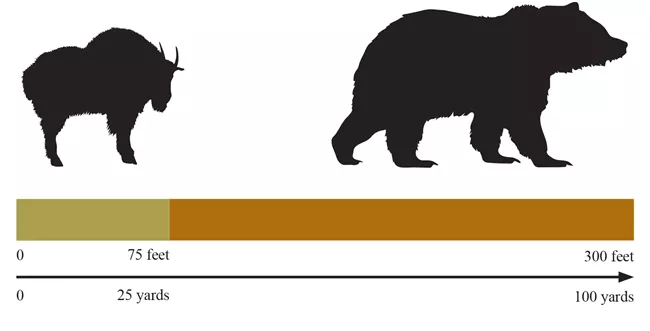
Bear Encounters
If you encounter a bear inside the minimum recommended safe distance (100 yards; 91 m), you can decrease your risk by following these guidelines:
- If a bear or other animal is moving in your direction on a trail, get out of its way and let it pass.
- If you can move away, do so. If moving away appears to agitate the bear, stop. In general, bears show agitation by swaying their heads, huffing, and clacking their teeth. Lowered head and laid-back ears also indicate aggression. Bears may stand on their hind legs or approach to get a better view, but these actions are not necessarily signs of aggression. The bear may not have identified you as a person and may be unable to smell or hear you from a distance. Help the bear recognize you as a friendly human.
- Talk quietly.
- Do not run! Back away slowly. Stop if it seems to agitate the bear.
- Use your peripheral vision. Bears may interpret direct eye contact as threatening.
- Continue to move away as the situation allows.
- If a bear appears intent on approaching you, your group, or your campsite in a non-defensive manner (not showing signs of agitation), gather your group together, make noise, and try to discourage the bear from further approaching. Prepare to deploy your bear spray. If you are preparing or consuming food, secure it. DO NOT LET THE BEAR GET YOUR FOOD!
- If a bear approaches in a defensive manner (appears agitated and/or charges), stop. Do not run. Talk quietly to the bear. Prepare to deploy your bear spray. If contact appears imminent and you do not have bear spray, protect your chest and abdomen by falling to the ground on your stomach, clasp your hands around the back of your neck, and leave your pack on for protection. If the bear attempts to roll you over, try to stay on your stomach. If the attack is defensive, the bear will leave once it recognizes you are not a threat. If the attack is prolonged, FIGHT BACK!
