

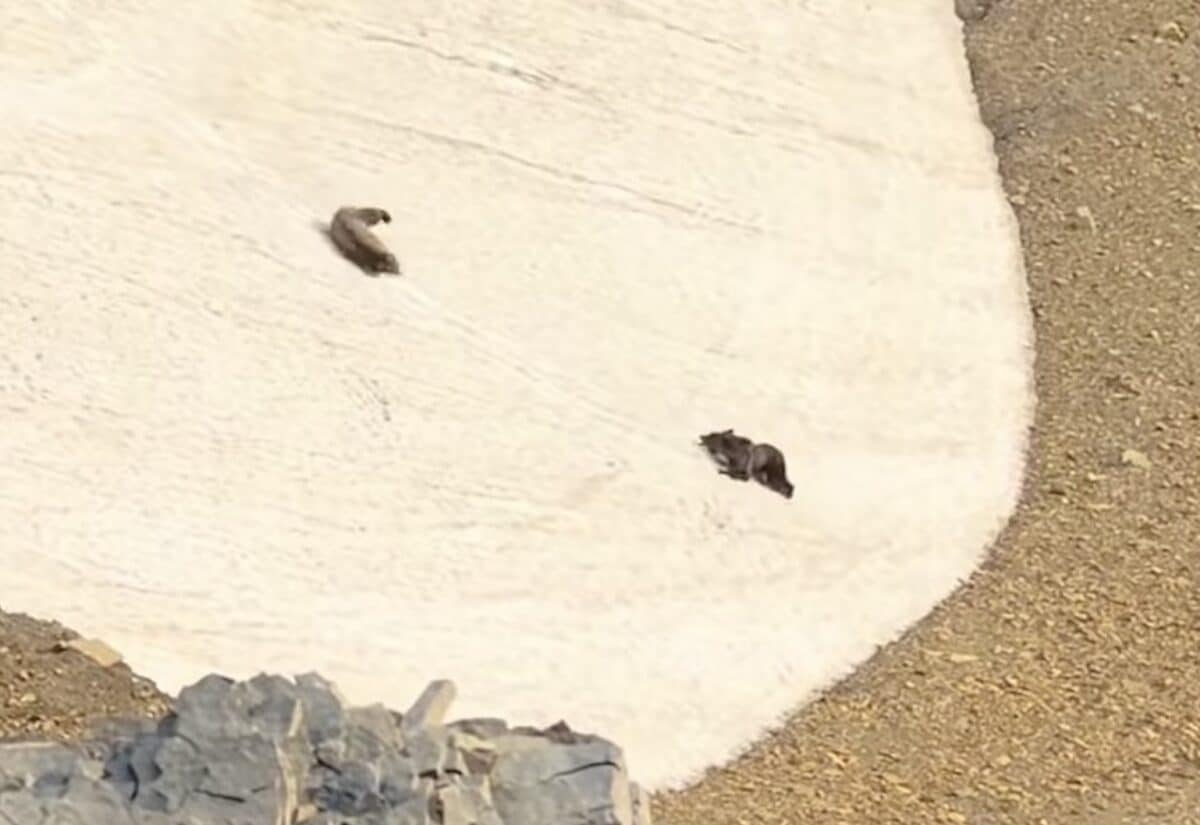
Incredible footage from the high alpine of Glacier National Park where a hiker spotted a playful pair of grizzly bears monkeying around a snow patch left over from winter.
Mary Berger was hiking Siyeh Pass, a challenging 4.6 mile one way trip with a 2,362 foot elevation gain when she saw the grizzlies at the top of the snowy slope. She managed to pull out her phone in time to take of quick video of the mid-summer shenanigans as the pair slid feet first and belly down, nipping at each other along the way.
Glacier National Park is home to an estimated total population of nearly 1,000 bears, of which 300 are grizzly bears. This number changes quite a bit as the animals move across surrounding wilderness lines.
To stay safe around Glacier’s resident bears visitors need to keep a respectful distance, at least 100 yards, at all times. In addition, park officials recommend always carrying EPA-registered bear spray in an accessible hip or chest holster, making loud noises on trails, hiking in groups of three or more, avoiding running or jogging, and properly secure all food and scented items. Learn what to do in a close proximity bear encounter below:
Glacier National Park Bear Encounters Safety Guidelines:
If you encounter a bear inside the minimum recommended safe distance (100 yards; 91 m), you can decrease your risk by following these guidelines:
- If a bear or other animal is moving in your direction on a trail, get out of its way and let it pass.
- If you can move away, do so. If moving away appears to agitate the bear, stop. In general, bears show agitation by swaying their heads, huffing, and clacking their teeth. Lowered head and laid-back ears also indicate aggression. Bears may stand on their hind legs or approach to get a better view, but these actions are not necessarily signs of aggression. The bear may not have identified you as a person and may be unable to smell or hear you from a distance. Help the bear recognize you as a friendly human.
- Talk quietly.
- Do not run! Back away slowly. Stop if it seems to agitate the bear.
- Use your peripheral vision. Bears may interpret direct eye contact as threatening.
- Continue to move away as the situation allows.
- If a bear appears intent on approaching you, your group, or your campsite in a non-defensive manner (not showing signs of agitation), gather your group together, make noise, and try to discourage the bear from further approaching. Prepare to deploy your bear spray. If you are preparing or consuming food, secure it. DO NOT LET THE BEAR GET YOUR FOOD!
- If a bear approaches in a defensive manner (appears agitated and/or charges), stop. Do not run. Talk quietly to the bear. Prepare to deploy your bear spray. If contact appears imminent and you do not have bear spray, protect your chest and abdomen by falling to the ground on your stomach, clasp your hands around the back of your neck, and leave your pack on for protection. If the bear attempts to roll you over, try to stay on your stomach. If the attack is defensive, the bear will leave once it recognizes you are not a threat. If the attack is prolonged, FIGHT BACK!
