

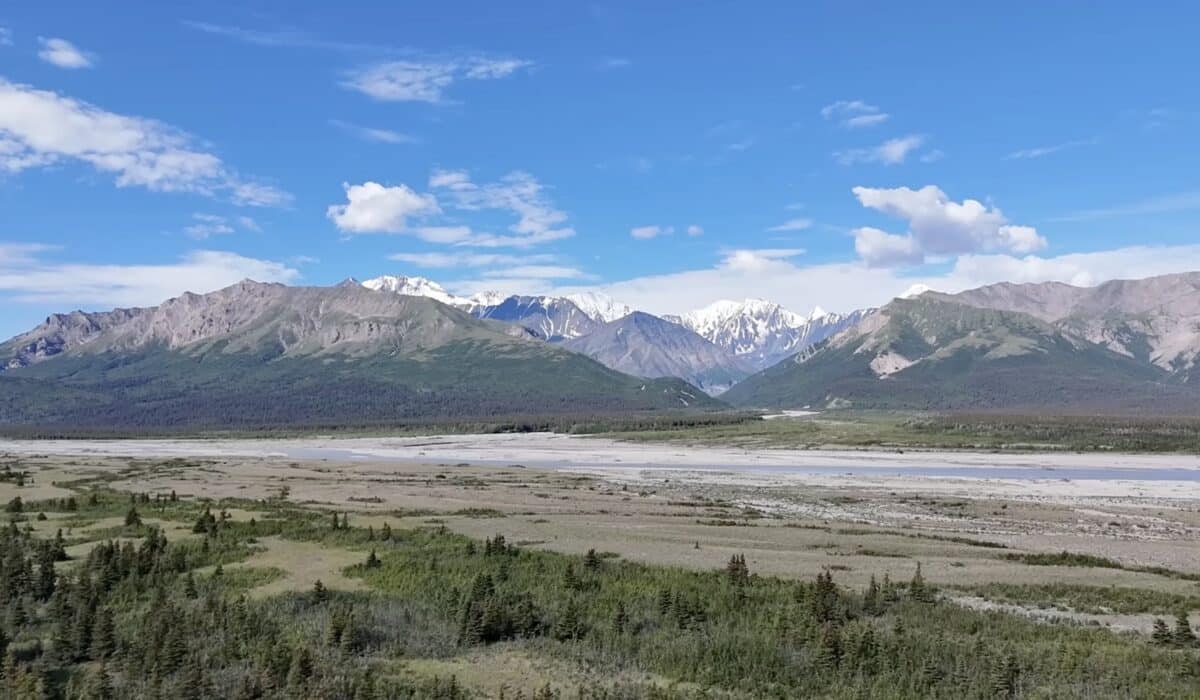
As August begins in Alaska, summer conditions still dominate much of the state. Temperatures remain in the 60s around Fairbanks and daylight stretches beyond 18 hours. But according to Weather With Travis, the seasonal transition is already underway with rapidly shortening days signaling that colder weather is not far behind.
The annual cooling across Alaska, Siberia, and northern Europe marks the beginning of the atmospheric changes that eventually shape winter weather across North America. The cold air develops in the far north first, but whether it reaches the Lower 48 depends on several large scale climate patterns.
El Nino Still Expected To Shape The Season
Weather With Travis says the overall forecast has not changed and continues to favor a classic El Nino winter pattern for 2026 through 2027.
A strengthening El Nino typically shifts the jet stream farther south, increasing storm activity across the southern United States while reducing the frequency of prolonged Arctic air outbreaks into much of the northern United States. That broad pattern provides a seasonal backdrop but does not determine every storm or every cold snap. It shows the overall pattern can influence the weather systems, not the week to week weather forecast.
Another Climate Pattern Could Make Winter Unpredictable
The biggest wildcard this season may be the Madden Julian Oscillation, commonly known as the MJO. The MJO is a moving area of tropical thunderstorm activity that circles the globe roughly every 30 to 60 days. As it shifts through different phases, it can generate atmospheric waves that alter the position and strength of the Pacific jet stream.
According to Weather With Travis those changes can temporarily reinforce or weaken the typical El Nino pattern. Even during a strong El Nino winter, periods of unusually cold weather could still develop across parts of the Central and Eastern United States if the MJO aligns with other favorable atmospheric conditions.
Why Alaska Matters
Interior Alaska serves as one of North America’s primary cold air reservoirs each winter. Unlike coastal Alaska, Fairbanks is far from the moderating influence of the Pacific Ocean. As daylight fades, snow cover develops, and long nights return, the landscape rapidly loses heat, allowing dense cold air to collect in valleys across Alaska and western Canada. However the existence of extremely cold air does not guarantee it will spread south. Atmospheric circulation must transport those air masses into the United States.
Weather With Travis also noted that Arctic sea ice remains below average this summer, while temperatures have generally been cooler than average across parts of Alaska but warmer across portions of Siberia. Even so it remains far too early for indicators like Siberian snow cover to provide meaningful clues about the coming winter.
For now the forecast continues to favor an El Nino driven winter, but forecasters will closely monitor the MJO, jet stream behavior, and other atmospheric signals throughout the fall that could make Winter 2026 through 2027 far more variable than a typical El Nino season.
