

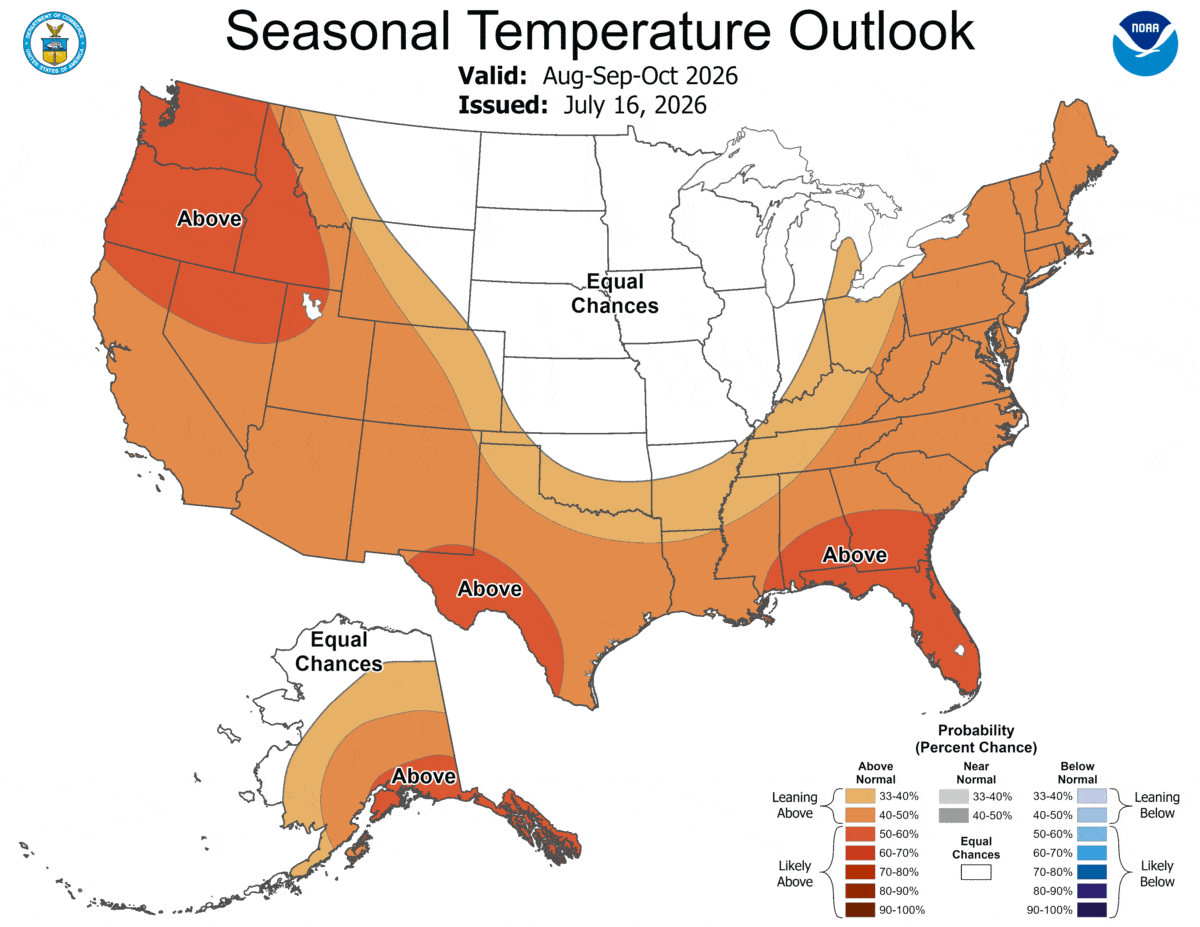
The latest seasonal outlook from NOAA’s Climate Prediction Center points toward a warmer than normal end to summer and start to fall across much of the United States. The newly released forecast covering August through October 2026 suggests above average temperatures are favored from the West Coast to the East Coast with only a limited portion of the central United States expected to see equal chances of above, below, or near normal temperatures.
The forecast also highlights several regions where precipitation could trend above or below average, offering an early look at how weather patterns may shape the final weeks of summer and the beginning of autumn.
Above Average Heat Expected Across Most Of The Country
According to NOAA’s seasonal temperature outlook, the strongest signal for above normal temperatures stretches across much of the western United States, the Gulf Coast, the Southeast, and the Northeast.
The highest probabilities for warmer than average conditions appear across parts of the Pacific Northwest, northern Rockies, Florida, southern Texas, and southern Alaska. Much of the remaining Lower 48 also leans toward above normal temperatures, though confidence decreases closer to the central Plains.
A broad area extending from the northern Plains into parts of the Midwest is categorized with equal chances. That designation does not mean temperatures will be normal. Instead it indicates there is no strong climate signal favoring above, below, or near average temperatures during the three month period.
For outdoor recreation, hiking, camping, mountain biking, and late season skiing on glaciers or permanent snowfields, the forecast could mean continued heat stress and accelerated snow and ice melt in many regions. Persistent warmth can also increase wildfire concerns in areas that remain dry heading into late summer.
Rainfall Outlook Shows Regional Differences
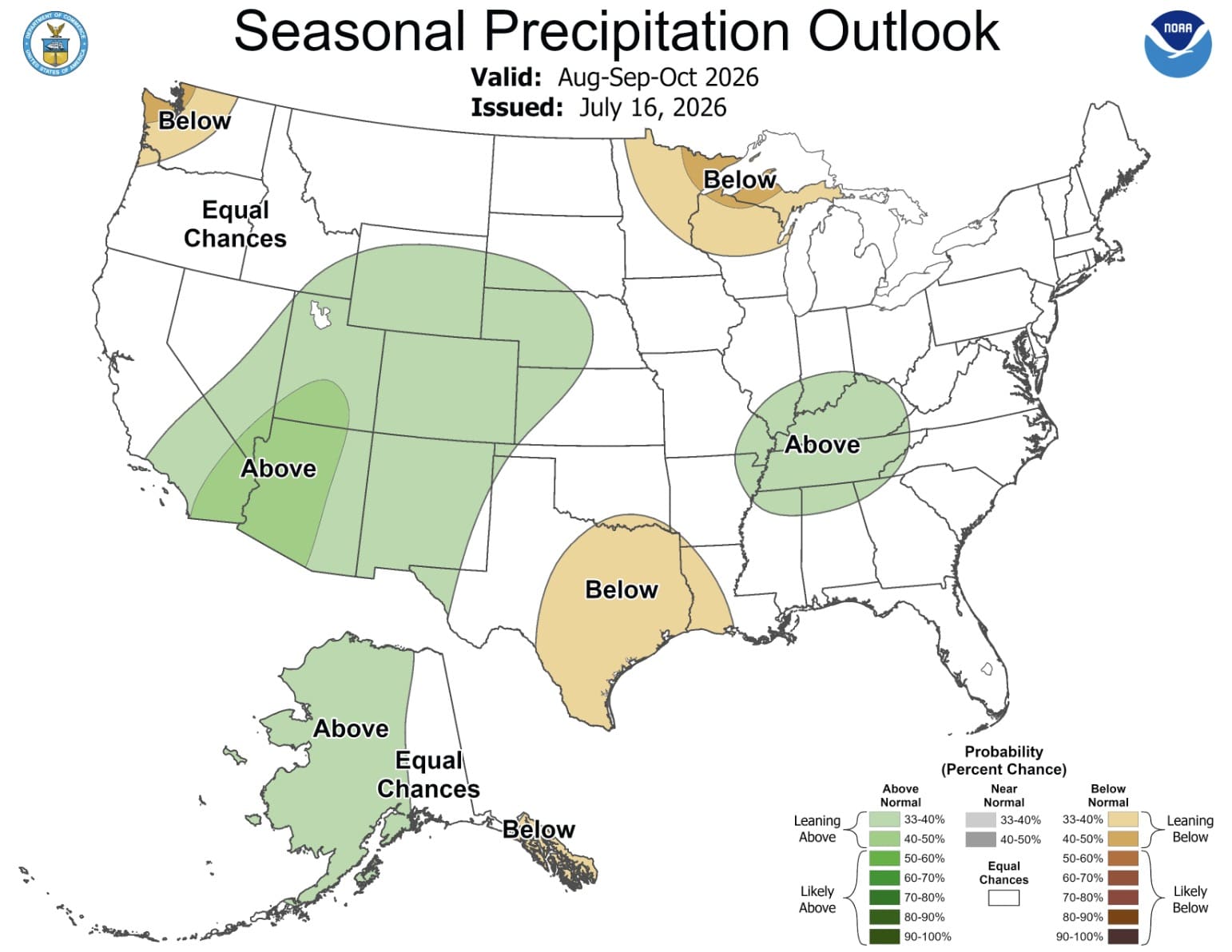
Above normal precipitation is favored across parts of the Southwest, including Arizona and New Mexico, extending northward into portions of the central Rockies and High Plains. Another area with increased odds of wetter than normal conditions covers parts of the Tennessee Valley and surrounding portions of the Southeast. Alaska is also expected to lean wetter than average.
Meanwhile, below normal precipitation is favored across parts of the Pacific Northwest, southern Texas, portions of the Upper Midwest, and the Alaska Panhandle.
Large sections of the country, including much of the Northeast, Mid Atlantic, central Plains, and California, fall into the equal chances category where no strong signal exists for wetter or drier than average conditions.
What The Seasonal Outlook Means
Seasonal outlooks are not daily weather forecasts. Instead they provide probabilities for how temperatures and precipitation are expected to compare with long term climate averages over a three month period.
That means individual heat waves, cold fronts, heavy rain events, or extended dry spells can still occur regardless of what the seasonal maps indicate. The outlook is designed to identify the overall pattern that has the greatest likelihood of developing during the forecast period.
For travelers, outdoor enthusiasts, and communities across the country, the latest NOAA outlook suggests that above average warmth is likely to remain the dominant weather story through the end of summer and into the first weeks of fall. At the same time, regional differences in rainfall could influence drought conditions, wildfire activity, water supplies, and recreation across many of America’s most popular outdoor destinations.
