

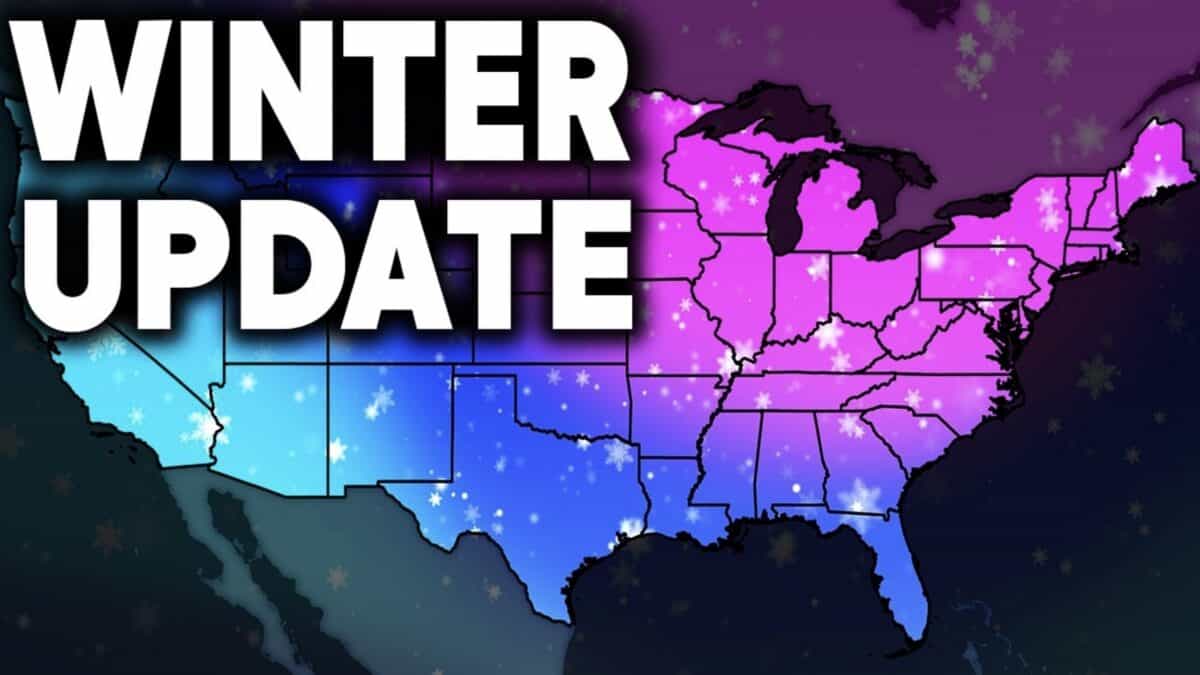
The 2026-27 winter forecast is beginning to take shape, and the latest update from Direct Weather suggests a season that could bring significant snowfall to parts of the United States. A historically strong El Niño is continuing to influence the atmosphere, while powerful Pacific jet streams are expected to play a major role in determining where storms track throughout the winter.
According to Direct Weather, several major climate models are now showing increasing agreement on the general pattern expected between December and March. The latest projections point toward an active West Coast storm track, above-average precipitation across parts of the southern United States, and potentially warmer-than-normal conditions across much of the northern states.
A Very Active West Coast Storm Track
One of the biggest takeaways from the latest forecast is the potential for repeated storms moving into the western United States. A powerful Pacific jet stream is expected to transport moisture onshore, potentially bringing multiple significant storm systems to the West Coast throughout the winter.
California and Oregon are particularly favored for above-average precipitation in the latest European model projections. The Southwest and southern Rockies could also benefit from the active storm pattern.
However temperatures could vary significantly depending on location. The strong Pacific jet stream may limit Arctic air intrusions across the northern United States, allowing warmer Pacific air to dominate areas farther north.
Southern States Could See Increased Snowfall
Direct Weather’s analysis of seasonal models suggests that the southern United States could become another major storm destination. The Deep South, Southeast, southern Plains, and portions of the Mid-Atlantic are highlighted as areas to watch. Historical El Niño winters also suggest increased snowfall potential across parts of these regions.
In particular, the corridor stretching from North Carolina and Virginia through Maryland, Delaware, southern New Jersey, and southeastern Pennsylvania has historically been favorable for snowfall during moderate-to-strong El Niño winters.
Meanwhile, northern states and portions of Canada could struggle to reach their typical snowfall averages.
What About Temperatures?
Although the overall pattern favors warmer conditions across much of the northern United States, that doesn’t mean winter will be without cold outbreaks. Direct Weather points to the possibility of a significant Arctic air intrusion sometime in December. The latest individual European model run suggests colder air could initially reach the West before moving toward central and eastern portions of the country.
The historically strong El Niño is also expected to gradually weaken, potentially reaching neutral conditions by summer 2027.
