

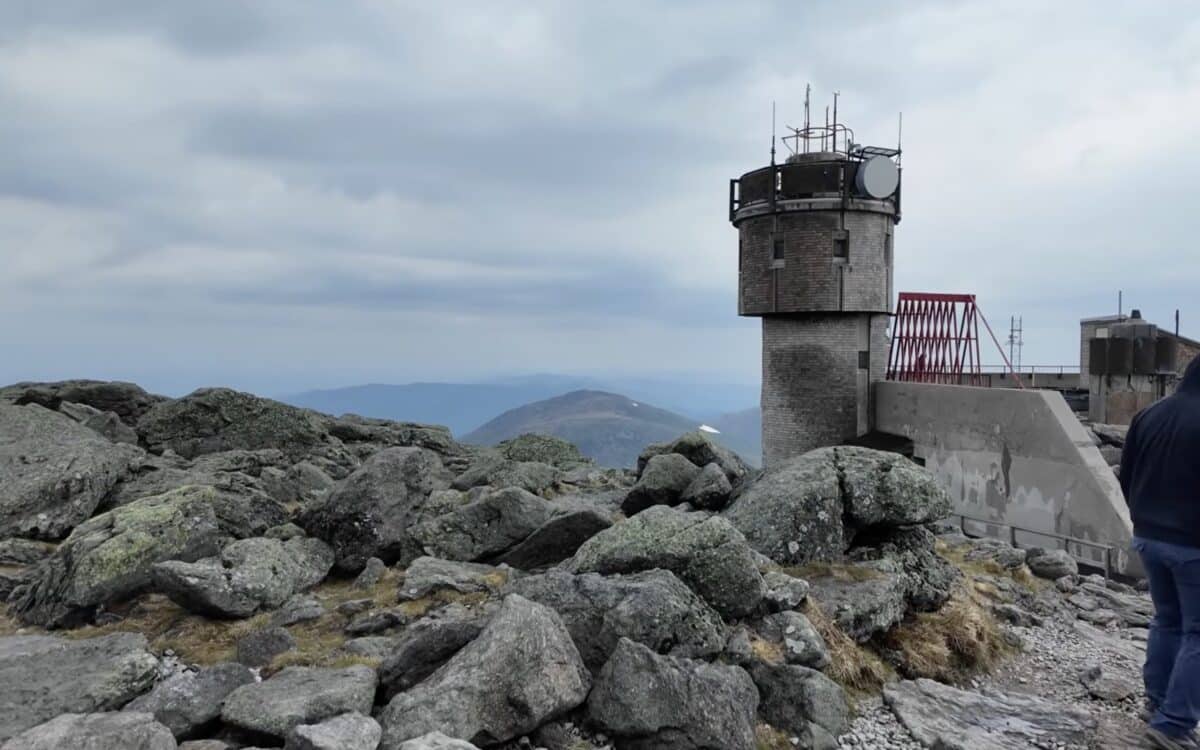
Mount Washington stands just 6,288 feet above sea level, a height that would barely qualify as a major peak in many western mountain ranges. Yet the New Hampshire summit has earned a reputation that far exceeds its elevation, recording wind gusts as high as 231 miles per hour and claiming more lives than the tallest mountain in North America.
That deadly combination of accessibility and rapidly changing weather continues to catch hikers off guard every year. While more than 400,000 people visit Mount Washington annually by car, train, shuttle, or on foot, the mountain remains one of the most dangerous outdoor destinations in the United States. YouTuber GeoLex visited the iconic mountain, exploring exactly why Mount Washington is one of the deadliest mountains in North America.
Why Mount Washington Has Such Extreme Weather
The mountain’s location is the biggest reason for its dangerous conditions. Mount Washington sits within New Hampshire’s Presidential Range, where multiple weather systems regularly collide.
Air masses arriving from the Atlantic Ocean, the Gulf of Mexico, and the western United States often converge over the range. As those systems are forced through surrounding valleys and over the mountain, the terrain compresses and accelerates the airflow creating powerful winds through a funneling process often compared to the Venturi effect. Conditions can change from warm sunshine at the trailhead to freezing temperatures, rain, snow, dense fog, and violent winds near the summit in a matter of hours.
Even during summer, visitors can encounter patches of snow and temperatures that feel more like late fall than July.
A Mountain That Looks Easier Than It Is
One of Mount Washington’s greatest hazards is its appearance. At just over 6,000 feet, many experienced hikers assume it presents few challenges compared with the Rockies or the Cascades. According to the video, 168 people had lost their lives on or around Mount Washington as of 2026, with many incidents tied to hikers who underestimated how quickly conditions could deteriorate. A warm day in the valley can become a subfreezing windstorm near the summit before hikers have time to react.
The mountain offers an approximately eight hour hiking route to the top, but visitors can also reach the summit using the historic Mount Washington Auto Road or the famous Cog Railway.
A Long History Of Tourism And Survival
Long before European settlement, Indigenous peoples including the Abenaki viewed the summit as a sacred place associated with powerful spiritual forces and generally avoided climbing to the top.
Tourism exploded during the mid 1800s after the Crawford Path opened access to the summit. Hotels, carriage roads, and eventually the Cog Railway transformed Mount Washington into one of America’s earliest mountain tourism destinations. Many of those early structures struggled to survive the mountain’s relentless weather.
Today, the Mount Washington Observatory continues monitoring one of the most extreme weather environments in North America. For visitors, the mountain delivers spectacular views and a one of a kind experience. But it also serves as a reminder that elevation alone does not determine danger. On Mount Washington, preparation often matters far more than altitude.