

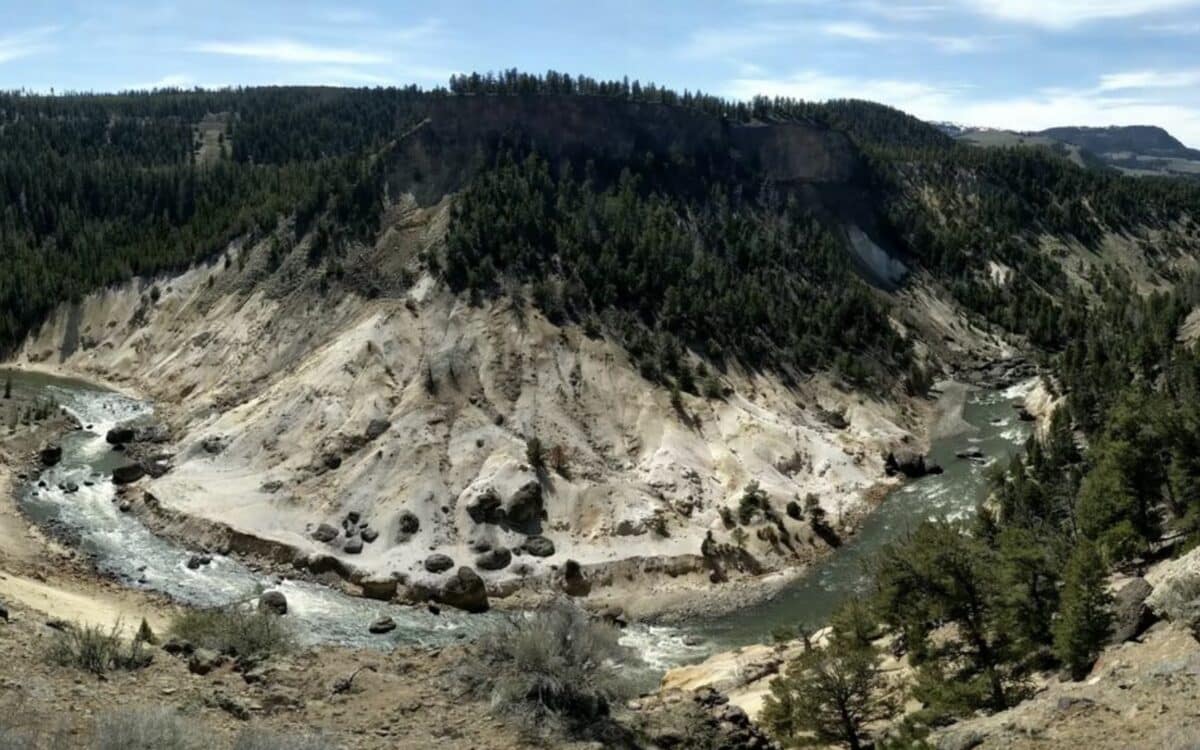
Yellowstone National Park is famous for erupting geysers, steaming hot springs, and one of the world’s largest volcanic systems. But scientists say there is another unusual feature hidden within the park that many visitors have never heard about. Natural oil seeps.
According to the USGS Yellowstone Volcano Observatory, rare hydrocarbon deposits can be found at Calcite Springs in the northeastern part of Yellowstone National Park. Researchers say the seeps are not connected to modern oil production. Instead they are the result of millions of years of geologic processes that unfolded long before the Yellowstone volcano formed.
A Rare Discovery in Yellowstone
Scientists have documented hydrocarbons around Calcite Springs for decades. Early geologists described sulfur coated vents alongside dark tar like material surrounding fumaroles. Modern researchers believe those deposits are naturally occurring hydrocarbons that traveled to the surface through fractures in the rock.
Hydrocarbons are compounds made of carbon and hydrogen. They form the foundation of petroleum, natural gas, coal, and crude oil after organic material is buried and transformed by heat and pressure over millions of years.
While hydrocarbon seeps are common beneath the ocean floor and are also famous at places like the La Brea Tar Pits in California, they are exceptionally rare inside Yellowstone National Park.
Why Oil Appears at Calcite Springs
The USGS explains that hydrocarbons develop through several stages as buried organic material experiences increasing temperatures and pressure deep underground.
During the earliest stage microbes begin breaking down organic matter and produce methane. As burial continues and temperatures rise, liquid petroleum and additional hydrocarbons can form. If temperatures become even hotter, those hydrocarbons eventually break down into methane, graphite, and other carbon rich materials.
Scientists believe the oil found at Calcite Springs likely originated from ancient marine shale formations dating back to the Permian Period. Those same rock layers supply many of the productive oil and gas fields found today in Wyoming’s Bighorn Basin just east of Yellowstone. Researchers also suggest younger lake sediments from the Eocene may have contributed some hydrocarbons reaching the surface.
Why Most of Yellowstone Has No Oil Seeps
The discovery raises an obvious question. If hydrocarbons exist beneath Yellowstone, why are oil seeps not found across the park.
Researchers say the answer comes down to heat.
Most of Yellowstone’s famous geothermal features sit inside the active volcanic caldera where underground temperatures are much higher than areas outside the caldera. That intense heat would have destroyed most buried hydrocarbons long ago by converting them into methane, carbon dioxide, or graphite before they ever had a chance to reach the surface.
Calcite Springs sits in the northeastern portion of the park where geologic conditions have allowed some hydrocarbons to survive and migrate upward through faults and fractures.
Although scientists have detected trace hydrocarbons in places including Yellowstone Lake, Lower Geyser Basin, and Norris Geyser Basin, there are no other known surface oil seeps like those found at Calcite Springs.
Another Reminder of Yellowstone’s Complex Past
The discovery serves as another reminder that Yellowstone is far more than a volcanic landscape. Beneath the park lies a complicated record of ancient oceans, buried forests, shifting continents, and powerful volcanic activity that spans hundreds of millions of years.
For visitors, the steaming vents and colorful hot springs remain the biggest attractions. For geologists, however, the small patches of natural oil at Calcite Springs offer a rare glimpse into the remarkable history hidden beneath one of America’s most famous national parks. They also demonstrate how Yellowstone continues to surprise scientists with features that connect its modern hydrothermal system to an ancient geologic past that existed long before the first geyser erupted.