

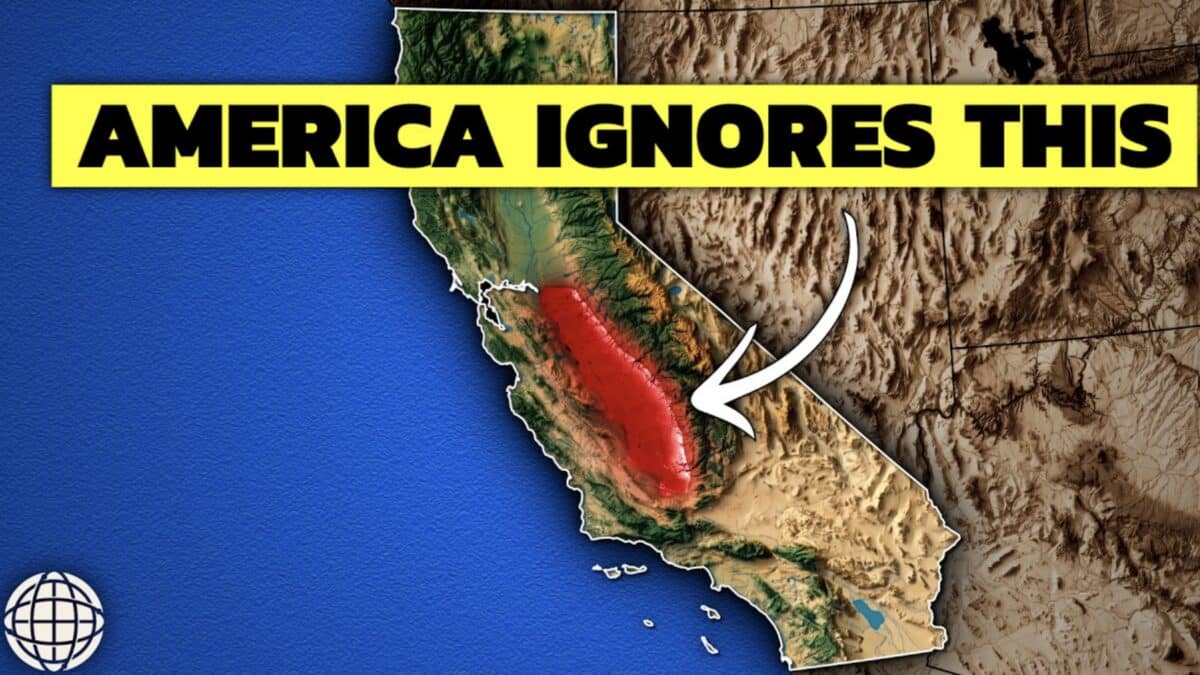
Tucked behind towering mountain ranges in the heart of California lies one of the most overlooked population centers in the United States. The San Joaquin Valley is home to more than 4 million people, produces roughly a quarter of the nation’s food supply, and yet remains almost entirely absent from the national conversation. Geography by Geoff recently explored why this massive inland region stays hidden from public consciousness, and the reasons are as much cultural as they are geographic.
The valley sits in a natural basin flanked by the Sierra Nevada to the east and the Coast Ranges to the west. Those mountain walls trap heat, block Pacific moisture, and effectively isolate the region from coastal California both physically and culturally. The area’s natural climate is closer to a semi-arid desert than the fertile farmland it has become, a transformation made possible only through extraordinary feats of water engineering over more than a century.
The valley produces over 80% of the world’s almonds along with enormous shares of domestic grapes, tomatoes, pistachios, and dairy. Cities like Fresno hold larger city-proper populations than Atlanta or Miami, yet millions of drivers pass through annually on Interstate 5 without ever encountering them, because the highway runs along the sparsely populated western edge of the valley by design.
The cultural gap reinforces the invisibility. While coastal California exports technology and entertainment, the San Joaquin Valley runs on agriculture, oil, and blue-collar labor, a reality that rarely fits the dominant California narrative. California’s high-speed rail project, with its first phase running through the valley, may eventually force a reckoning with just how significant this region truly is.
