

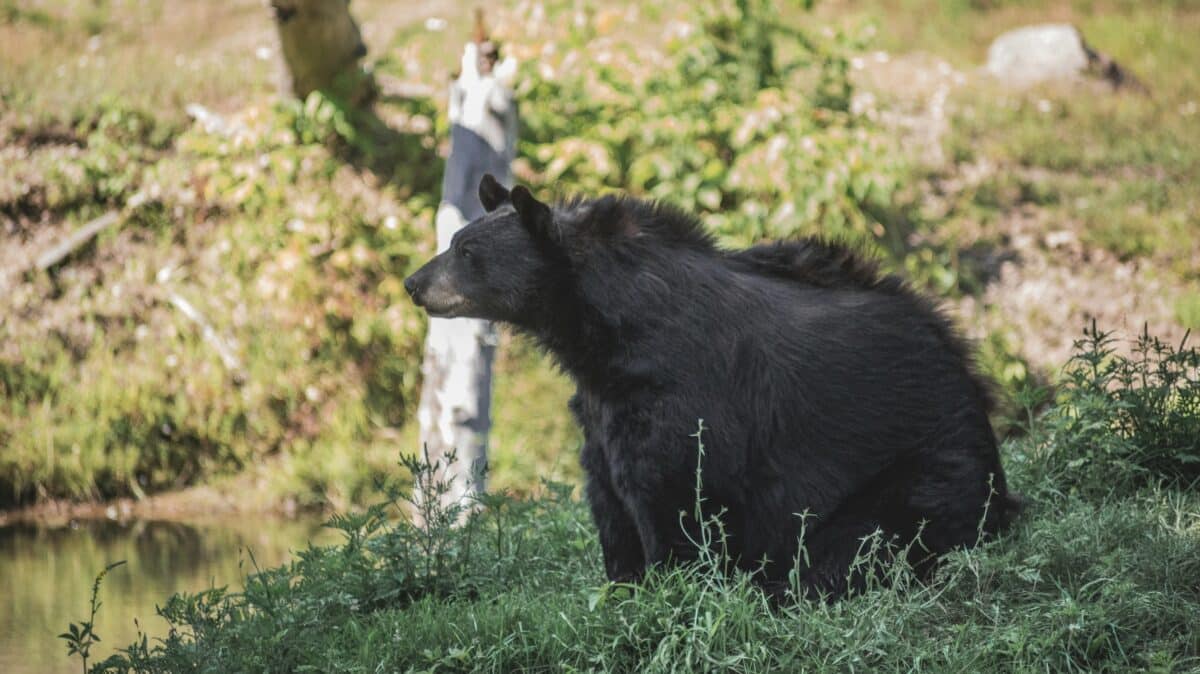
It’s spring across the United States, and in areas like California’s Lake Tahoe region, that means one very clear thing: black bears have emerged from their dens and they’re feeling hungry. California State Parks is warning both residents and visitors to be especially cautious with food, trash, and other attractants throughout this period.
Both male and female bears without cubs are already active, taking advantage of early grasses and plants, but the warmer-than-average temperatures and low snowpack throughout the region could reduce the availability of natural food sources later this year. They rely on natural foods like nuts, seeds, and fruits produced by trees and shrubs (called mast), but the temperature and precipitation can heavily impact their growing season, productivity, and timing.
Lake Tahoe’s snowpack is at just 24% of the April average and warm temperatures are leading to premature snowmelt, likely leading to a shortened growing season with average or below average mast productivity. Black bears are very adaptable and they’ll shift to other natural food sources like insects and small mammals, but studies have shown that those living near urban areas are likely to turn toward human-related food sources when natural sources are scarce.
“What puts bears at greatest risk isn’t a lack of natural food, it’s access to ours. Encouraging close interactions, allowing bears to den under homes, or feeding bears (intentionally or unintentionally) leads to dangerous outcomes for both bears and people. If we want healthy bears on the landscape, we need to give them the space to stay wild.” – ” Bear Management Specialist, Sarinah Simons with California State Parks.
Bears that turn toward human-provided food typically face a higher risk of mortality, with years of poor natural food availability generally leading to double or even triple the number of vehicle collisions with the animals. They’re more likely to encounter vehicles and unsecured attractants as they travel greater distances in search of food.
Both residents and visitors should follow the BearWise® Six At-Home Basics, including 1) never feeding or approaching bears, 2) securing food, garbage, and recycling, 3) removing bird feeders when the animals are active, 4) never leaving pet food outdoors, 5) cleaning and storing grills and smokers, and 6) alerting neighbors to all bear activity.
If you see a bear that you believe is unhealthy, sick, or orphaned, you should report it to the Tahoe Interagency Bear Team’s wildlife professionals at the California Department of Fish and Wildlife or the Nevada Department of Wildlife. More information and tips for living responsibly with wildlife is available at tahoebears.org and bearwise.org.