

Vancouver Island, located off Canada’s Pacific Coast, is known for its abundant wildlife both on land and in the surrounding waters. Sea lions, whales, orcas, dolphins, sea otters, and much more live in the sea water, while bears, wolves, deer, and mountain lions can all be found on the land.
Vancouver Island’s cougar, Felis concolor vancouverensis, is a subspecies of the mountain lion. There are around 4,000 mountain lions living in the entire province of British Columbia, but around 600-800 live on Vancouver Island. That population makes Vancouver Island home to the highest concentration of this mountain lion in North America.
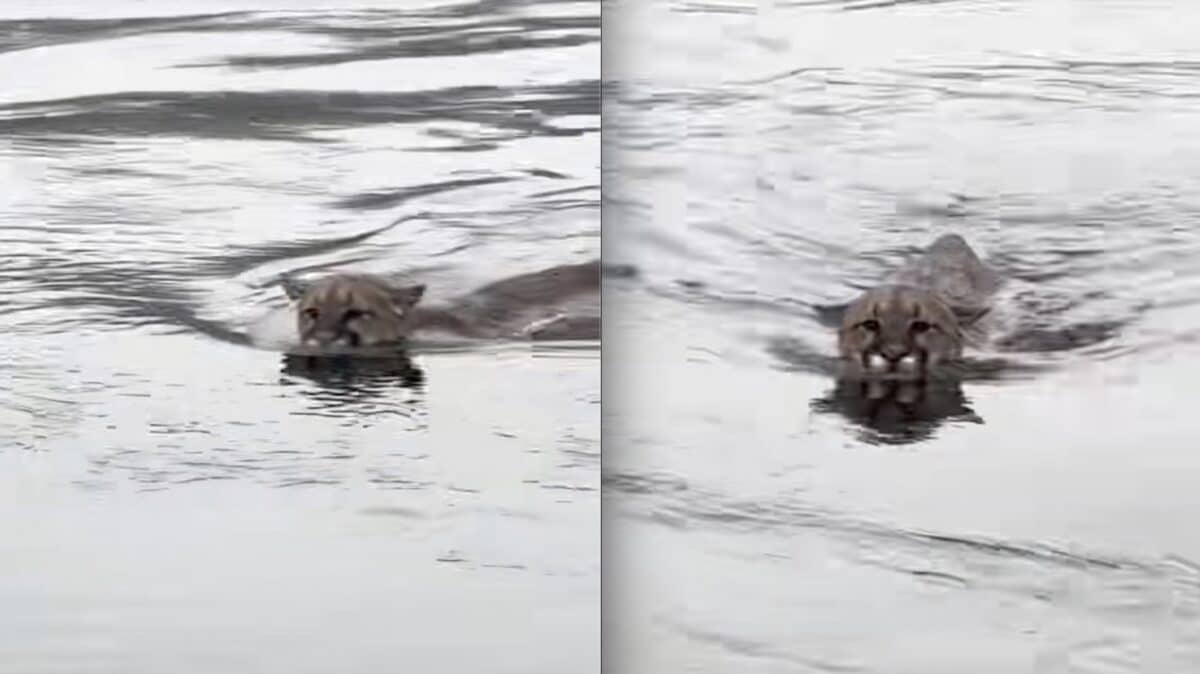
It’s unsurprising then to learn that mountain lion sightings and encounters aren’t incredibly uncommon around the island, though most people don’t usually expect to see them swimming in the surrounding waters. However that’s exactly what Jenna Evans and her parents saw after launching their boat from Grice Bay in Tofino earlier in April.
According to CTV News, the mountain lion was swimming across the Dawley Passage from Vancouver Island to Meares Island, completing the crossing in just a few minutes. The cat did eye the people in their boat but appeared much more interested with navigating through the waters.
It’s not clear exactly why the cougar was crossing the pass, but Evans dad reportedly saw some blood on its mouth. Because of that, he believes it may have been in a fight with a bear or another animal before jumping in the water in an attempt to escape.
According to Discover Vancouver Island, mountain lions in the area are known to swim to smaller islands to hunt for food if their territory (cougars are territorial, staying in an area of 30 to 100 square miles) isn’t producing. Sightings are rare, even on the well populated Vancouver Island, but they’re most common when a cougar is hunting domesticated animals or blacktail deer in a residential area.
If you do encounter a mountain lion, it’s vital that you give it plenty of space and an avenue of escape. They’ll usually avoid encounters with people, but they might attack if they feel threatened. Do not run, pick children up off the ground immediately and slowly back away. Do not turn your back on the animal or make quick movements, as this can trigger an attack. If the cat does behave aggressively, arm yourself with a large stick, throw rocks, and talk loudly, working to convince the animal that you are a threat and not prey.
If a mountain lion does attack you, fight back with anything you can, whether it’s rocks, sticks, bare fists, fishing poles, or whatever else you can get your hands on. Many people have survived cougar attacks by fighting hard.