

Sargent’s Purchase, N.H. – Nearly two dozen hikers required rescue after several inches of snow that fell on New Hampshire’s Mount Washington. The October snowfall blanketed the peaks of the Presidential Range, catching many hikers unprepared for winter weather.
Some of the Hikers who headed up to the 6300-foot summit were underdressed and ill-prepared for the cold, snowy conditions on the mountainside. Reports from the rescuers stated that some who were assisted were shivering and close to hypothermic when found.
According to WCVB, some of the hikers were expecting to catch the bus shuttle back down the mountain without realizing that the road is already closed for the season, and the shuttle bus is not operating. The clogged railway served as a download for the hikers who were charged $61 for a one-way ticket down the mountain.
Interesting information from Mount Washington Observatory
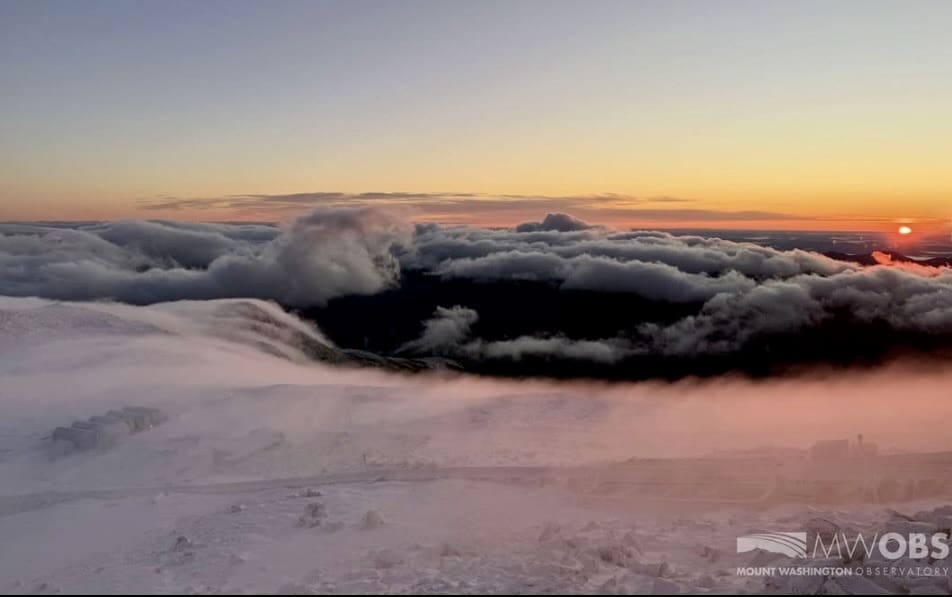
This image was actually taken yesterday morning, on October 23rd. This was the first time we cleared from the fog after our first few inches of snowfall for the winter season, starting on October 21st, and continuing, lightly, through today.
Looking through our database, it has been a fairly late start to the snow year here on the summit of Mount Washington. October 21st is tied for the 8th latest date on which we have received our first inch of daily snowfall. The latest we have received our first inch of daily snowfall was November 4th, 1971. As for total cumulative snowfall, we had only received 0.4” through October 20th, which was our 4th least snowy start to the winter season. In 1995, our least snowy start, we had only received 0.2” through October 20th. We have received 5.4” for the season as of 2pm today and are now only in sole possession of the 22nd least snowy start of the winter season.
The recent spell of wintry weather looks likely to continue, and we could pick up a few more inches before this persistent upper-level low finally exits our region. For additional forecast information, please visit www.mountwashington/forecast.
Stay safe out there by being prepared for changing conditions, particularly in the fall when temperatures can drop and early snowfall can make conditions challenging.
