

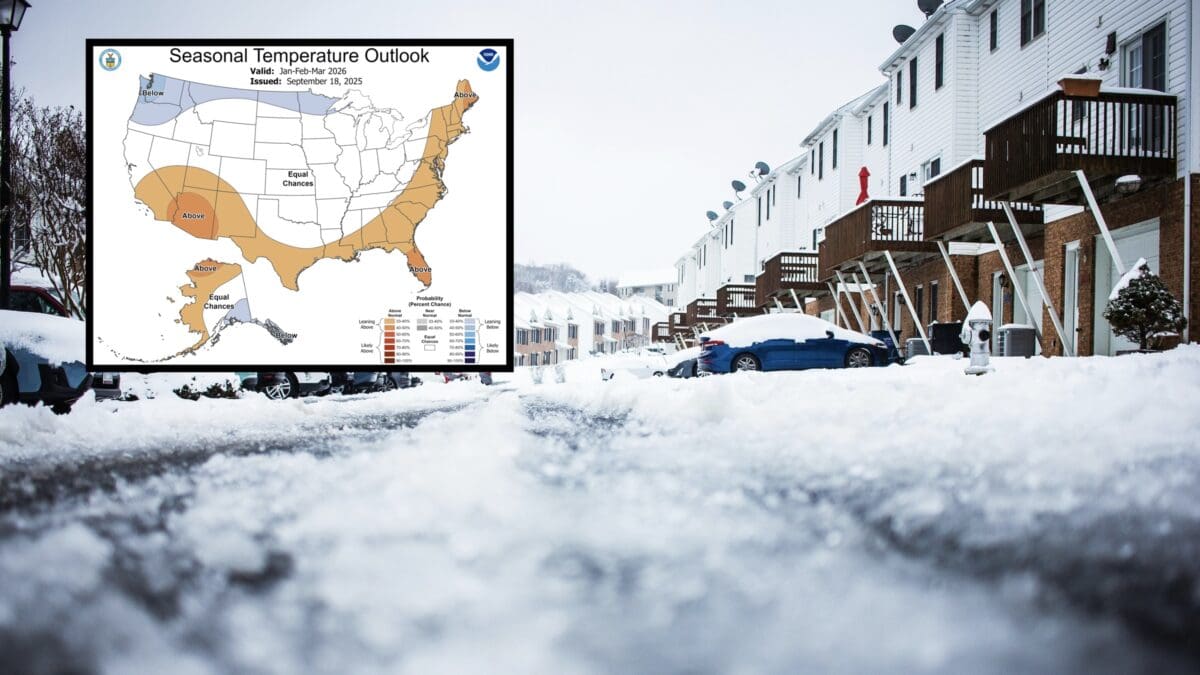
January-February-March 2026 Seasonal Temperature & Precipitation Outlook: NOAA forecasts milder winters in the Northeast, Southeast, and Southwest.
Today, October 6th, marks the heart of fall, but attention is already turning to the upcoming winter. While exact weather predictions months out are challenging, climate trends offer insights into likely temperature and precipitation patterns.
The National Oceanic and Atmospheric Administration’s Climate Prediction Center provides seasonal outlooks up to 18 months in advance. The latest update for January, February, and March 2026, released on September 18th, highlights warmer winters for the Northeast, Southeast, and Southwest, while cooler conditions may prevail in the Pacific Northwest and Northern Rockies.
Seasonal Temperature Outlook (January – March 2026):

NOAA’s Seasonal Temperature Outlook, released on September 18, 2025, provides a probabilistic forecast for temperature trends across the U.S. for January-February-March 2026. The outlook shows warmer conditions in the south and east, cooler conditions in the north, and neutral odds in central regions. Here’s the breakdown:
- Northeast (Maine, New Hampshire, Vermont, Massachusetts, New York, Pennsylvania, New Jersey, Maryland, Delaware): Likely above normal (70-90% probability). Expect significantly warmer winters, potentially reducing cold snaps.
- Southeast (Florida, Georgia, Alabama, Mississippi, Tennessee, Kentucky, the Carolinas, Virginia): Likely above normal (60-80% probability). Above-average warmth may bring early spring-like conditions.
- Southwest (California, Nevada, Arizona, Utah, New Mexico, western Texas): Likely above normal (60-80% probability). Warmer winters could exacerbate drought and reduce snowpack.
- South Central (Southern Texas, Louisiana): Leaning above normal (33-50% probability). Milder winter temperatures are expected.
- Central U.S. (Wyoming, Colorado, Nebraska, South Dakota, Kansas, Iowa, Missouri, Illinois, Arkansas, eastern Oklahoma): Equal chances. No strong signal for above- or below-normal temperatures.
- Northern Rockies and Plains (Eastern Montana, North Dakota, Minnesota, northern Wisconsin): Leaning to likely below normal (40-70% probability). Colder temperatures may increase frozen precipitation.
- Pacific Northwest (Washington, Oregon, western Idaho, western Montana): Leaning below normal (33-60% probability). Cooler winters could bring more frost or snow.
- Alaska: Mixed outlook. Equal chances in the interior, leaning below normal (33-40% probability) in the south and west.
What This Means For Skiers and Snowboarders
NOAA’s outlook for January-March 2026 suggests mixed prospects for skiers and snowboarders. The Northeast, Southeast, and Southwest are forecast to experience above-normal temperatures, with the Northeast facing the highest likelihood of warmth. This could mean reduced snowpack, fewer powder days, and potentially slushy or icy conditions in these regions.
