

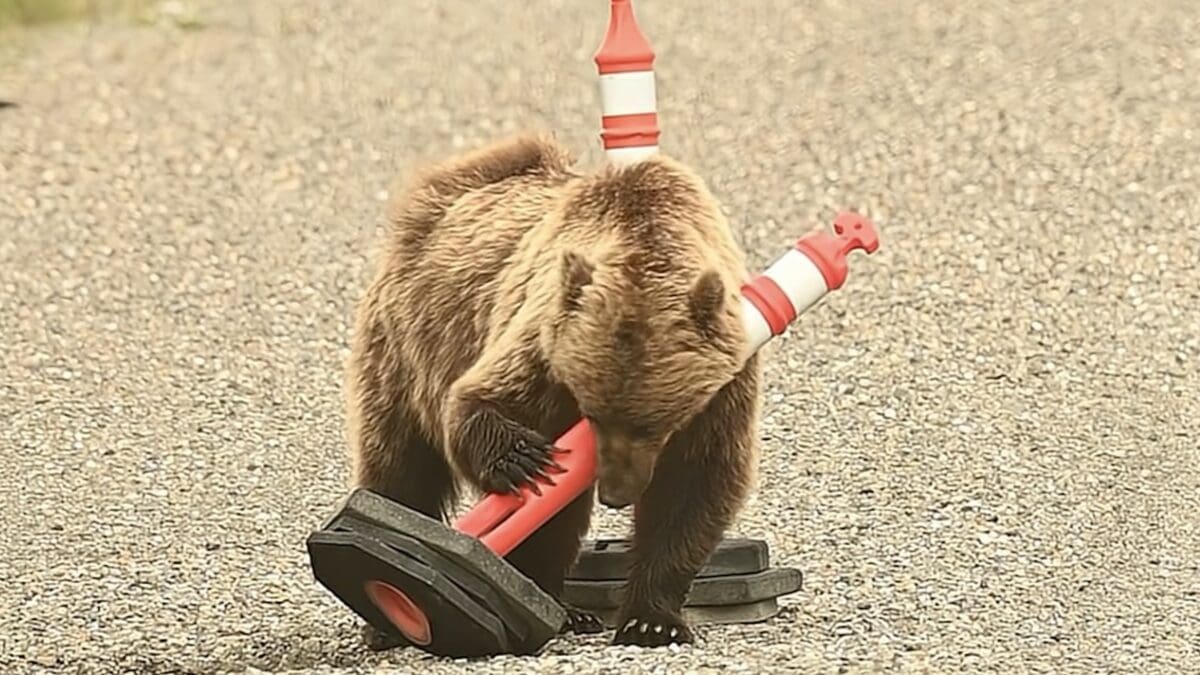
DENALI NATIONAL PARK, Alaska – This adorable footage of a grizzly bear playing with a traffic cone was captured in Alaska’s Denali National Park & Preserve, showing the young bear accidentally dropping one of the traffic cones into the sinkhole it was placed by.
The incredible video left us thinking about the bears and wildlife of Denali National Park. So let’s explore some fascinating facts about the park’s bears and wildlife and the bears that call Alaska home.
Bears of Alaska:
- Alaska is home to three types of bears: black bears, grizzly bears, and polar bears.
- Black bears are the smallest species of bear in North America. They vary in color from black to white, appearing with brown, cinnamon, and even bluish shades.
- Due to the amount of time spent on or near sea ice and their excellent swimming abilities, polar bears are considered marine animals.
- Grizzly bears and brown bears are the same species. Brown bears are generally found along the coast and are usually larger due to the abundant amount of food found in their habitat.
Grizzlies of Denali National Park:
- Approximately 300–350 grizzly bears live on the north side of the Alaska Range based on the results of survey work done in the mid 1990’s.
- Approximately 72 grizzly bears per 1,000 square mile are estimated to live ont he south side of the Alaska Range.
- Grizzly bears eat a mixed diet of grasses, berries, roots, fish, and small mammals.
- Grizzlies will prey on moose, caribou, and their calves, as well as scavenging carrion when available.
Denali National Park Grizzly Bear Safety:
Preventing Negative Encounters With Bears
What can you do to reduce the chances of a dangerous situation? Knowledge is the key to prevention and is the most important tool to take with you in bear country. Two of the best ways to avoid conflicts are to prevent surprise encounters and to ensure your food and trash are always stored properly.
Preventing Surprise Encounters
When bears feel threatened, they will either fight or flee. Most of the time they flee, but bears may also respond to a threat by charging or attacking. This most commonly occurs when people encounter female bears with cubs or bears protecting a food source (e.g., a carcass). To reduce the chances of a surprise encounter:
- Make your presence known – Hike in groups and make noise to avoid surprising bears.
- Move in the open and avoid areas with poor visibility when possible. In areas of poor visibility, make noise more frequently.
- Traveling along rivers or other noisy areas makes it difficult for bears to hear you. Be extra loud in noisy areas.
- Pay attention to signs of bear activity (tracks, scat, dug up areas, etc.).
- Watch for carcasses – Look for bird activity to alert you of a carcass that a bear may be feeding on. If you see or smell a carcass, leave the area.
- Don’t wear headphones or earbuds when hiking, jogging, or biking.
- Biking and jogging increase your speed and the likelihood of surprising a bear. Read more about cycling safety.
- Stay at least 300 yards away from all bears (the length of three football fields).
- Ask about recent bear activity at the visitor center or Backcountry Information Center.
- Pay attention to trailhead signs that may provide information about recent bear activity
