

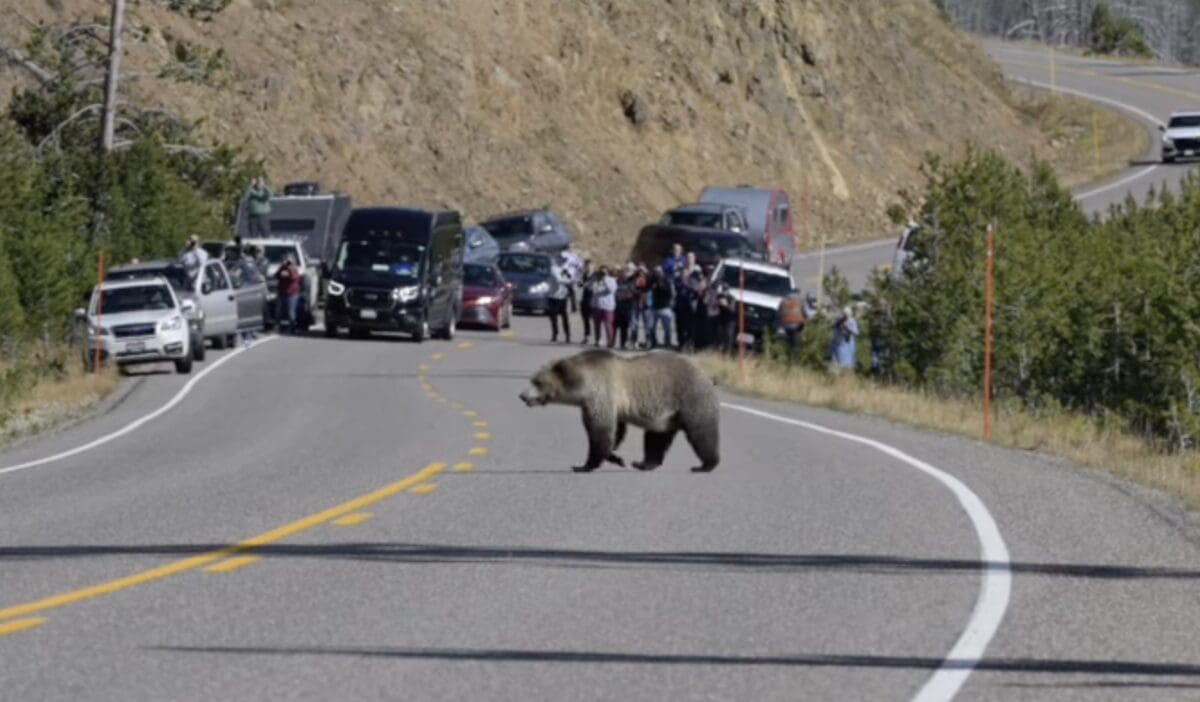
In the early days of the National Park Service, bear management was often focused on bringing the animals closer to busy areas while making it more convenient for tourists to get a good look at them. Access to garbage dumps and human food was rarely limited, and both rangers and visitors would frequently feed bears in campgrounds and around roads.
In the 1970s, a new bear management plan was adopted by Yellowstone National Park, focused on protecting and maintaining grizzly and black bear populations in their natural manner, keeping both tourists and the animals safer than they were in the past. This plan, which is still in effect today, includes protecting and maintaining natural populations, educating visitors and employees, cutting off human food sources to bears, alerting visitors to the presence and dangers of bears, and providing opportunities for visitors to understand and observe bears in their natural habitat.
When bears make their way close to roadways, rangers will proactively manage traffic to keep both the animals and motorist safe. When done correctly this type of roadway management creates a lost stress interaction with manmade infrastructure and memorable experience for the visitors.
Traffic jams caused by bears in Yellowstone are so common that they’ve earned their own name Bear Jams. In any situation where wildlife appears on or near the side of the road, guests should always listen to the directions of park rangers. Visitors should use pullouts to safely observe wildlife, letting other cars pass if possible.
Yellowstone National Park Safety Guidelines:
Yellowstone’s scenic wonders are sure to take your breath away: don’t let them take your life. From boiling hot springs to thousands of wild animals, some of the hazards in Yellowstone will be new to you. Protect yourself and the sights you plan to enjoy by following a few simple rules:
- Never approach wildlife
The animals in Yellowstone are wild and unpredictable, no matter how calm they appear to be. The safest (and often best) view of wildlife is from inside a car. Always stay at least 100 yards (91 m) away from bears and wolves, and at least 25 yards (23 m) away from all other animals, including bison and elk. - Stay on boardwalks and trails in thermal areas
Hot springs have injured or killed more people in Yellowstone than any other natural feature. Keep your children close and don’t let them run. - Never feed wildlife
Animals that become dependent on human food may become aggressive toward people and have to be killed. Keep all food, garbage, or other smelly items packed away when not in use. - Never park in the road or block traffic
Use pullouts to watch wildlife and let other cars pass. Stay with your vehicle if you encounter a wildlife jam.
We can’t guarantee your safety in Yellowstone, but these concepts will help you avoid the most common accidents. See below for more great advice, and be sure to review our Rules & Regulations, Laws & Policies, and tips for backcountry travel.