

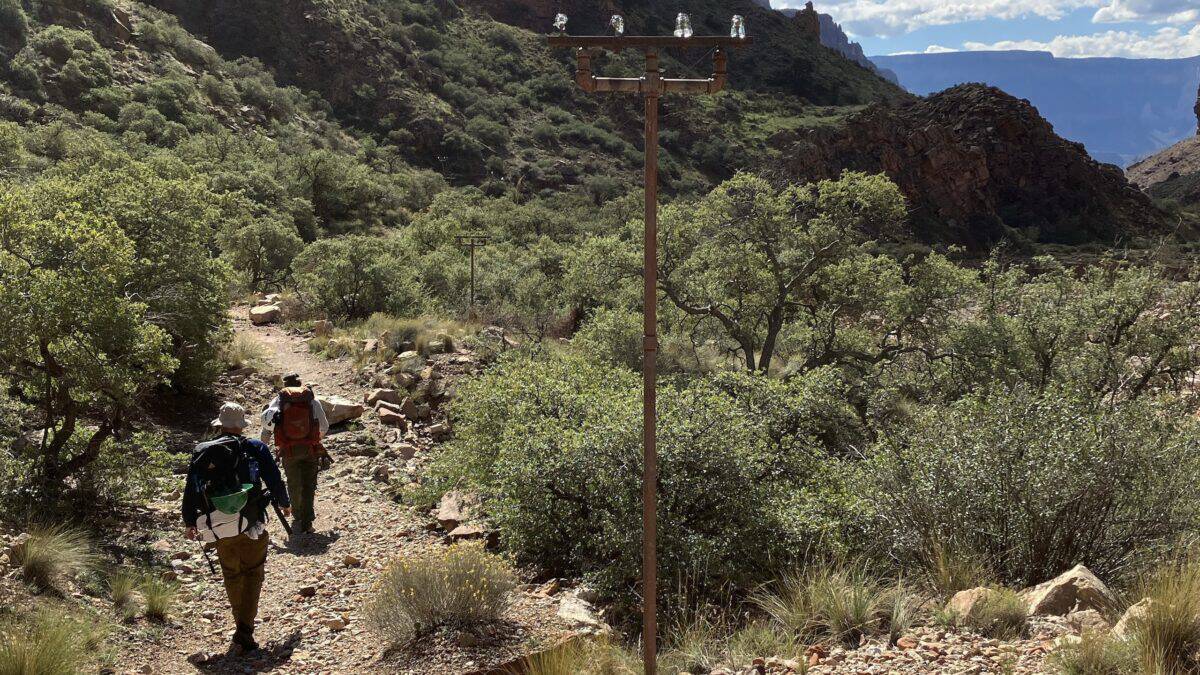
The National Park Service is seeking public input on a proposal to remove hazardous sections of a historic telephone line running through the inner canyon of Grand Canyon National Park while preserving the infrastructure’s historical significance.
The 15-day public comment period opened October 28 and will close at midnight on November 11, 2026. The proposal aims to address safety risks posed by suspended, hanging and fallen telephone wires while protecting important features of the historic resource.
Historic Telephone Line Poses Safety Risks
The Trans-Canyon Telephone Line generally follows the Bright Angel and North Kaibab trails, with a spur toward the South Kaibab Trail. Reconstructed by Civilian Conservation Corps crews in 1935, the line is listed on the National Register of Historic Places for its role in the park’s communications, engineering and administrative history.
According to the National Park Service, sections of the aging line have created hazards for helicopter operations and emergency responses in the inner canyon. The wires can also pose entanglement risks for wildlife.
Under the proposed plan, the park would remove portions of the historic telephone wire where necessary to eliminate known safety hazards. Visibility markers would be installed on retained wire where appropriate. Historic poles, cross-arms, insulators and other associated hardware would remain in place unless they independently pose safety concerns.
Park Seeks to Balance Safety and Preservation
Removing portions of the original copper wire and adding safety markers would alter features that contribute to the telephone line’s historical significance. The National Park Service determined that these changes constitute an adverse effect under the National Historic Preservation Act.
Working with the Arizona State Historic Preservation Officer, the agency developed a draft Memorandum of Agreement outlining measures to address the project’s effects. The agreement would allow the park to reduce safety risks while documenting and preserving the history of the Trans-Canyon Telephone Line.
Members of the public can review the proposal and submit comments through the National Park Service’s Planning, Environment, and Public Comment website by selecting “Open for Comment.” Electronic submissions through the project website are the preferred method.
The National Park Service notes that submitted comments are public records and may be released at any time, including personal information provided in submissions.
