
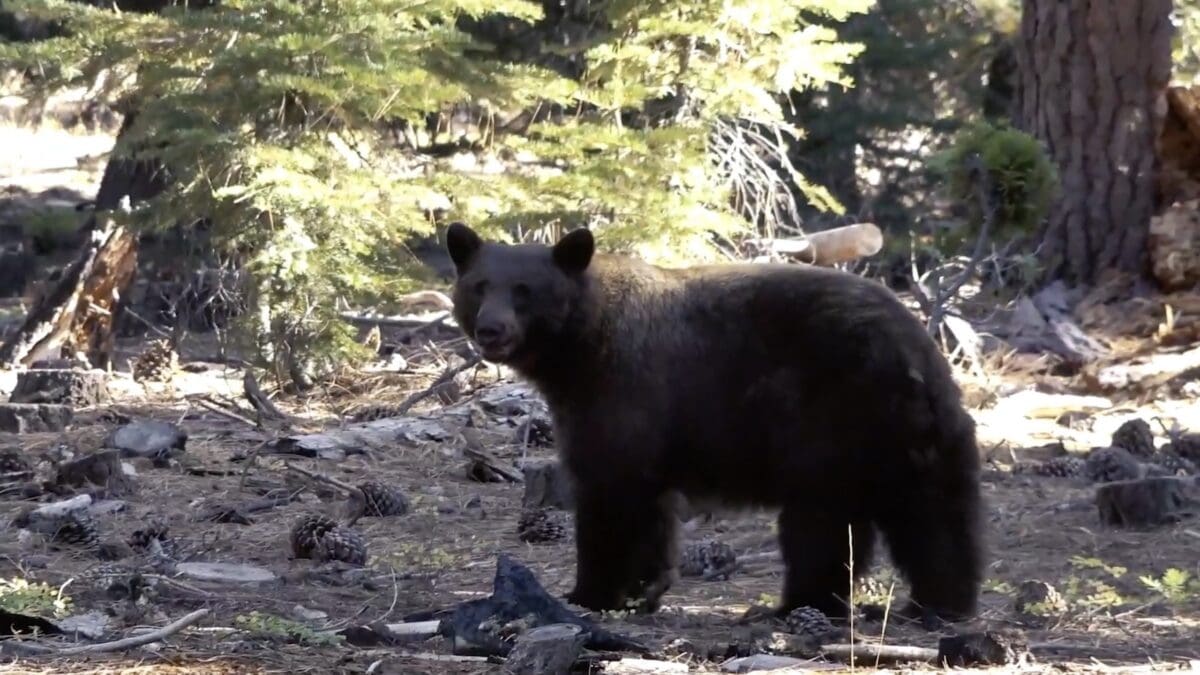
As bears across the Lake Tahoe Basin search for food ahead of winter, California wildlife officials are urging drivers to slow down and watch for wildlife on roadways. Fall brings an increased risk of bear-vehicle collisions as the animals spend more time foraging during a critical period before hibernation.
The California Department of Fish and Wildlife (CDFW) is reminding motorists that bears can be active at any time of day or night, making extra caution essential as shorter days bring reduced visibility during morning and evening commutes.
Why Fall Is Dangerous for Tahoe Bears
Bears enter a period called hyperphagia during the fall, when they consume as many calories as possible to prepare for winter. During this time, they may travel farther and more frequently in search of natural food sources, unsecured garbage and other human-provided food.
That increased movement can bring bears across highways, neighborhood streets and other busy roads. Bears that regularly find food near homes and businesses may spend even more time in developed areas, increasing their chances of being struck by a vehicle. A collision can cause serious or fatal injuries to a bear, leave cubs orphaned and result in property damage or injuries to people inside vehicles.
Wildlife officials respond to bear-vehicle collisions throughout the Tahoe Basin each year, although the total number is difficult to establish. Some incidents go unreported, while injured animals may leave the roadway before being discovered.
How Drivers Can Help Prevent Collisions
Drivers should follow posted speed limits and remain particularly alert at dawn, dusk and nighttime. Bears can cross roads unexpectedly, and motorists should watch for additional animals if they spot one bear, especially females that may be traveling with cubs.
Drivers should never stop in traffic lanes or along highways to photograph wildlife. Officials also advise against swerving suddenly to avoid an animal, which can cause a vehicle to leave the roadway or enter oncoming traffic. Remaining alert near wildlife warning signs, avoiding distractions and keeping an eye on road shoulders can help reduce collision risks.
Residents can also help by securing garbage, food and other attractants to prevent bears from entering developed areas in search of an easy meal.
Reporting Bear Collisions in California and Nevada
In California, motorists can report a bear collision or a dead or injured bear along a roadway to CDFW at 916-358-2917 or through the Wildlife Incident Reporting System. Non-emergency incidents in California State Parks can be reported at 916-358-1300.
In Nevada, contact the Nevada Department of Wildlife at 775-688-2327. Call 911 for emergencies or collisions that pose an immediate threat to public safety.
More information about preventing conflicts with bears is available at TahoeBears.org and BearWise.org.