

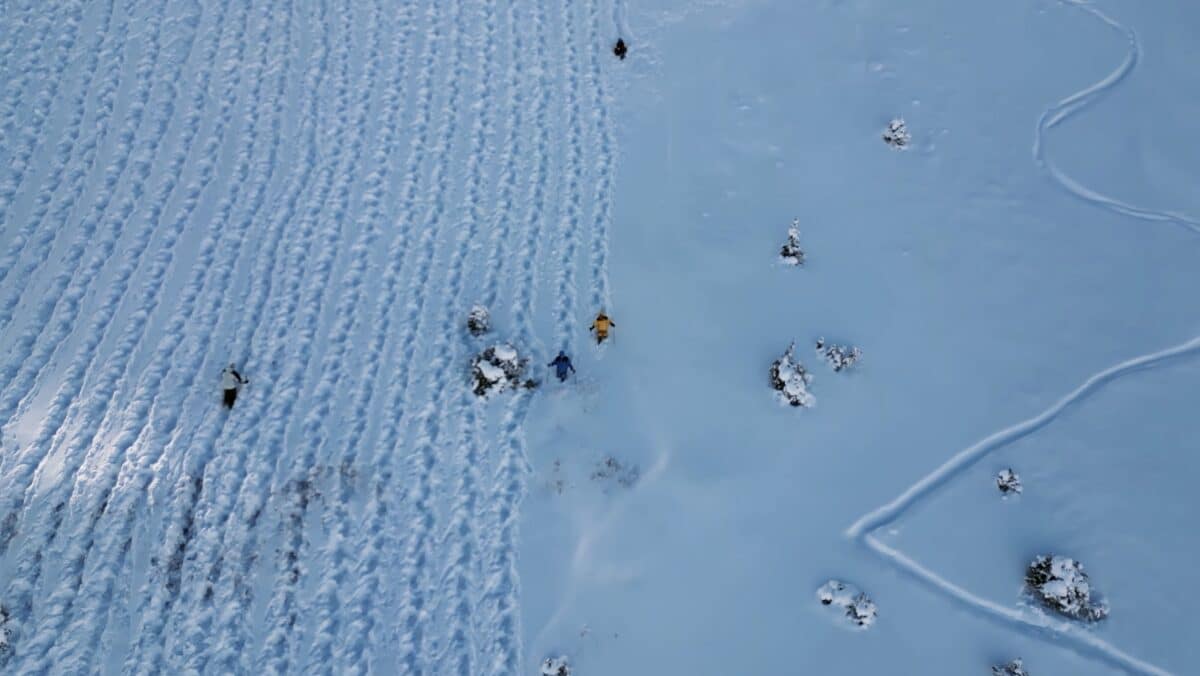
Long before the first skier drops into Highland Bowl at Aspen Highlands, crews have already spent days walking its steep slopes one step at a time.
Aspen Snowmass recently highlighted the annual bootpacking operation that helps prepare one of North America’s most recognizable inbounds expert zones for the ski season. Locals, ski patrollers and other hired bootpackers climb through steep avalanche starting zones, using their boots to compact early-season snow and help build a more stable base.
The work is slow, physical and highly dependent on weather and snowfall. According to the Aspen Highlands Bootpacking Program, some days involve hours outside in severe winter conditions at high elevation, repeatedly marching up and down steep terrain.
Highlands Patrol describes the work as comparable to mountaineering, with hazards that can include falls and avalanche exposure. Bootpacking typically begins once enough snow has accumulated in the starting zones. In past seasons, crews have started as early as Oct. 21 and as late as Dec. 7, although mid-November is the most common starting point.
Why Highland Bowl is packed by foot
Highland Bowl is not typical lift-served ski terrain.
The 270-acre expert zone tops out at 12,392 feet and contains pitches ranging from roughly 38 to 48 degrees. Reaching the summit requires skiers and snowboarders to climb 782 vertical feet above Loge Peak, with the full hike typically taking about 45 minutes in good conditions.
Before that terrain can safely open to the public, patrol needs a workable early-season snowpack. Bootpacking is part of that preparation.
“What it takes is a Herculean effort. Patrol couldn’t do it. There’s not enough man-hour for patrol to do. But this community was willing to do that.”
Rather than leaving the first layers of snow loose and unconsolidated, crews walk through avalanche starting zones to physically compact the snow. The process helps break down weak early-season layers and creates a denser base that subsequent storms can build on.
It does not eliminate avalanche danger. Highland Bowl still requires extensive avalanche mitigation and monitoring throughout the winter but the work done by bootpackers gives patrol a head start before the public ever reaches the terrain.
Bootpacking can mean weeks of work
Highlands Patrol says the bootpacking season can last roughly six to eight weeks when conditions cooperate, generally wrapping up by the end of December and sometimes by Aspen Highlands’ opening day.
During the preseason, crews may work Monday through Saturday from 8 a.m. until 4:30 p.m., weather permitting. Conditions determine where they work and how difficult a particular day becomes. Some assignments involve repeatedly climbing and descending steep avalanche starting zones in Highland Bowl. Others take place on terrain including Temerity, Steeplechase and Oly Bowl, where workers may be able to use lifts between laps.
Bootpackers are required to carry an avalanche beacon and wear boots suitable for steep winter travel. Highlands Patrol recommends alpine touring, telemark or stiff snowboard boots with Vibram-style soles, along with full winter clothing capable of handling an entire day outside.
The job also comes with an unusual warning: bring skis or a snowboard you don’t mind damaging. Crews frequently have to travel across thin early-season coverage, and Highlands Patrol explicitly recommends bringing “rock” gear.
Beginning with the 2025-26 season, Aspen Highlands changed its bootpacking program so participants became temporary Aspen Skiing Company employees receiving an hourly wage. Bootpackers can also earn pass benefits based on the number of days they work.
The work behind one of Colorado’s most famous ski lines
For most skiers, the Highland Bowl experience begins at the top of the Loge Peak chairlift.
From there, they shoulder their skis or boards and follow the bootpack toward Highland Peak. A snowcat can sometimes shorten the climb by about 15 minutes, but getting to much of the terrain still requires hiking.
Those who reach the top gain access to a huge amphitheater of double-black terrain, including the G Zones, Y Zones and steep summit lines such as Full Curl and Ozone.
Aspen Highlands is scheduled to open Dec. 12 for the 2026-27 season, part of Aspen Snowmass’ recently announced winter operating calendar. Exactly when Highland Bowl opens will depend on snowfall, snowpack development and patrol’s ability to prepare the terrain.
Whenever that happens, the first skiers dropping into the Bowl will be following hundreds of footsteps left behind by the people who helped make those turns possible.
