

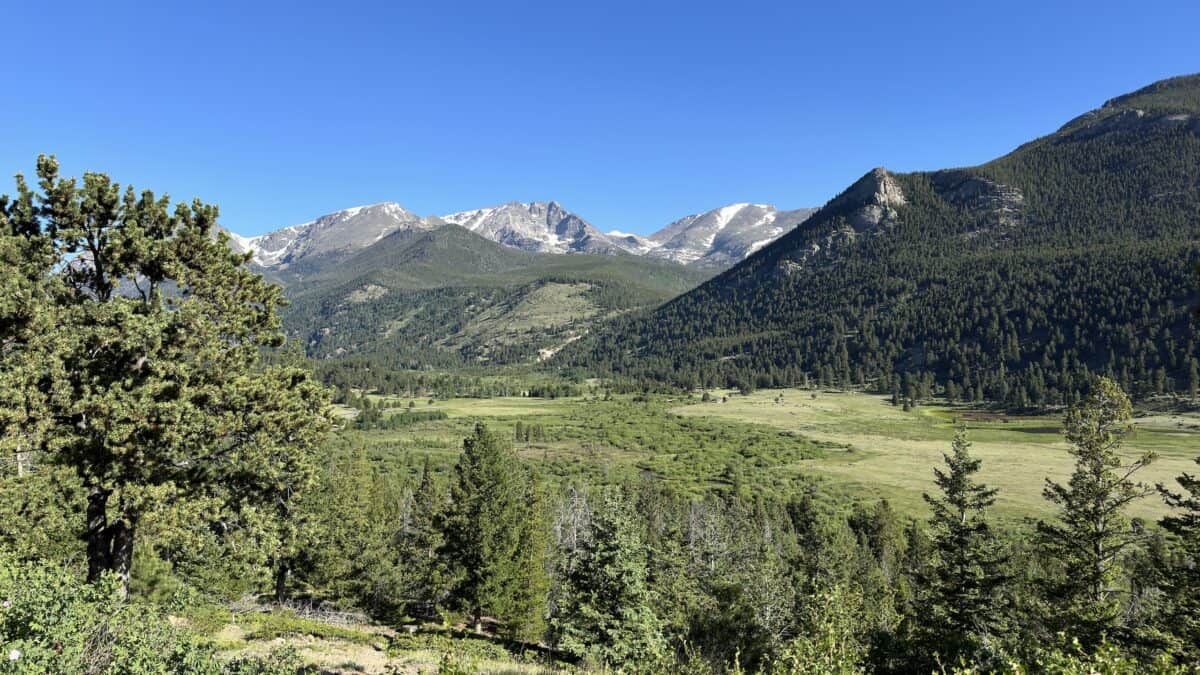
Rocky Mountain National Park is preparing for a prescribed burn covering 437 acres on the park’s east side, with operations potentially beginning in late October and continuing through the winter when weather and fuel conditions are favorable.
The National Park Service announced the planned project on October 26, saying the burn will target portions of the Eagle Cliff Unit and Headquarters Unit between Beaver Meadows Visitor Center and Bear Lake Road, including areas south of High Drive.
The project aims to reduce hazardous vegetation and lower the risk of future wildfires threatening nearby communities and park infrastructure.
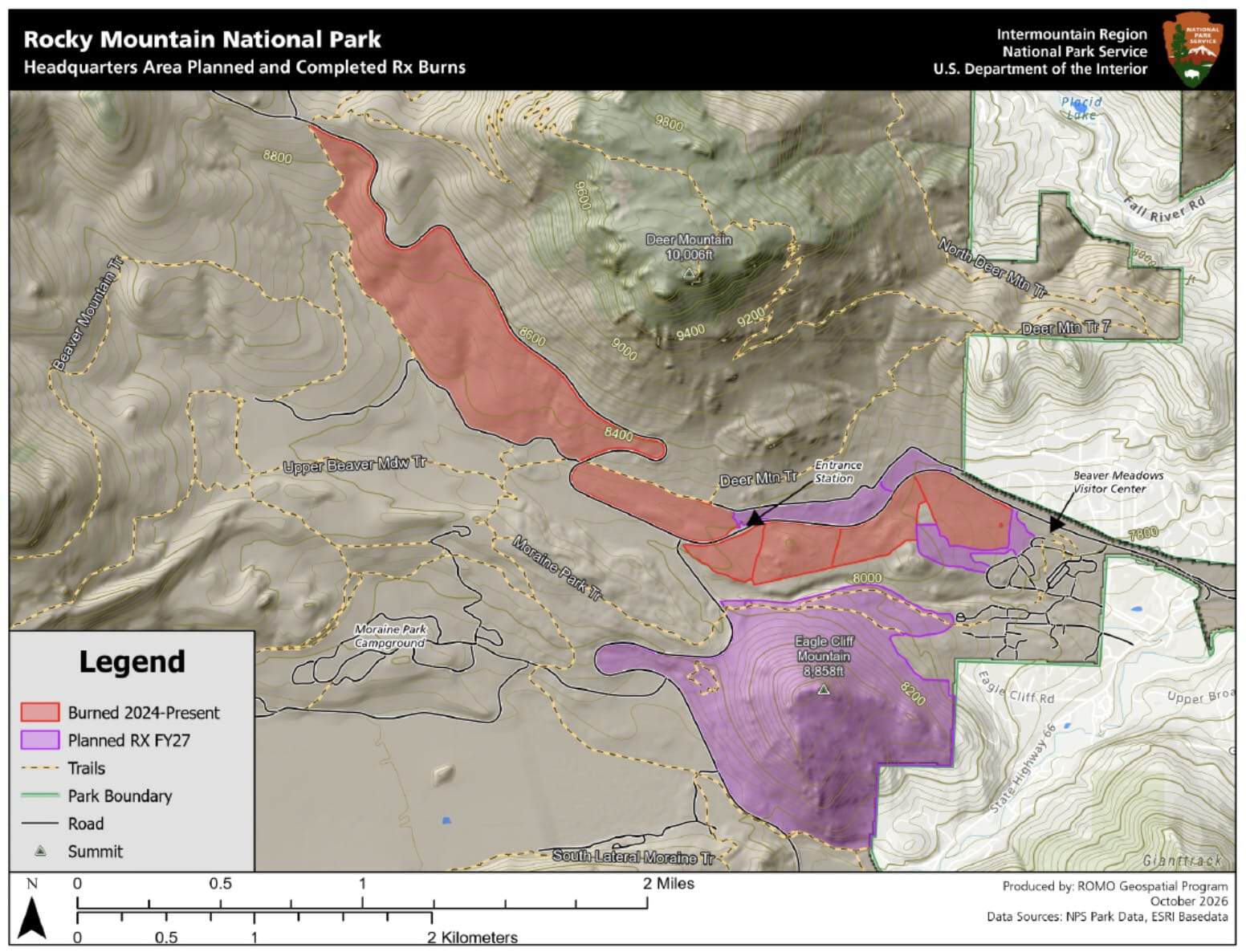
Smoke and Road Closures Possible
Prescribed burning operations will take place over several days to limit daily smoke production. However, smoke may remain visible inside and outside the park for an additional three to 10 days as vegetation continues to smolder.
The National Park Service expects some smoke to disperse east of the park and warns that prescribed fire smoke can affect public health.
Ignitions will likely occur on weekdays, although the exact timing will depend on weather, air quality, available personnel and other safety considerations.
Visitors traveling along U.S. Highway 36 and Bear Lake Road near the burn area should also prepare for potential traffic disruptions. Traffic control will be in place during active operations, and fire personnel may escort visitors through burning areas. Temporary road closures are possible, and visitors will not be permitted to stop along roadways within the burn area.
Previous Fire Projects Helped Protect Estes Park
The planned burn builds on earlier fuel-reduction efforts that have helped protect communities near Rocky Mountain National Park.
According to the National Park Service, firefighters used existing prescribed fire and hazardous fuels treatment areas while fighting the East Troublesome Fire in 2020 and the Fern Lake Fire in 2012. Those treated areas provided a buffer between advancing flames and Estes Park.
Previous fuel-reduction projects also helped prevent fire from crossing Bear Lake Road and Trail Ridge Road. The new project will reduce grasses, light fuels and understory vegetation, helping limit the amount of combustible material available during future wildfires.
The National Park Service and the U.S. Wildland Fire Service will continue monitoring conditions before and during operations. The burn will proceed only when weather, air quality and other factors meet safety requirements. Visitors can contact Rocky Mountain National Park’s Information Office at 970-586-1206 for additional information.