


The National Park Service is warning visitors about the fire risk posed by lithium-ion batteries after several recent incidents inside national parks, including an e-bike that caught fire at Grand Canyon National Park.
The agency issued a new lithium-ion battery fire warning as part of Fire Prevention Week, which runs Oct. 4-10. Lithium-ion batteries are found in everything from phones and cameras to power tools, e-bikes, e-scooters and park equipment, but the NPS warns that damaged, overheated or improperly charged batteries can overheat, catch fire or explode.
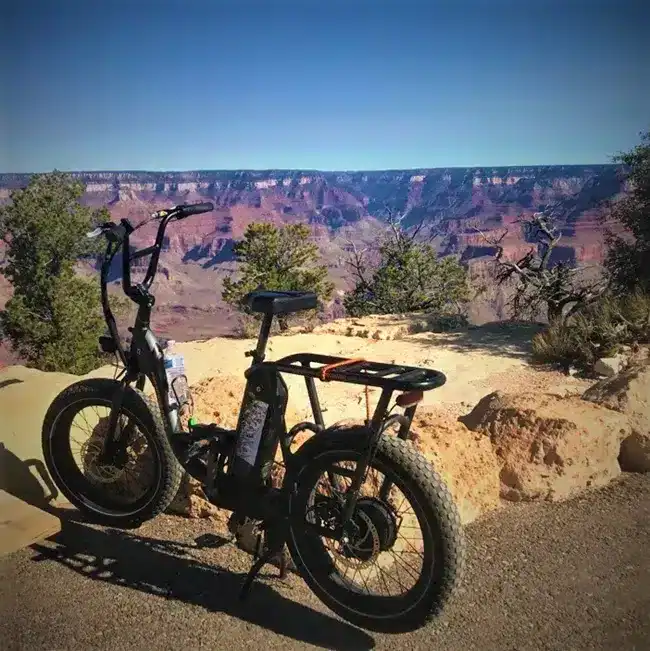
The warning comes after several battery-related incidents on National Park Service property. On July 21, firefighters at Grand Canyon National Park responded to an e-bike burning at an apartment. On Sept. 5, lithium-ion batteries aboard a boat went into thermal runaway and began smoking at Wahweap Marina in Glen Canyon National Recreation Area. An audio tour player also began smoking while charging at Alcatraz on July 27.
Another incident occurred in June 2025 at Yosemite National Park, where an electric unicycle exploded and caught fire at a vacation rental cabin in Wawona, damaging part of a nearby fence and roof.

NPS Says E-Bikes Should Be Charged Outdoors
For owners of e-bikes and e-scooters, one recommendation from the NPS is particularly notable. The agency says larger battery-powered devices should be charged outdoors and should never be positioned where a fire could block an exit.
The NPS also recommends charging devices on hard surfaces, staying nearby while they charge and unplugging them once they are fully charged. Owners should use the charger supplied with the device or one specifically approved by the manufacturer rather than an inexpensive or incompatible replacement.
Federal consumer safety officials have issued similar guidance. The Consumer Product Safety Commission’s e-bike and e-scooter safety guidance recommends that users remain present while charging micromobility devices, never charge them while sleeping and only use batteries and chargers that have been approved for the specific device.
The risks are not hypothetical. Earlier this year, the CPSC warned consumers to stop using certain Ridstar e-bikes after receiving 11 reports of fires involving the bikes’ batteries or wiring. The incidents included one burn injury, five reports of smoke inhalation and more than $40,000 in reported property damage.

Watch For Warning Signs
The National Park Service says people should immediately stop using a lithium-ion battery if it becomes unusually hot, begins swelling, develops an unusual smell, leaks, smokes or starts making popping or hissing sounds. Those symptoms can indicate a damaged or failing battery that could overheat or ignite.
The agency also recommends buying battery-powered products carrying recognized safety certification marks such as UL, ETL or CSA. The CPSC similarly recommends using micromobility products and batteries that have been designed and certified to applicable safety standards.
The issue is becoming increasingly relevant for outdoor recreation as battery-powered transportation becomes more common. E-bike access continues to expand on public lands, including more than 200 miles of trails around Moab that opened to Class 1 e-bikes in 2026.
The National Park Service’s warning isn’t telling visitors to leave their e-bikes or electronics at home. Instead, the agency is asking people to pay close attention to how those batteries are charged, stored and maintained. With phones, cameras, e-bikes and other rechargeable equipment ubiquitous in our national parks, the NPS says preventing the next battery fire can be as simple as using the correct charger, staying nearby while a device charges and recognizing the warning signs of a failing battery before it ignites.
