

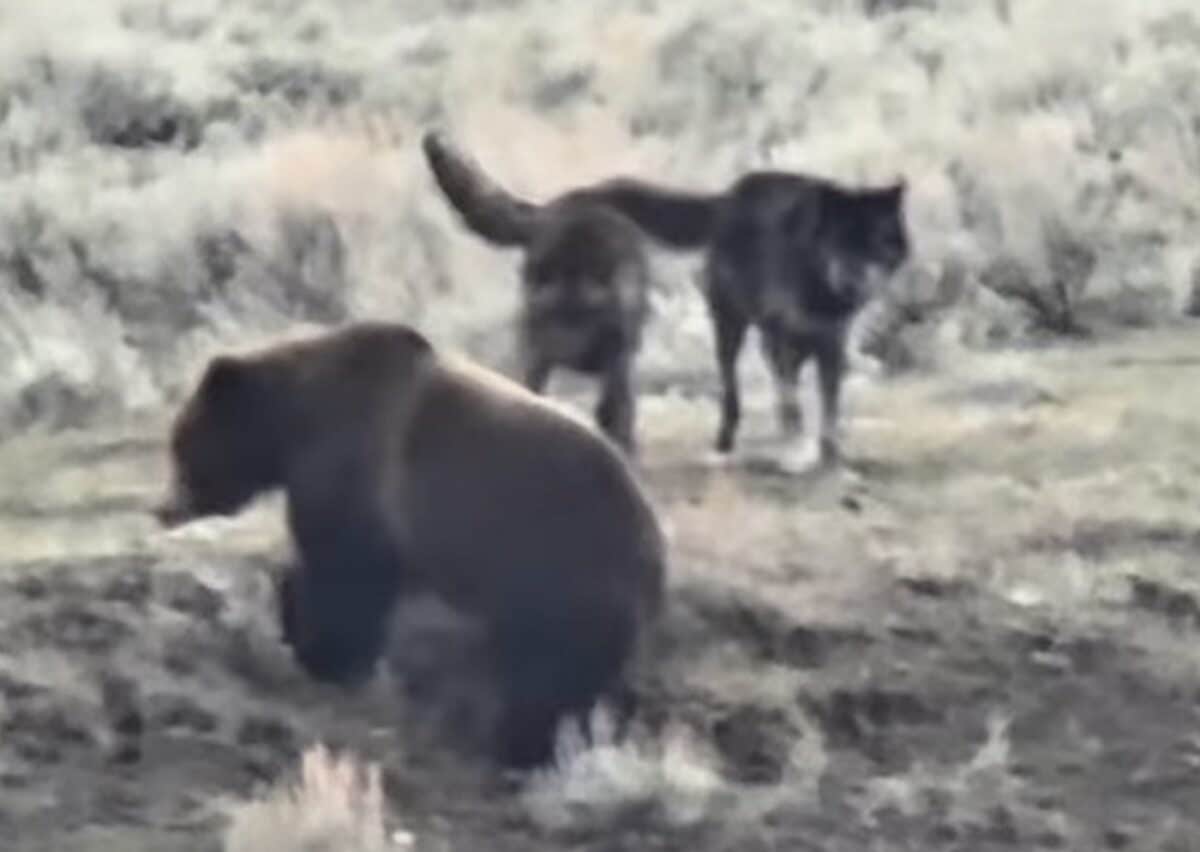
Yellowstone National Park — Fascinating wildlife footage out of America’s oldest National Park of a hungry bear freshly woken from hibernation getting more than it bargained for after tracking down a thawed out carcass. The video was captured last week by a photographer with a telephoto lens and shows that although grizzly bears are apex predators in Yellowstone National Park’s food chain, their dominance can be challenged in certain situations.
Here’s the play by play from Julie Argyle who is the author of two incredible books about western wildlife:
“A carcass, wolves, and a ginormous grizzly. After watching wolves feed on a carcass for most of the day, we noticed something moving near the tree line. There, coming towards the carcass at a dead run was this amazing Grizzly.
The wolves had retreated to the sage and most were sleeping, unaware of the bear. Once the Bear reached the area where the wolves were, the wolves must’ve smelled him, and they immediately let out a low howl, stopping the bear in his tracks, and then all chaos broke out. Two wolves jumped at the bear and it took off running toward the carcass. The pack followed, but they were no match for the bear.
Once they reached the carcass, we lost sight of the bear, but about 30 minutes later, they all reappeared, and the wolves escorted the bear out of the area.”
Argyle was behind her camera for another incredible moment of territorial behavior at Yellowstone last week when she witnessed this bison seemingly telling a rambunctious pack of wolves to get off his lawn:
“This bison had the entire valley to eat grass wherever it wanted. For some reason he didn’t want the wolves lying where they were and let them know. The way he flips his head at the end knowing he is the boss!”
Yellowstone National Park Wildlife Safety
If you plan on visiting Yellowstone this summer remember its animals are wild and dangerous, no matter how docile they may appear to be. The safest (and often best) view of wildlife is from inside a car. Always stay at least 100 yards away from bears, wolves, and cougars, and at least 25 yards away from all other animals, including bison and elk. If an animal moves closer to you, back away to maintain a safe distance. It’s illegal to willfully remain near or approach wildlife, including birds, within any distance that disturbs or displaces the animal.
Binoculars and telephoto lenses always give you a better view than approaching the animal would. Lenses with focal lengths of 300mm or greater are recommended for adequate reach.

