

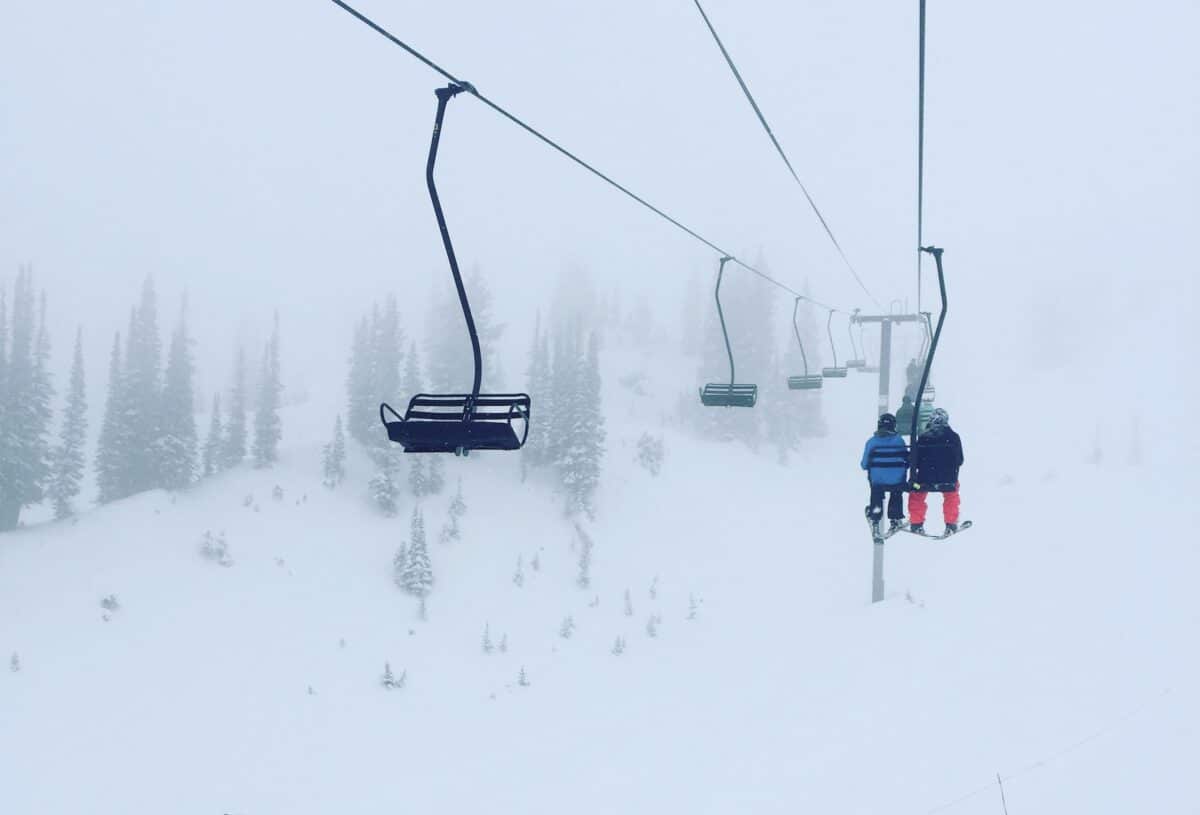
Here are five ski resorts that average 400+ inches a season—and the simple, very unfair reasons they get absolutely hammered.
1) Mt. Baker, WA — ~641″ average snowfall
Mt. Baker is the PNW’s snow vacuum. It’s close enough to the Pacific to get storm after storm, and the North Cascades do what they do best: force moist air straight up, wring it out, and bury everything in sight.
Why it’s a snow magnet:
- Maritime storms roll in wet and heavy, then pile up fast when they hit terrain.
- Orographic lift in the Cascades = clouds hit mountains → rise over mountain → snow.
Mt. Baker is widely cited as averaging ~641 inches annually, and it’s also home to the famous 1998–99 season record (yes, that one).
2) Alyeska Resort, AK — ~663″ average snowfall
Alyeska sits in a ridiculous spot: coastal Alaska, where the atmosphere is basically always ready to do something dramatic. Big moisture + mountains = BIG TIME.
Why it’s a snow magnet:
- Gulf of Alaska moisture is the fuel.
- Terrain and location help storms unload hard—often in huge, consistent cycles.
One widely reported figure has Alyeska averaging ~663″ per year, with recent seasons blowing past 700″ totals.
(Snowfall averages can vary depending on where the measuring plot is and which dataset a source uses—welcome to the snow-stat rabbit hole.)
3) Alta Ski Area, UT — ~548″ 44-year average
Alta doesn’t just get snow—Alta gets scientifically documented snow. The Collins Study Plot has been tracking totals for decades, and the “average” is still an absurd number.
Why it’s a snow magnet:
- Classic Great Salt Lake influence + cold storms = frequent refreshes.
- The Cottonwoods are shaped to squeeze storms for all they’re worth.
Alta cites a 44-year average seasonal snowfall of 548 inches at the Collins Study Plot.
4) Snowbird, UT — 500″+ annual snowfall (claimed by resor
Right next door to Alta, Snowbird has the same winning formula: storm track + terrain + elevation… and a canyon that turns incoming moisture into face shots.
Why it’s a snow magnet:
- Little Cottonwood Canyon is basically a natural snow collector.
- Fast changes in elevation help storms dump quickly and repeatedly.
Snowbird markets itself as “500+” annual snowfall—and anyone who’s been there during a real cycle isn’t arguing.
5) Wolf Creek, CO — ~430″ annual snowfall
Colorado is known for sunshine, not necessarily nuclear storm totals—except Wolf Creek. It’s perched right where storms can slam into the San Juans and unload. This place is famous for getting snow when other parts of the state are dry.
Why it’s a snow magnet:
- Position near Wolf Creek Pass + San Juan terrain = prime orographic dumping ground.
- Storms coming from the south/west can absolutely light it up.
Wolf Creek lists 430 natural inches of annual snowfall on its own stats page.
The common thread
These mountains aren’t “lucky.” They’re just sitting in the right spot where:
- moisture shows up reliably,
- terrain forces air upward,
- temperatures cooperate often enough,
- and storms have a reason to unload right there.