

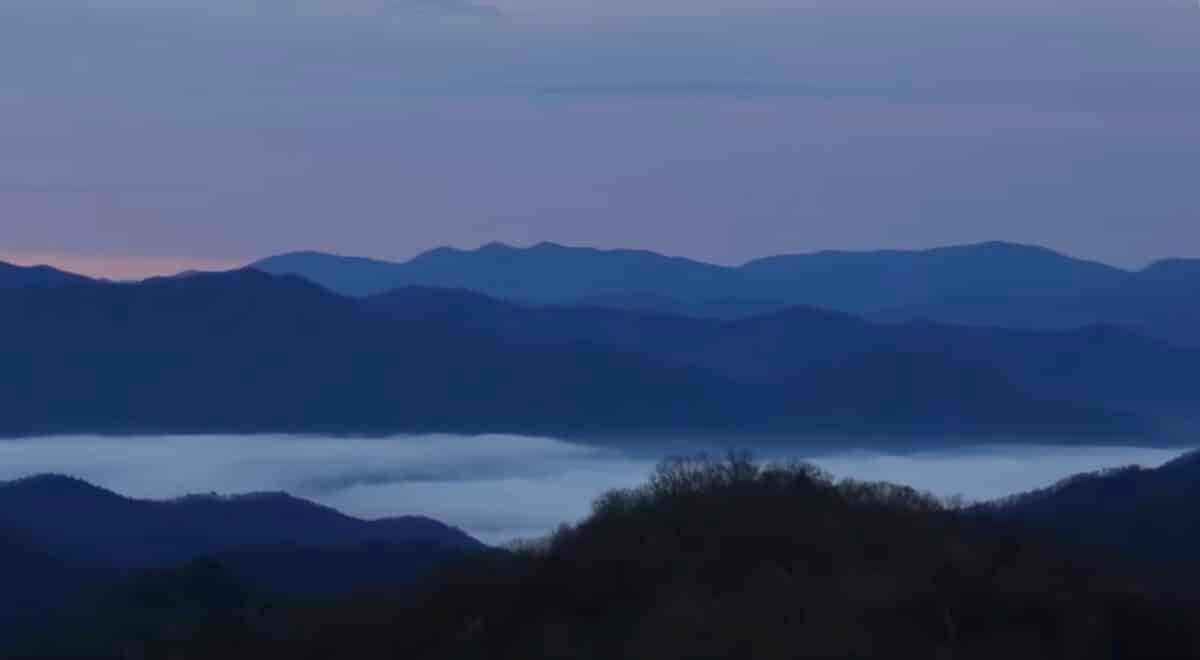
The Great Smoky Mountains, the most visited National Park int he United States, stretches over 500,000 acres through both Tennessee and North Carolina. It features cascading streams, vibrant foliage all-year-round, and over 20,000 species, all living in a temperate rainforest climate. But how did it get the “Smoky” name? Vox explored this regions unique hazy effect and its history with indigenous presence.
The “Smoky” name originates in the mountains’ iconic blue haze (the mountains are often called “Shaconage” in Cherokee, meaning “blue”, but frequently embellished to “place of blue smoke”). It’s caused by the orographic precipitation and volatile organic compounds released by dense vegetation, causing a scattering of sunlight that creates the blueish effect.
