

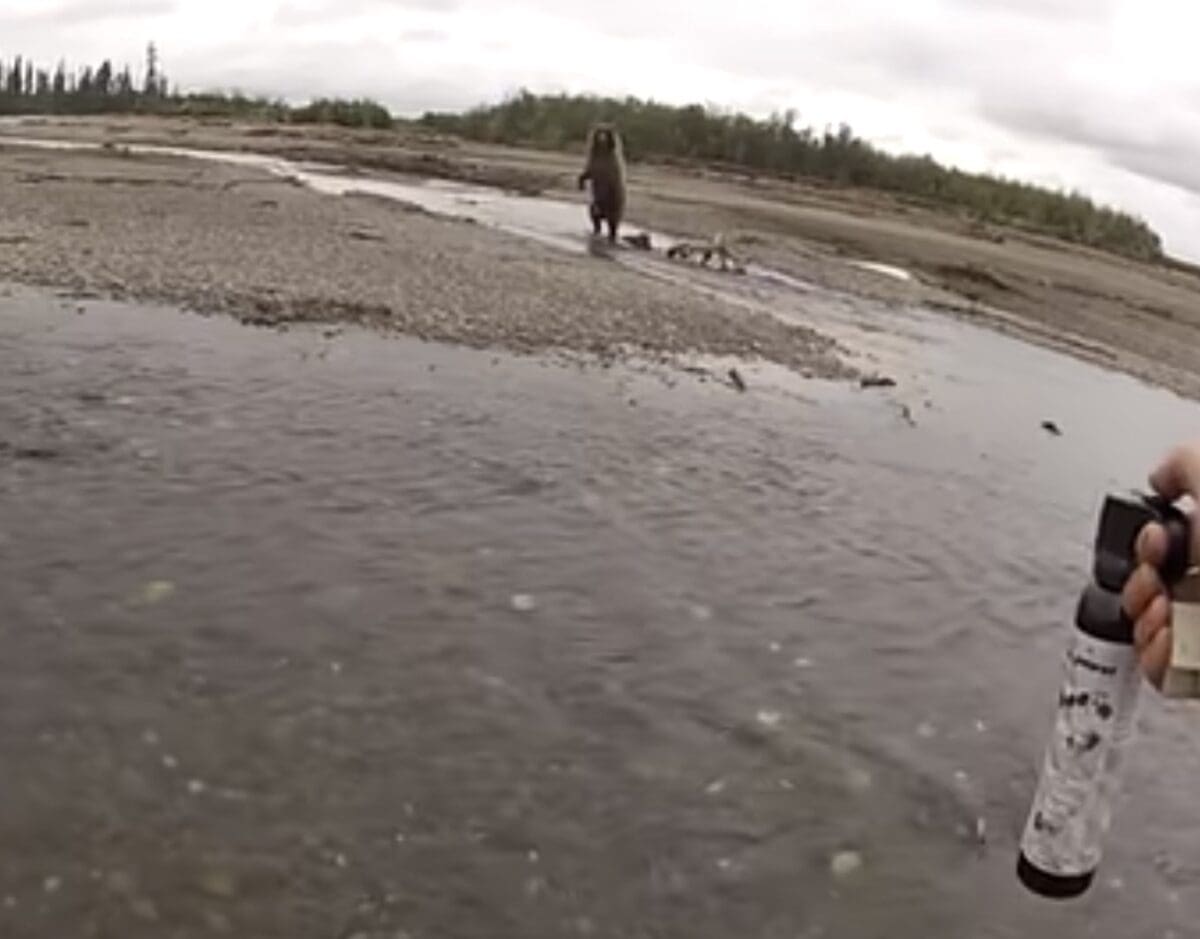
Bear spray is among the best way to deter approaching grizzly bears. The substance is made with 1-2% capsaicin per EPA guidelines, inflames the eyes and upper respiratory system of a target upon impact. Between 1996 and 2006, bear spray showed 90% effectiveness in 40 incidents where it was used properly against a bear.
Alaska is home to an estimated 30,000 brown bears statewide and more than 70% of the North American population. Living and recreating in Alaska means living and recreating around bears. Those who live in the state or plan on visiting are encouraged to read up on and understand how to behave around grizzlies in the case of an encounter. These fishermen approached by what appeared to be a fairly agressive grizzly but their understanding of the animal and their preparedness kept them safe.
Fishermen who see a grizzly bear approach should immediately stop fishing. Bears that learn they can obtain fish just by approaching anglers are very likely to return for more. Alaska Department of Fish & Game guidelines encourage those who’ve been noticed by a grizzly bear to speak calmly to the animal and prepare their deterrent (in this case the bear spray), backing away slowly if possible. If the bear continues to approach, you should stop and stand your ground. In this case standing their ground is what lead to the bear leaving.
Alaska Department of Fish & Game Grizzly Bear Guidelines:
Don’t Fish for Bears
- If a bear learns it can obtain fish just by approaching anglers, it will return for more.
- If a bear approaches you while you are fishing, stop fishing.
- If a bear approaches and you have a fish on your line, give the line slack so the fish doesn’t splash—or if need be, cut your line.
Dealing with Close Encounters
If you see a bear, avoid it and give the bear every opportunity to avoid you. If you do encounter a bear, remain calm and try to observe what the bear is doing. Chances are good you are not in danger. Most bears are interested only in protecting food, cubs or their “personal space.” Once they feel there is no threat, they will move on. Remember the following:
If You See a Bear
- If the bear appears not to have sensed you, move away without alerting it. Keep your eyes on the bear.
- If the bear does notice you, face the bear, stand your ground and talk to it calmly. Let the bear know you are human. Talk in a normal voice. Help the bear recognize you. Try to appear larger by standing close to others in your group or wave your arms slowly above your head. Try to back away slowly, but if the bear follows, stop and hold your ground. Prepare your deterrent if you have one.
- If a bear cannot tell what you are, it may come closer or stand on its hind legs to get a better look or smell. A standing bear is usually curious, not threatening.
- If you take the above actions and the bear continues to focus on you or approach, you should become more assertive: raise your voice, beat on pans, use noisemakers, throw rocks or sticks. Use your deterrent if you have one. Drive a bear off rather than let it follow you. If you are with others, group together to look big and stand your ground.
