

Despite modern satellites and increasingly detailed maps, islands are still emerging and being identified around the world. A fascinating investigation by Curiosity Dude explores the history of the last islands discovered by humans and reveals how difficult it can be to determine exactly when an island was discovered.
The answer depends on what qualifies as a discovery. Some islands were spotted centuries before explorers could reach them, while others remained incorrectly mapped for decades. More recently, natural events have created entirely new islands.
Islands That Remained Hidden for Centuries
Bouvet Island in the South Atlantic was first spotted by French explorer Jean-Baptiste Charles Bouvet de Lozier in 1739. However, he recorded its location incorrectly, and subsequent explorers struggled to find it. British whalers encountered the island again in 1808, confirming its existence.
Other discoveries took even longer to verify. Russian explorer Fabian von Bellingshausen spotted Peter I Island near Antarctica in 1821, but difficult conditions prevented anyone from landing until 1929.
In the Russian Arctic, the discovery of Severnaya Zemlya in 1913 initially appeared to reveal a single landmass. Expeditions between 1930 and 1932 eventually established that the territory contained four major islands and numerous smaller ones.
Satellites Changed Island Discovery
By the 20th century, aircraft and satellites were helping researchers identify land that traditional exploration had missed.
In 1948, aerial surveys revealed Prince Charles Island and other previously unmapped landmasses in Canada’s Arctic. Meanwhile, Antarctica’s Thurston Island was incorrectly classified as a peninsula until 1960, despite having been spotted from the air two decades earlier.
Satellite imagery eventually made it possible to identify much smaller features. In 1973, Canadian geographer Betty Fleming spotted a tiny island off Labrador in images from NASA’s Landsat program. The island was later verified in person.
The Latest Island May Not Have Been Newly Discovered
More recently, earthquakes and volcanic eruptions have created temporary islands. Pakistan’s Zalzala Koh emerged after a powerful 2013 earthquake, but waves gradually eroded it. An underwater volcanic eruption near Japan’s Iwo Jima also produced a new island in 2023.
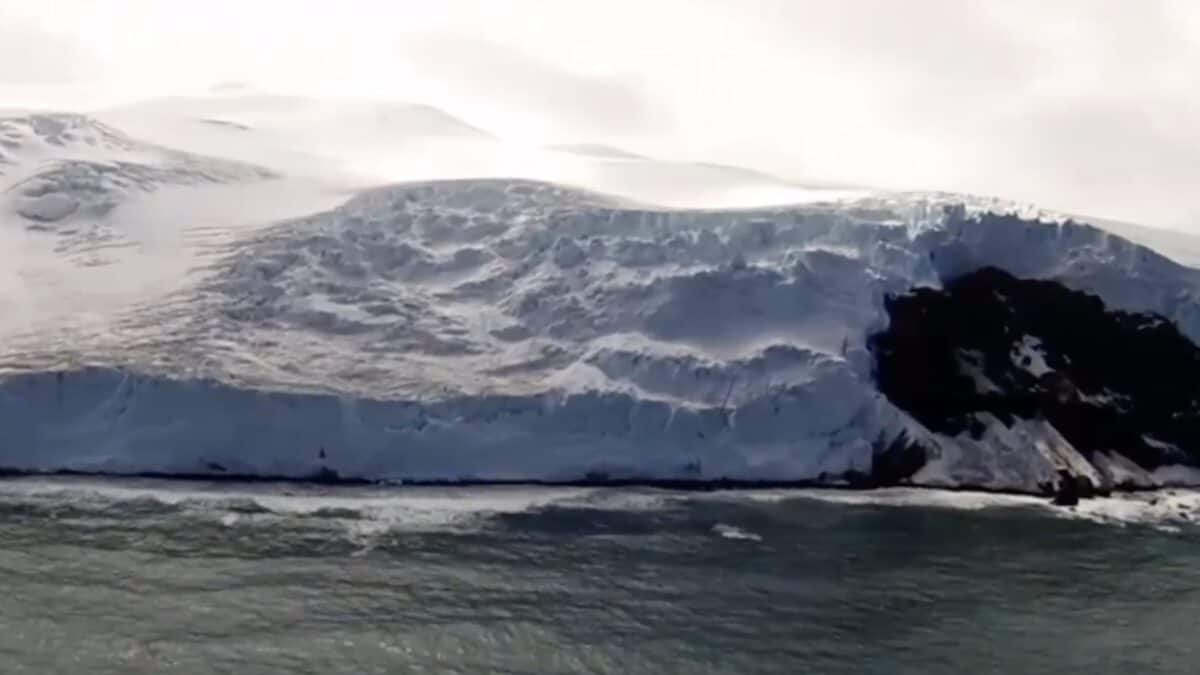
The investigation identifies a different kind of discovery in Alaska. In summer 2025, retreating ice around Prow Knob finally disappeared, leaving the approximately five-kilometer landmass completely surrounded by water. The mountain was already known, but it had only recently become an island.
