

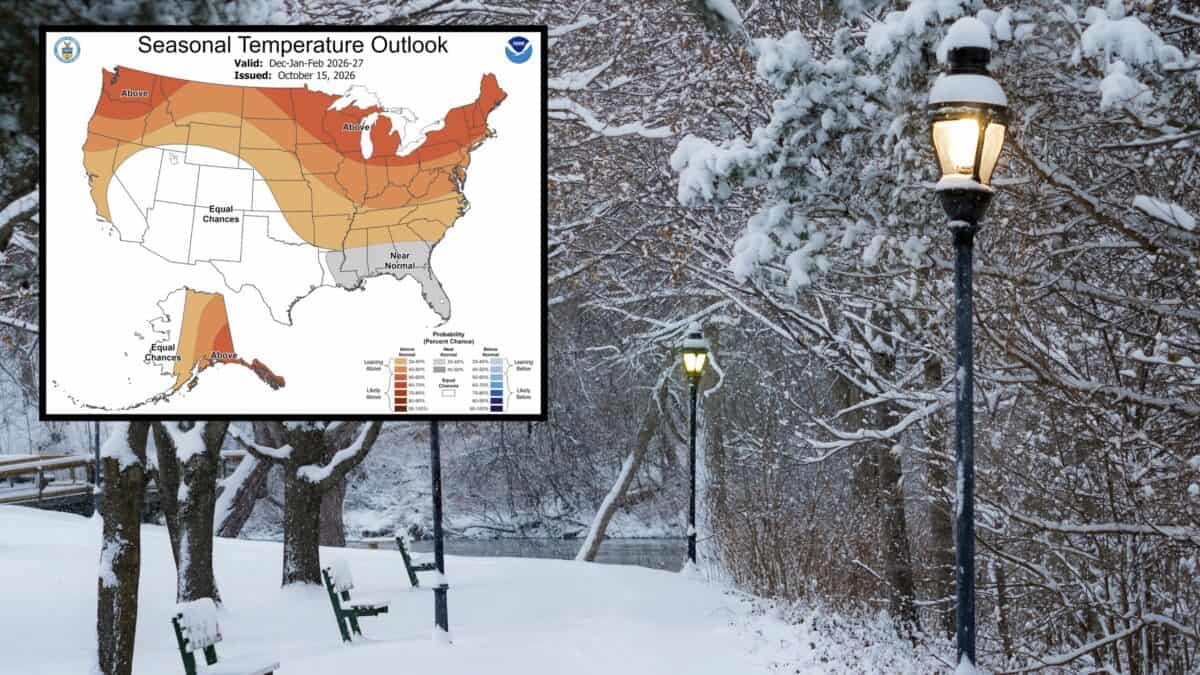
NOAA’s Climate Prediction Center released an updated winter weather outlook on October 15th, 2026, offering a fresh look at what skiers and snowboarders across the United States could experience during the heart of the upcoming season. The latest forecast favors above-normal temperatures across much of the northern United States, while precipitation odds lean wetter across the southern tier, including California, the Southwest and parts of the southern Rockies.
The updated outlook covers December 2026 through February 2027 and reflects the growing influence of a strong El Niño. While the maps do not predict exact snowfall totals, they provide an indication of where temperatures and precipitation may trend during meteorological winter.
NOAA’s Updated Winter Temperature Outlook
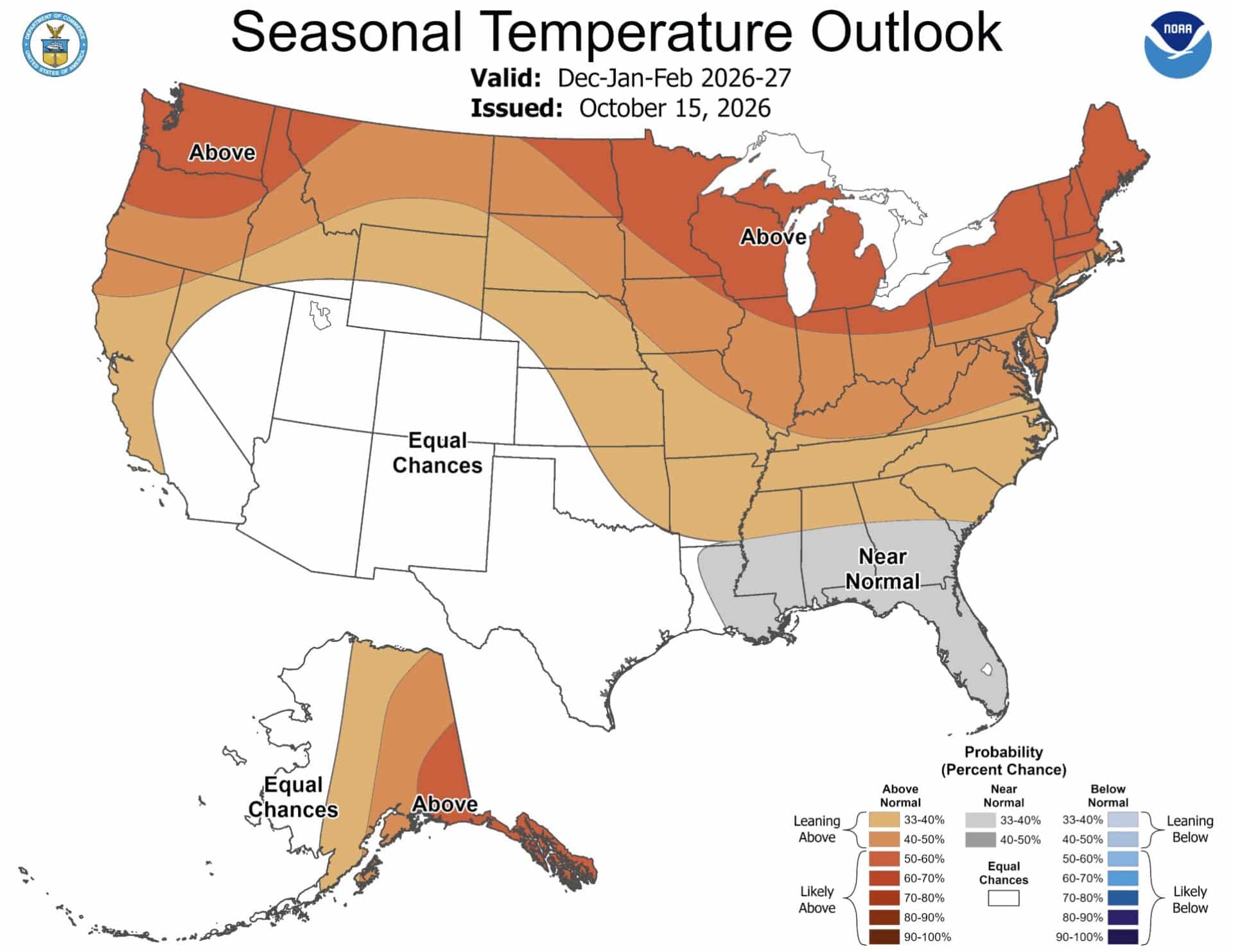
NOAA’s temperature outlook favors warmer-than-average conditions across much of the northern United States, including the Pacific Northwest, northern Rockies, Upper Midwest, Great Lakes and Northeast. The strongest signals extend across portions of the northern Rockies and the Upper Mississippi Valley.
For skiers, warmer seasonal temperatures could create challenges at resorts where snowmaking and natural snowfall depend on sustained cold weather. Areas across Washington, Idaho and Montana could experience periods of above-average temperatures, although the outlook does not rule out major cold outbreaks or significant powder days.
The forecast is more uncertain across much of the Southwest and portions of the central United States, where NOAA indicates equal chances of above-normal, near-normal or below-normal temperatures.
That leaves ski destinations in Colorado and Utah without a definitive seasonal temperature signal in portions of the region. Resorts such as Vail, Breckenridge, Snowbird and Alta could still see substantial snowfall even if temperatures fluctuate throughout the winter.
NOAA’s Winter Precipitation Forecast
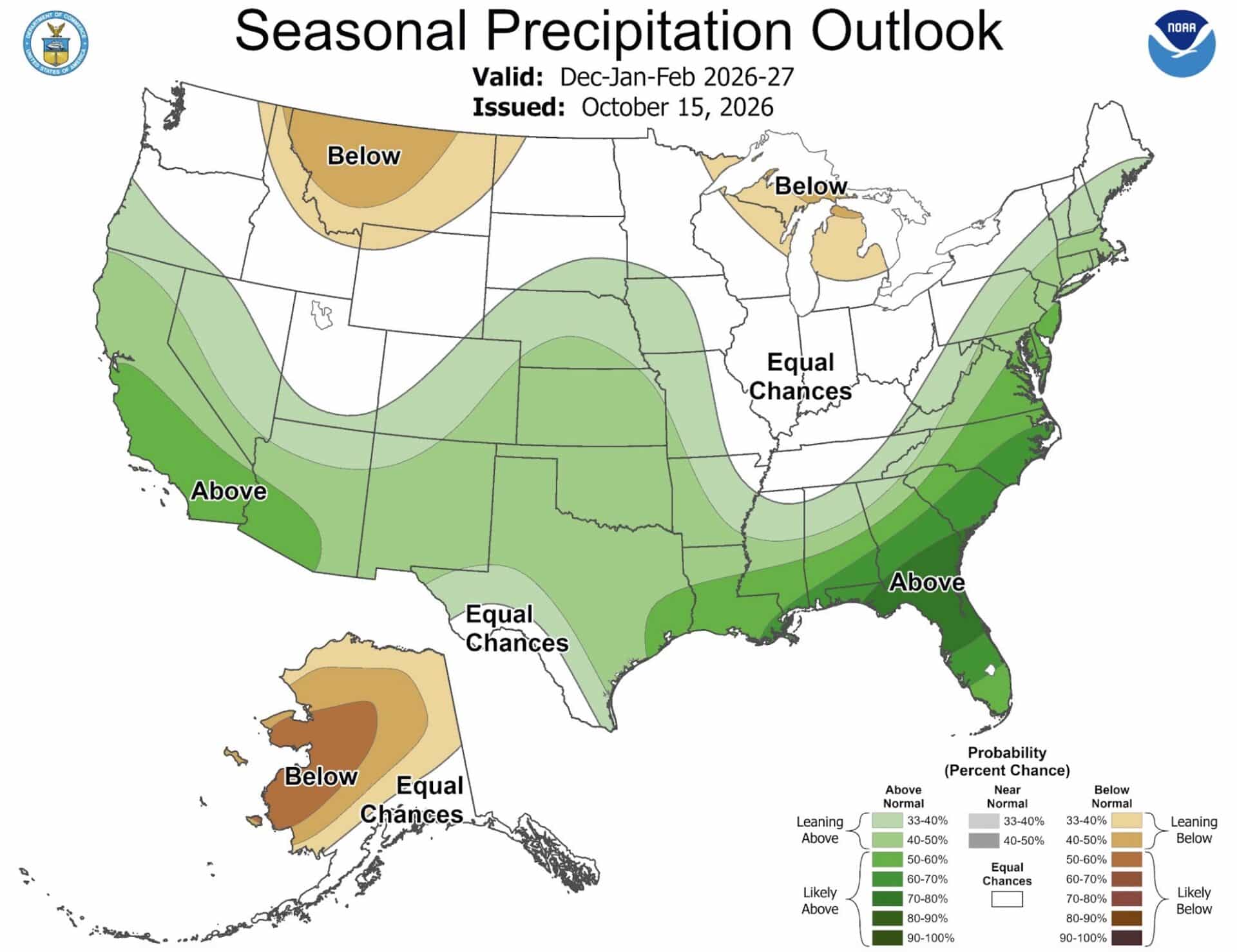
The precipitation outlook offers a potentially encouraging signal for several major ski regions. NOAA favors above-normal precipitation across much of the southern United States, including California, the Southwest and portions of the southern Rockies. The wetter signal also extends across much of the Southeast and along the East Coast.
This pattern could benefit ski areas in California, Arizona, New Mexico and southern Colorado if enough of that precipitation falls as snow. Mammoth Mountain, Palisades Tahoe, Taos Ski Valley, Wolf Creek and Purgatory are among the destinations worth watching as the season develops.
However, increased precipitation does not automatically translate into more snowfall. Warmer temperatures can raise snow levels and cause some mountain storms to produce rain instead of snow, particularly at lower elevations.
Meanwhile, NOAA favors below-normal precipitation across portions of the northern Rockies and northwestern interior, along with parts of the Great Lakes region. That signal could present challenges for resorts in those areas if fewer productive storms arrive during the season.
What the Outlook Means for Ski Season
Skiers should keep in mind that NOAA’s seasonal outlook is not a snowfall forecast. It estimates the likelihood of temperatures and total precipitation finishing above or below historical averages, rather than predicting how many inches of snow individual resorts will receive.
Individual storms, elevation, storm tracks and temperature changes will ultimately determine conditions on the slopes. Even regions with a warmer or drier seasonal outlook can experience major snowstorms.
