

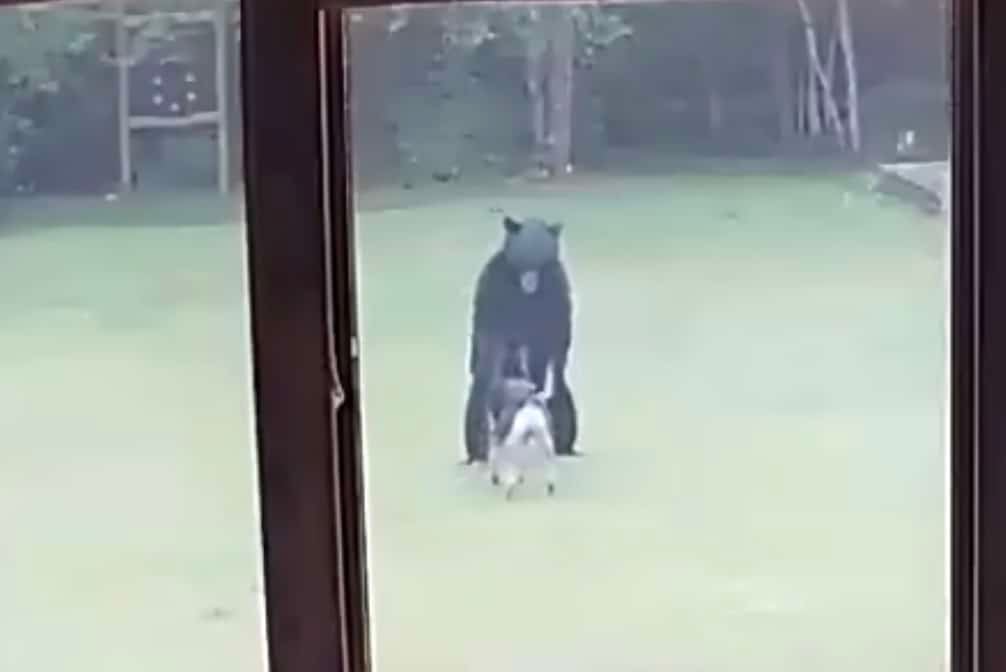
Vermont — A wild black bear and a domestic dog struck up an unlikely friendship and the entire encounter was captured on a home security camera.
Vermont resident and mother of two, Jenn Sargent, is the owner of the German shepherd mix and was unaware it had made a new friend until she got a call from her neighbors notifying her that her dog Jameson was in the backyard playing with a bear in the grass.
Instead of barking at the bear or seeking shelter, Jameson egged it on to play and succeeded in doing so as the pair chased each other around the yard and the back bear stood on its hind legs before going in for a few investigative sniffs.
Sargent estimates the pair played with each other for around 7 minutes before calling it quits. She was thankful that her children were not outside for the impromptu playdate and was glad the it was juvenile bear that came through her property rather than its mother who had been spotted around town.
Sargent noted that Jameson is usually quite territorial and not playful with strangers but made an exception for its black bear friend and appeared to be looking for him to come back and play after it left.
While this encounter is undeniably cute, living in bear country is serious business and Vermonters are encouraged to take preventive measure to avoid negative encounters. Learn more about Vermont bear safety below.
Human-Bear Conflicts: A Fed Bear is a Dead Bear
People often encourage bears to come out of the forest by providing food without realizing it. When bears become used to these food sources and have frequent contact with humans they become more dependent on human foods and less wary. This is bad news for the bears. This puts bears at increased risk to vehicle collisions and of being killed in defense of property.
The most common sources of food that attract bears are: pet food, bird feeders, barbecue grills, garbage, household trash containers, open dumpsters, and campsites with accessible food and food wastes.
Purposely feeding a bear is not just bad for the bear, it’s also illegal.
If you see a bear in a residential area or you encounter an aggressive bear, please contact the Vermont Fish & Wildlife Department.
Protecting Your Home and Property
Vermonters must take reasonable measures to protect their property from bears before lethal force can be taken. Some of these measures include:
- Keep chickens and honeybees secure within an electric fence or other bear-proof enclosure.
- Never feed bears, deliberately or accidentally.
- Feed your pets indoors.
- Feed birds from December to March only.
- Store trash in a secure place. Trash cans alone are not enough!
The Fish & Wildlife Department will not reimburse claimants for bear damage to livestock, fruit, or bees. Farmers will be reimbursed as long as their land is not posted against hunting.
Persons suffering bear damage should contact the nearest Vermont Fish & Wildlife office or local state game warden prior to taking any control action on their own. Fish & Wildlife personnel will recommend appropriate measures or control strategies that can lessen the problem.
It is your responsibility to avoid attracting bears. Bears are wild animals that belong in their natural habitat—the forest.
