

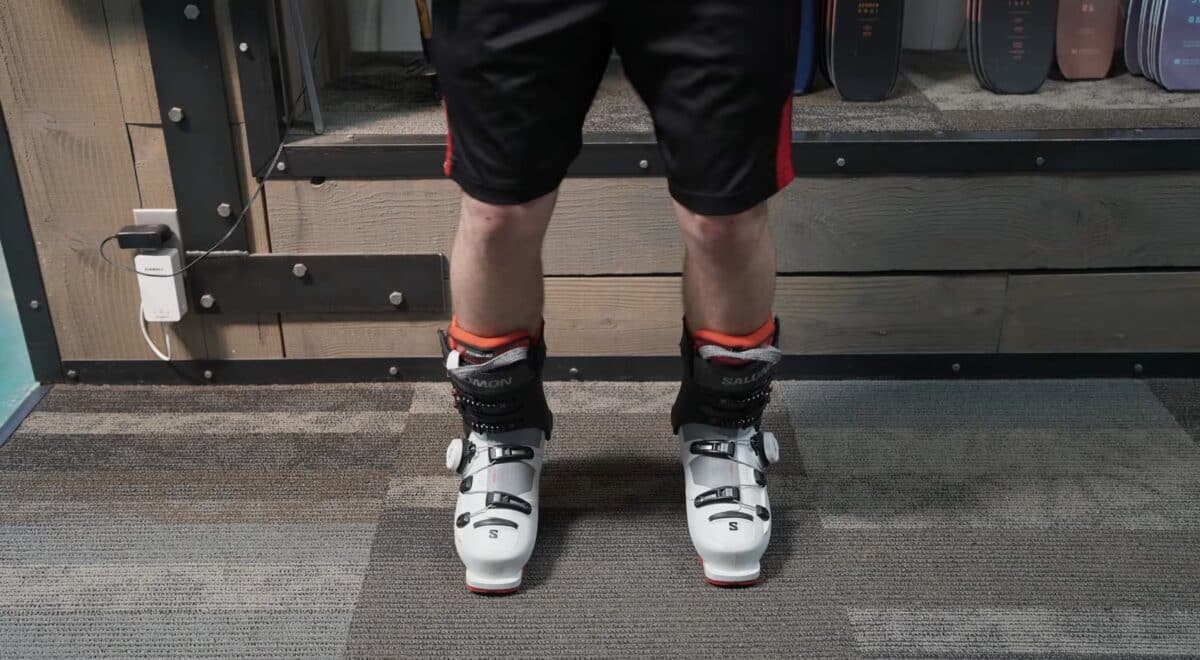
There are a lot of ski boot modifications that many people need to get their boots feeling and fitting right. Foot beds and arch support is a necessity for almost anyone, whether they’re custom or drop ins. Beyond that you start to get into more complicated and permanent modifications, but most are standard enough. Boot canting tends to take things up a notch, but it can still be vital to getting the right fit and form. This video from Boot Solutions by Powder House breaks down how boot canting works and who it’s good for.
Boot canting works to achieve a neutral skiing stance where the hips, kneed, and ankles from a straight line with the skis flat or slightly on the inside edge. There are two primary types of adjustments. Cuff alignment adjusts the cuff angle to match your lower leg angle. It doesn’t significantly change your stance, but it can make boots quite a bit more comfortable. Boot sole canting uses angled shims to actually adjust your stance to neutral.
Canting can be super beneficial for knock-kneed skiers and bow-legged skiers. That said, it isn’t for everyone, and it’s vital that you discuss any boot work with a boot fitter.