

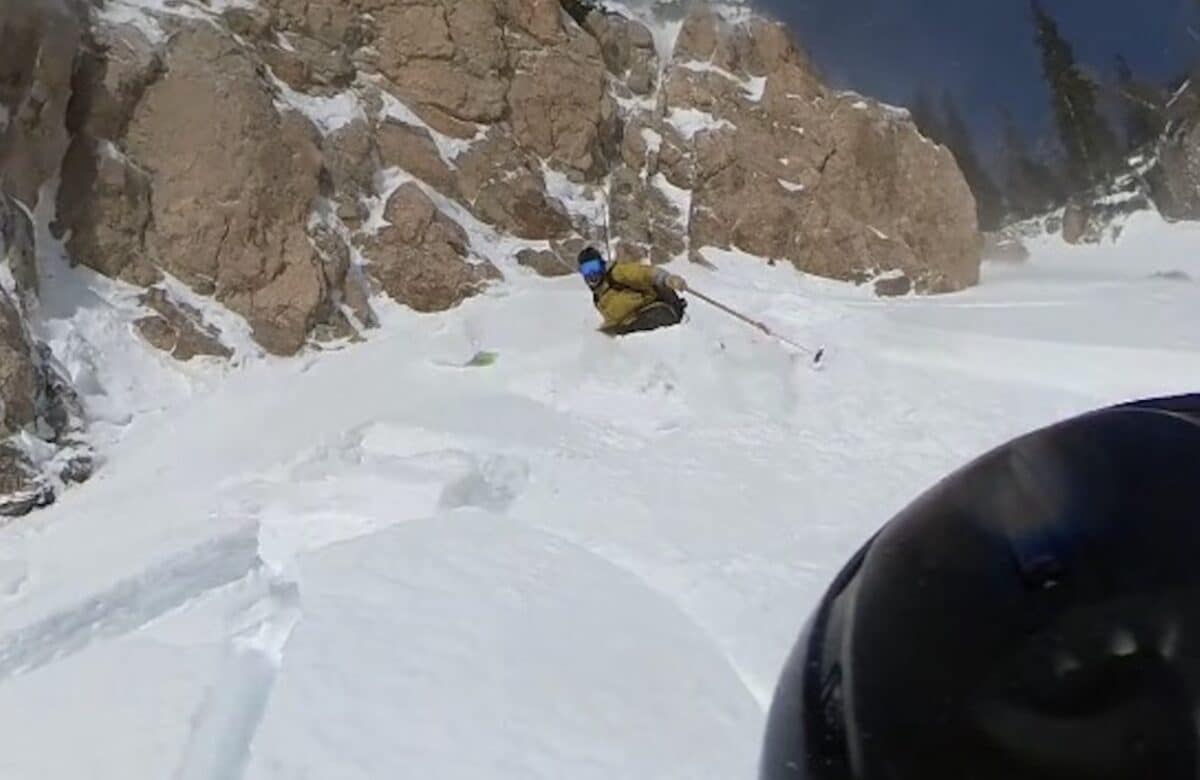
The following video captured January 10, 2026 documents an human triggered avalanche in within Rocky Mountain National Park.
A group of three backcountry skiers/riders was descending the line. They intentionally ski-cut the upper chute to test the slope, which triggered a wind slab avalanche that released and swept clear part of the upper terrain, carrying one member with it.
As the third skier entered the untouched lower section of the slope, the snow fractured above him, producing an 8–14 inch crown. He was caught, carried downslope, briefly buried, and managed to self-arrest by grabbing a tree — though the impact dislocated his shoulder in the process.
While the other two hurried down to assist their injured partner, another rider was caught in a secondary slide (likely a hangfire triggered by their movement). Fortunately, the group handled the injury, regrouped, and safely made their way out of the area. No other serious injuries were reported.
This serves as a stark reminder of how persistent wind slabs can remain reactive — even after initial mitigation — and how quickly situations can escalate in consequential terrain. Always stay vigilant with avalanche forecasting, spacing, and group protocols in the backcountry.
Colorado Avalanche Information Center – CAIC:
This video captures an incident that happened today in Haiyaha Couloir in Rocky Mountain National Park. Two riders in a group of three were caught and carried in an avalanche. The group reported ski cutting the upper chute, which triggered a Wind Slab avalanche that cleared part of the slope. When a skier entered the untouched lower slope, it fractured above him with an 8–14” crown. He was caught, carried, briefly buried, and dislocated his shoulder while grabbing a tree. As partners moved to help, another rider was caught in a slide. Thankfully, the group was able to address the injury and safely exit the area.
The group shared their lessons learned and mistakes in their field report. (You can find it in the Field Reports section at colorado.gov/avalanche.) We all benefit when people share information about their incidents so that we can learn from them. Many factors contribute to avalanche accidents, and there are key takeaways we can all glean from reading these reports and studying those factors. We ALL make mistakes. Please keep this in mind and be respectful in your comments.
