

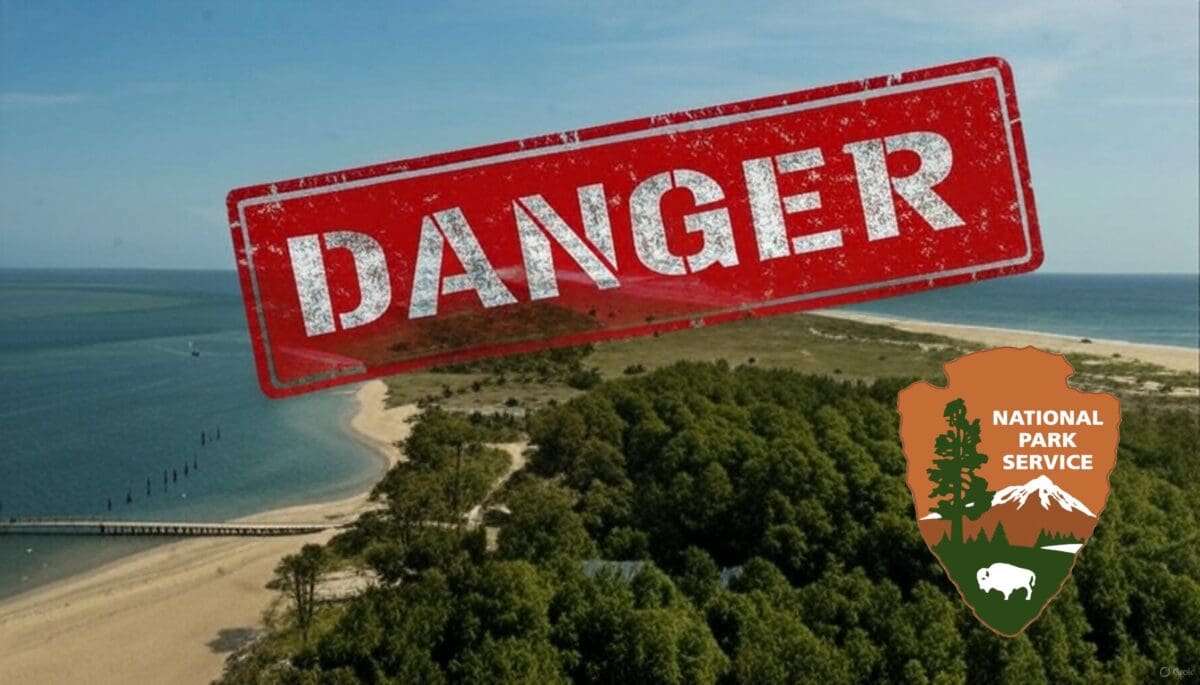
Navigating the Hidden Dangers of Shark Island at Cape Lookout National Park includes being aware of the potential presence of National Park quicksand.
Cape Lookout National Park, a stunning coastal gem along North Carolina’s Outer Banks, is renowned for its pristine beaches, historic lighthouse, and untamed natural beauty. However, a recent warning from park authorities has brought attention to a lesser-known hazard near the Point of Cape Lookout: Shark Island. This emerging sandbar, lying just outside the park’s jurisdiction, poses a unique and potentially costly danger to visitors due to its soft, unstable sand, which behaves eerily like quicksand. That is why the National Park Service issued a Danger Warning for Park visitors this week.
The Rise of Shark Island: A Deceptive Sandbar
Shark Island is a relatively new feature near the Point of Cape Lookout, where shifting currents and sediment have formed a sandbar that appears to connect to the mainland. At first glance, it might look like an inviting stretch of beach, perfect for a stroll or a picnic. However, appearances can be deceiving. The sand on Shark Island is described as exceptionally soft and unstable, creating conditions that make navigation difficult and increase the risk of becoming stuck. This isn’t your typical firm beach sand—it’s a shifting, sinking surface that can trap unsuspecting visitors, much like quicksand.
Why Shark Island’s Sand Is Like Quicksand
Quicksand, often dramatized in movies, is a mixture of sand, water, and sometimes clay that creates a soupy, unstable surface. When weight is applied, the mixture loses its ability to support, causing objects or people to sink. Shark Island’s sand shares similar characteristics due to its loose, water-saturated composition. Here’s why it’s so dangerous:
- Soft and Unstable Surface: The sand on Shark Island lacks the compaction found on typical beaches. Constant tidal activity and shifting currents keep the sand loose and saturated with water, creating a deceptive surface that gives way underfoot.
- Risk of Entrapment: Stepping onto this soft sand can cause visitors to sink, sometimes up to their knees or deeper. The more someone struggles, the more likely they are to become further entrenched, much like quicksand. This can be exhausting and, in some cases, dangerous, especially if the tide is rising.
- Difficult Navigation: The uneven and unpredictable terrain makes walking across Shark Island a challenge. Visitors may find themselves unable to move forward or backward without assistance, increasing the risk of injury or stranding.
- Outside Park Jurisdiction: Because Shark Island lies outside Cape Lookout National Park’s jurisdiction, rescue or assistance may not be immediately available. This isolation amplifies the risks, as visitors may be left to fend for themselves in an emergency.
The Costly Outcome of Ignoring the Warning
The park’s warning about Shark Island isn’t just about physical danger—it also shows the potential for costly consequences. Getting stuck in the soft sand can lead to damaged equipment, such as vehicles or boats, if visitors attempt to traverse the sandbar. For example, off-road vehicles or boats that get too close may become mired in the sand, requiring expensive towing or recovery efforts. Additionally, the physical toll of trying to free oneself from the sand can lead to exhaustion, dehydration, or injury, particularly in the remote setting of Cape Lookout.
For those exploring by foot, the risk of becoming stuck could lead to being stranded as tides shift, potentially cutting off access to safer ground. In extreme cases, this could necessitate a rescue operation, which is not only costly but also dangerous for both visitors and responders in an area outside the park’s direct oversight.
Staying Safe at Cape Lookout: Tips for Visitors
While Shark Island’s dangers may sound intimidating, they can be easily avoided with proper precautions. Here are some tips to ensure a safe and enjoyable visit to Cape Lookout National Park:
- Heed Park Warnings: Always pay attention to warnings and advisories issued by Cape Lookout National Park. If Shark Island or similar areas are flagged as hazardous, avoid them entirely.
- Stick to Established Paths: Stay on firm, well-traveled beaches and trails within the park’s boundaries. Avoid venturing onto unmarked or unfamiliar sandbars, especially those described as soft or unstable.
- Check Tide Schedules: Tides can dramatically affect coastal areas, including sandbars like Shark Island. Before heading out, check tide schedules to avoid being caught in rising waters.
- Travel with a Group: Exploring with others increases safety. If someone gets stuck, companions can assist or seek help, reducing the risk of being stranded alone.
- Carry Emergency Supplies: Bring water, a first-aid kit, and a fully charged phone or communication device. In remote areas like Cape Lookout, being prepared for unexpected situations is critical.
- Know Your Limits: If you’re unsure about the terrain or conditions, don’t take unnecessary risks. The beauty of Cape Lookout can be enjoyed safely from established areas within the park.
Why Cape Lookout Is Still Worth Visiting
Despite the risks associated with Shark Island, Cape Lookout National Park remains a very cool destination. It’s 56 miles of undeveloped shoreline, wild horses, and a historic lighthouse offer a unique glimpse into the untouched beauty of the Outer Banks. By staying informed and cautious, visitors can fully enjoy the park’s wonders without falling victim to hazards like Shark Island’s quicksand-like sand.
Final Thoughts: Respecting Nature’s Power
Shark Island serves as a reminder that nature, while beautiful, can be unpredictable and unforgiving. The soft, sinking sand of this emerging sandbar is a natural phenomenon, not unlike quicksand, that demands respect and caution. By staying informed, following park guidelines, and exercising good judgment, visitors can safely explore Cape Lookout National Park and avoid the costly and dangerous pitfalls of Shark Island.
So, the next time you plan a trip to Cape Lookout, take a moment to appreciate the wild, untamed beauty of the area—but steer clear of Shark Island. Stick to the safe paths, soak in the views, and let the adventure unfold without sinking into trouble.
Have you visited Cape Lookout or encountered a similar natural hazard? Share your tips for staying safe in the comments below!
