

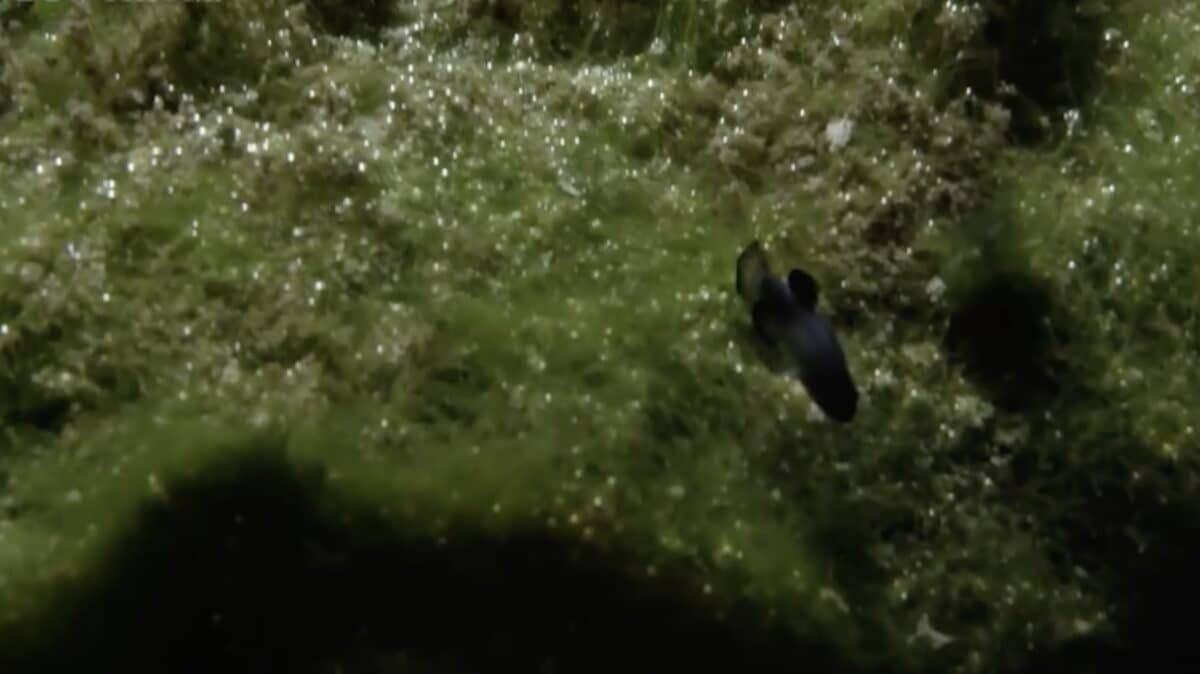
Deep in the Mojave Desert, tucked within Death Valley National Park, lies a geological oddity called Devils Hole, a water-filled fault opening that descends beyond 436 feet with no known bottom. The water sits at a constant 93°F with dangerously low dissolved oxygen levels, making it lethal to nearly any fish on the planet. Yet somehow, a tiny species called the Devils Hole pupfish has carved out an existence here, and nowhere else on Earth.
With fewer than 40 individuals currently surviving in the wild, these fish are considered among the rarest vertebrates on the planet. The population has nearly collapsed at least three times since the 1950s, when human activity in the region began disrupting the ecosystem. During the winter of 2024/25, two poorly timed earthquakes triggered waves called seiches that swept the algae, invertebrates, and food sources completely off the rocky shelf the fish depend on. The population plummeted from over 200 fish in September 2024 to as few as 20 by late February.
In response, wildlife managers drew on a captive “lifeboat” population maintained at the nearby Ash Meadows Fish Conservation Facility. For the first time in a decade, 43 fish were stocked back into Devils Hole across two separate events. Since then, the population has stabilized and biologists have begun observing eggs and juvenile fish.
The stakes extend well beyond this single species. Researchers are still studying how these fish survive on the edge of what biology allows, and the lessons could inform medical research and conservation efforts for other vulnerable desert species facing similar threats.
