

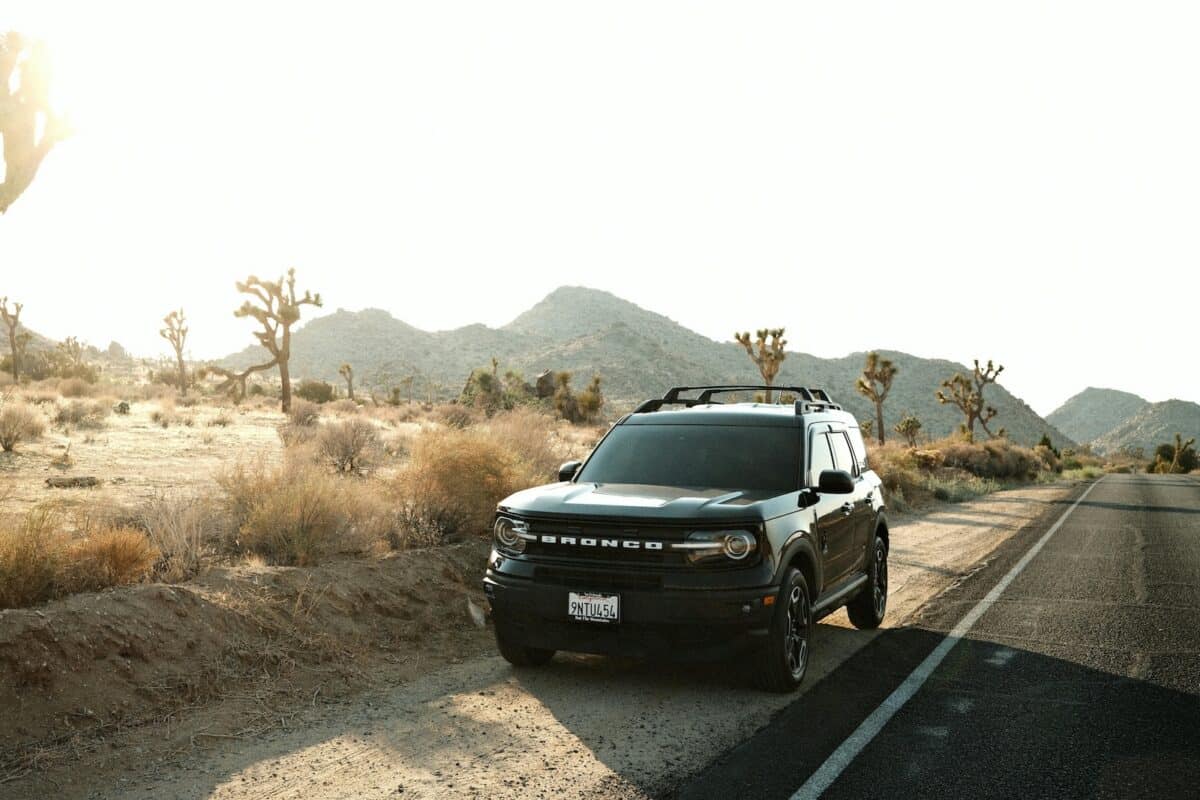
CALIFORNIA — Springtime is amazing time of year to visit Joshua Tree National Park where warming temps across this vast swatch of wilderness in southern California trigger the park’s resident Desert Tortoises to emerge from their burrows, forage for food, and look for mates.
These incredibly resilient reptiles have been roaming the earth for the past 15 to 20 million years but there is a modern convenience that’s popped up in the last 100 years or so that almost every visitor to Joshua Tree uses that threatens livelihood of Desert Tortoises, cars.
As it is getting warmer, Desert Tortoises are becoming more active across the 1,200 square miles of desert terrain that encompasses the park and officials want to warn visitors that they sometimes they seek shade beneath parked vehicles to escape the desert heat.
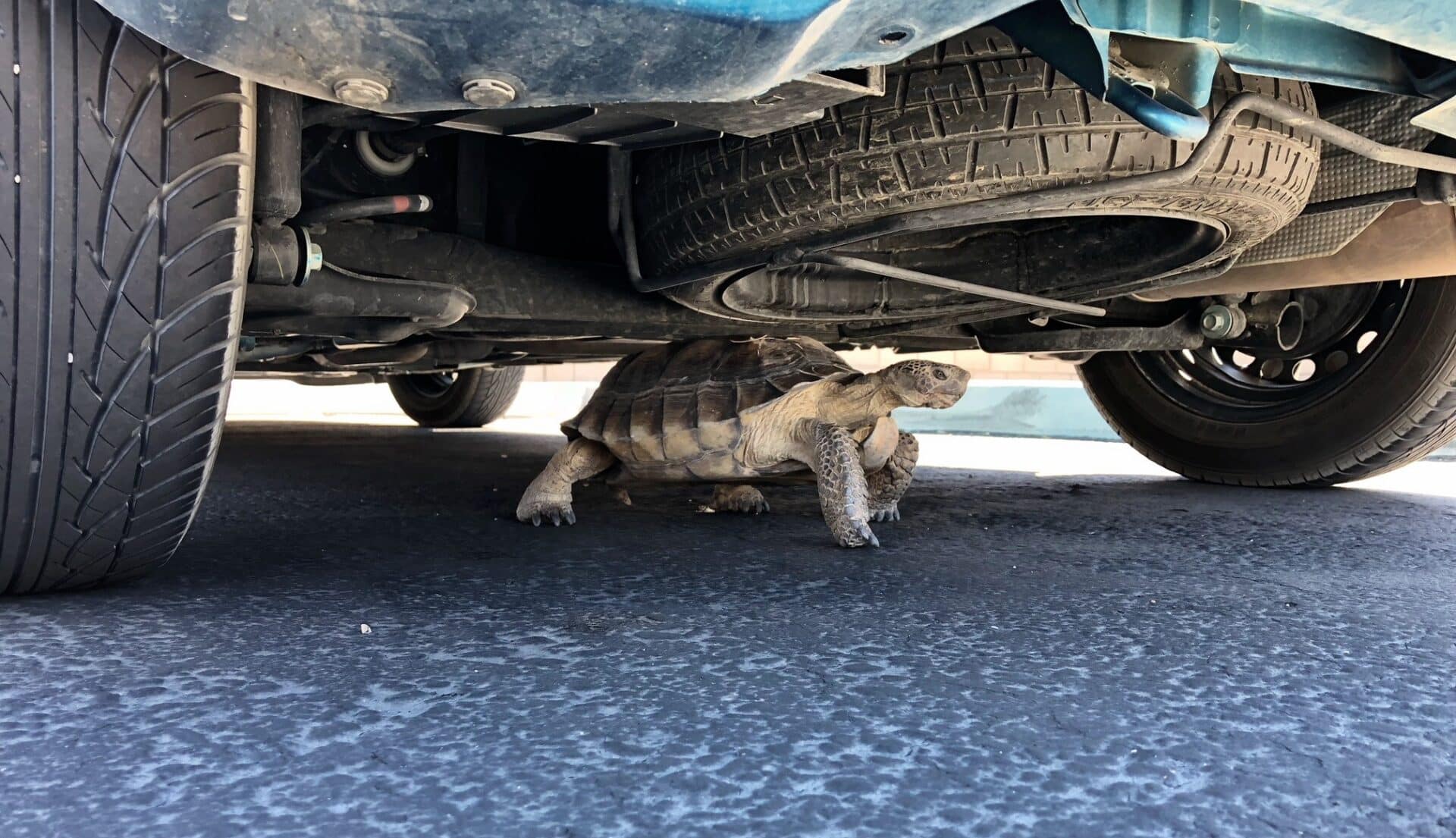
To avoid any unfortunate accidents, visitors are encouraged to take a quick moment to look underneath and around your tires before starting your cars.
“By taking a few extra seconds to check under your vehicle, you can help protect these slow-moving desert residents as they seek tasty desert vegetation. If you see a tortoise in the road or near your vehicle, give it space and allow it to move along on its own. Never pick up or handle a tortoise unless it is in immediate danger.”
Do your part in protecting California’s state reptile and give a quick look under your car before pulling away in Joshua Tree National Park. Be safe, have fun, learn more about Gopherus agassizii below:
What to do if you encounter a Desert Tortoise:
If you see a tortoise in the wild, it is important not to pick it up. Like a young child who may wet his pants when afraid, a tortoise will “void” its bladder if frightened. This could have life-threatening consequences for the animal if it is not able to replenish its water supply. Handling wild tortoises is illegal under the Endangered Species Act. The only reason for picking one up is when the tortoise is on or near a road and is in imminent danger of being struck by a vehicle. If you must move one, grasp it firmly with two hands, keep it just a few inches above the ground, and move it off the road about 50 feet in the same direction in which it was headed. Then place it gently back on the ground (preferably in the shade).
It is illegal to remove a tortoise from the wild and bring it home as a pet. There are plenty of rescued tortoises looking for good homes. If you are interested in adopting one, please contact one of the park’s visitor centers or a chapter of the California Turtle and Tortoise Club. Do not release pet tortoises into the wild; they may carry a number of diseases. Even if a domesticated tortoise appears healthy it probably will not be able to fend for itself after being dumped in the desert. It is used to being cared for, and may have lost its instincts to forage and protect itself from predators. Beyond that, tortoises are highly territorial and an intruder will not be tolerated for long. Tortoises have good vision and a good sense of smell, and they know their territory well. During its lifetime of 50 to 100 years, a wild tortoise rarely moves more than a couple of miles from its birthplace and is intimately familiar with the resources within its territory. These resources are vital to its survival, and may not support a new addition.
The aboriginal peoples who lived in the western deserts were well acquainted with the tortoise. Although not all groups would eat tortoise meat, it was generally prized for its food value. Some hunters lured tortoises onto the surface of the ground by placing a dish of water at the opening of a burrow. Tortoises were then roasted in cooking pits lined with hot rocks. The shells were put to a variety of uses: they served as bowls, scoops, spoons, ladles, and were sometimes ground into powder for medicinal purposes. They were also used to make ceremonial rattles: the carapace, or upper dome-shaped half of the shell, and the plastron, or flat underside of the shell, were joined together after being filled with small stones or seeds. The openings at either end were plugged with pitch. Tortoise motifs appear in desert rock art and in basketry and pottery. Several creation stories feature a tortoise shell, whose shape evokes the dome of the sky above the earth.
Biologists are currently studying the desert tortoise living within Joshua Tree National Park. Using measurements collected by such sophisticated equipment as radio telemetry and GPS (Global Positioning System), they are gathering information that allows us to increase our understanding of this threatened desert reptile.
Spring is a good time to spot a desert tortoise because the warm temperatures trigger an impulse to emerge from the burrow, forage, and look for mates. If you see one, please fill out a wildlife observation card, available at visitor centers and entrance stations. By slowing your pace, you will increase your chances of catching a glimpse into the unassuming world of the desert tortoise.