

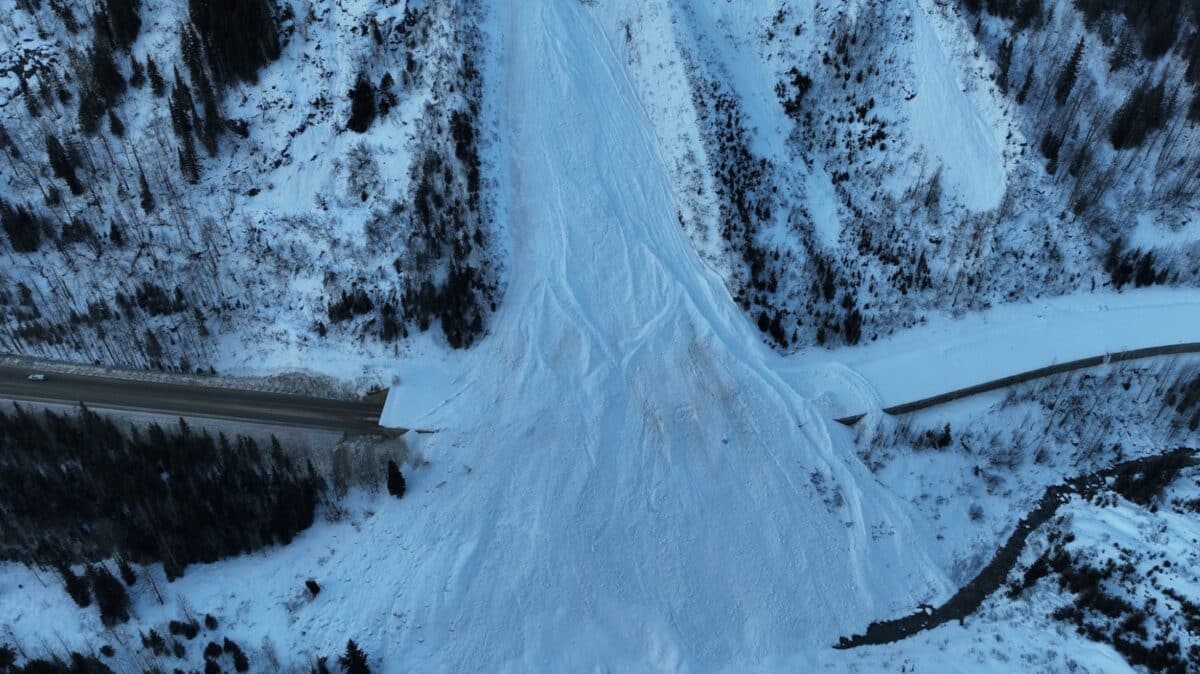
A ferocious storm last week buried a critical stretch of highway through the Canadian Rockies with nearly twice the snowfall forecasters predicted, dropping 8 inches of precipitation onto an already unstable snowpack. Freezing levels climbed to 7,200 feet, setting up the mountains above Rogers Pass in British Columbia for a viscous avalanche cycle.
Rogers Pass sits along the Trans-Canada Highway, the only paved road connecting the interior of Canada through this section of the Rockies. When it closes, there is no detour.
To keep it open, Parks Canada deploys the Canadian Armed Forces under a program called Operation PALACI. Soldiers fire military artillery into avalanche zones above the highway, triggering controlled slides before unstable snow can release on its own and bury the road.
During last week’s storm, crews fired 271 artillery rounds and set off 15 remote explosives, triggering more than 700 avalanches. Of those, 37 were large enough to destroy a car or a building.
Without the artillery program, Parks Canada estimates the highway would have closed the evening of March 16 and stayed shut until at least March 21, followed by nearly another week of cleanup. Total closure time would have stretched to roughly 294 hours.
Instead the road closed for just 65 hours, with three separate openings to move traffic through safely.
Colorado and Utah highway crews use artillery and explosives too, but few avalanche paths in North America demand the kind of sustained military firepower that Rogers Pass requires every single winter.
