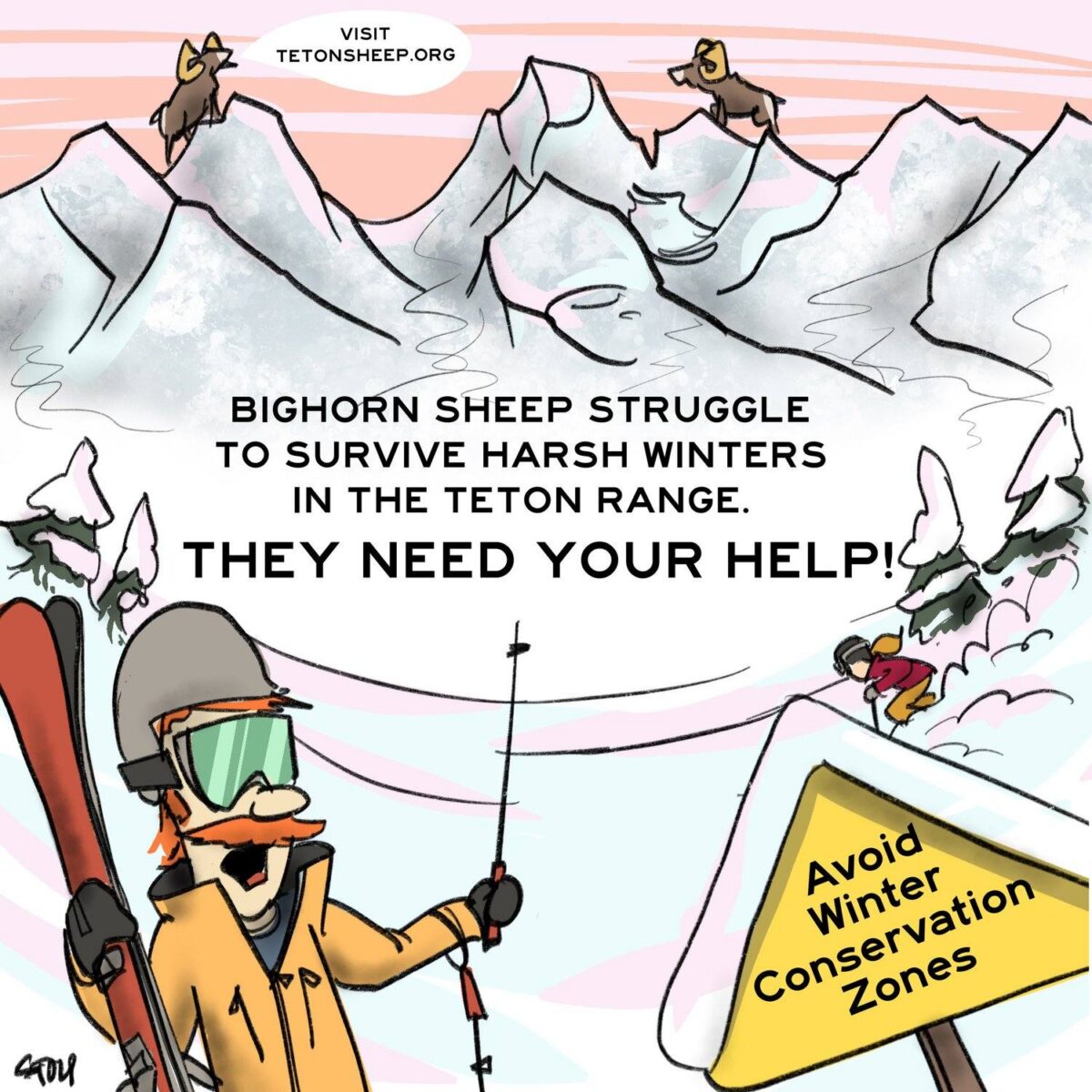
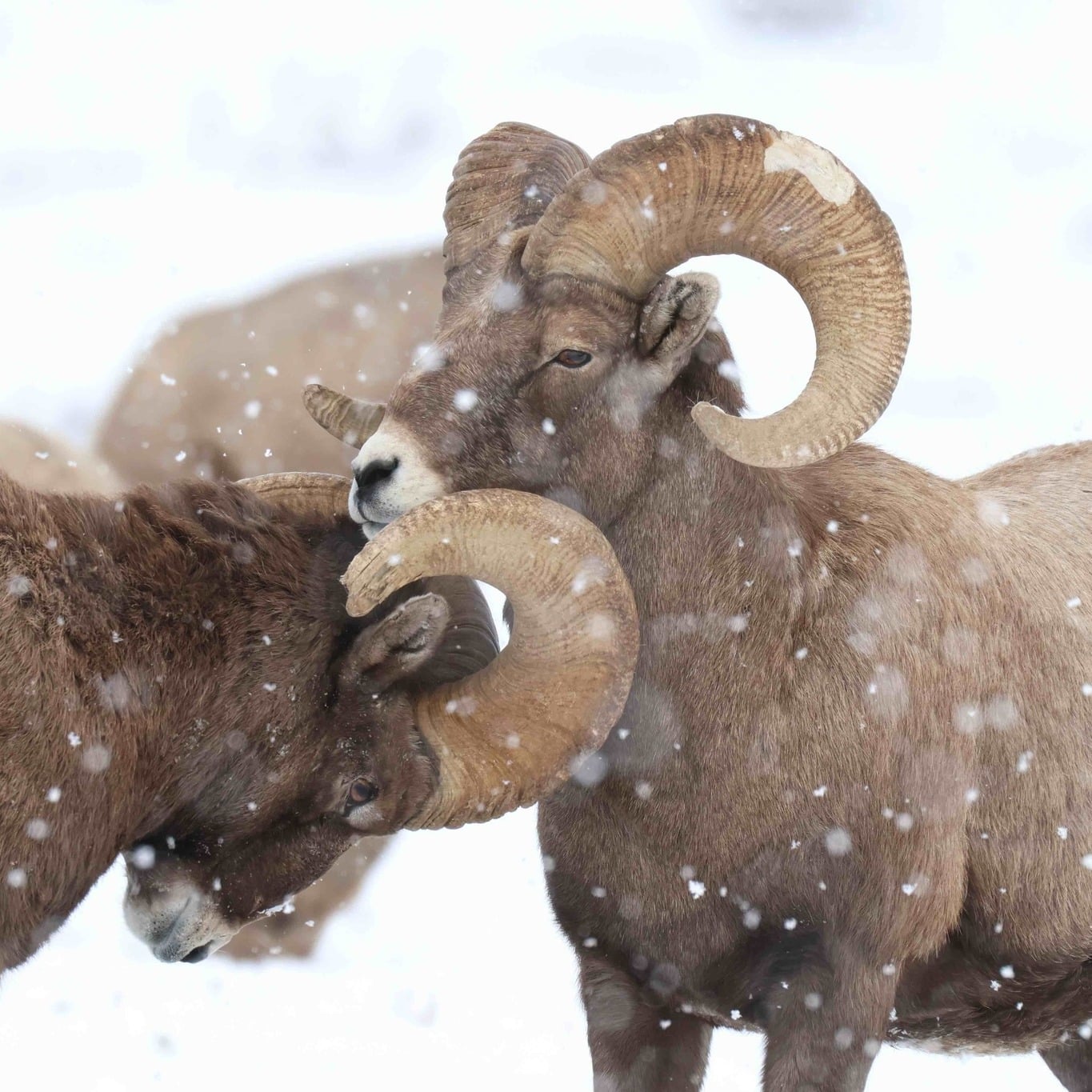
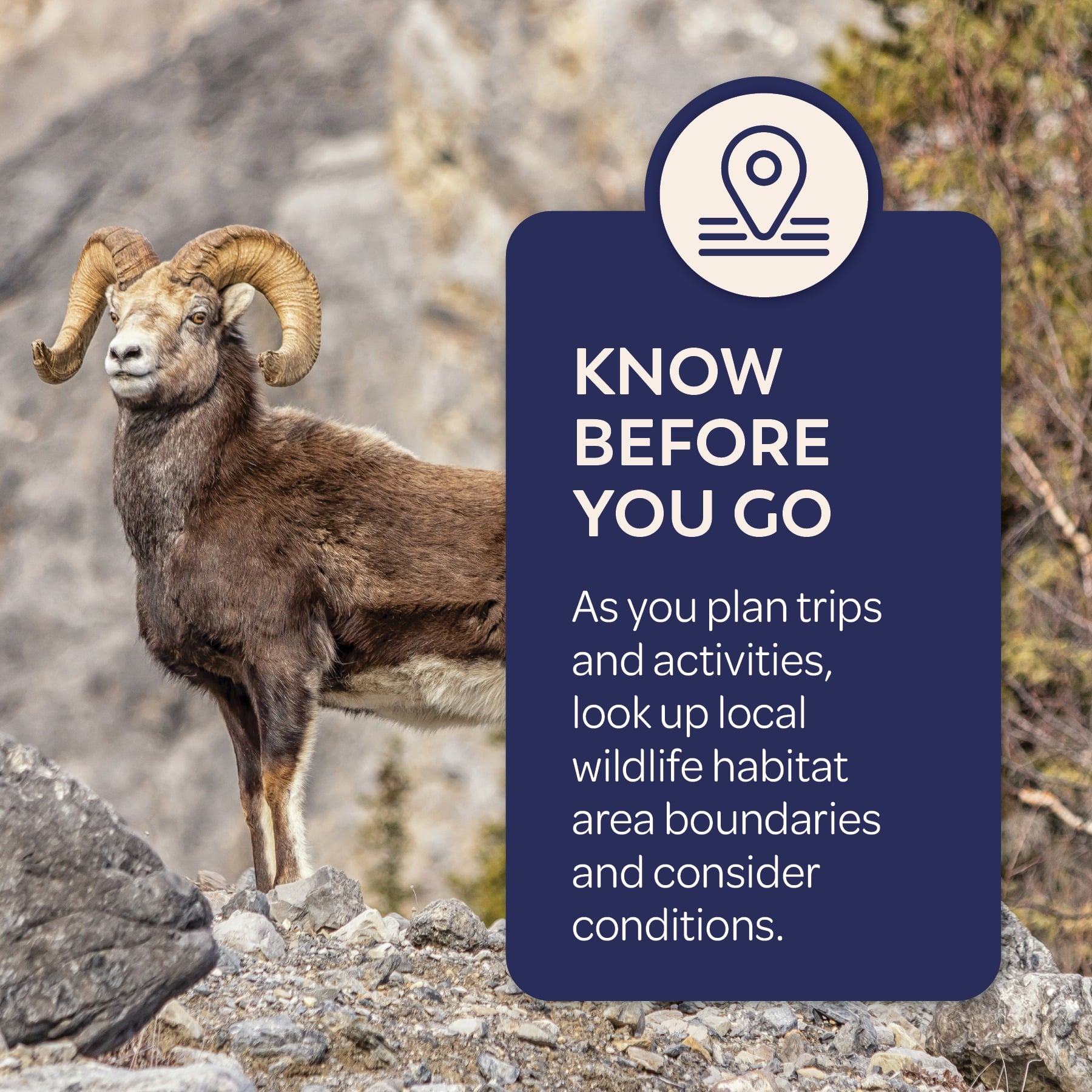
Bighorn sheep are one of the most iconic wildlife species in Grand Teton National Park and are specially adapted to survive the harsh alpine environment of the Teton Range. During winter, these animals rely on limited wind-scoured slopes where snow is shallow and forage is accessible, making them particularly sensitive to disturbance. Backcountry skiers traveling through sheep habitat should give animals plenty of space, avoid approaching or chasing them, and move quietly through the area if sheep are present. Grand Teton just released a friendly reminder to Teton backcountry skiers when it comes interacting with the resident bighorns:
“Tell your peeps to watch for sheep! Share the range with the Tetons’ original mountaineers. Bighorn sheep have worked hard to survive the winter at high elevation. By late winter, their fat reserves are running thin and every bit of energy counts. Giving them space will help them make it through the final weeks of winter.” –Grand Teton National Park
𝐇𝐨𝐰 𝐲𝐨𝐮 𝐜𝐚𝐧 𝐡𝐞𝐥𝐩:
𝐏𝐥𝐚𝐧 𝐚𝐡𝐞𝐚𝐝. Download free bighorn sheep critical habitat maps at tetonsheep.org.
𝐑𝐞𝐬𝐩𝐞𝐜𝐭 𝐜𝐥𝐨𝐬𝐮𝐫𝐞𝐬 (𝐦𝐚𝐧𝐝𝐚𝐭𝐨𝐫𝐲). Avoid travel or stick to designated routes in the bighorn conservation zones (voluntary).
𝐆𝐢𝐯𝐞 𝐬𝐡𝐞𝐞𝐩 𝐩𝐥𝐞𝐧𝐭𝐲 𝐨𝐟 𝐬𝐩𝐚𝐜𝐞.
𝐑𝐞𝐩𝐨𝐫𝐭 𝐬𝐢𝐠𝐡𝐭𝐢𝐧𝐠𝐬 at tetonsheep.org
Remember, disturbing bighorn sheep can force them to flee into deep snow, wasting valuable energy they need to survive the winter. Observe from a distance to help ensure these animals remain healthy throughout the coldest months. Protect these iconic residents and keep the Tetons wild!
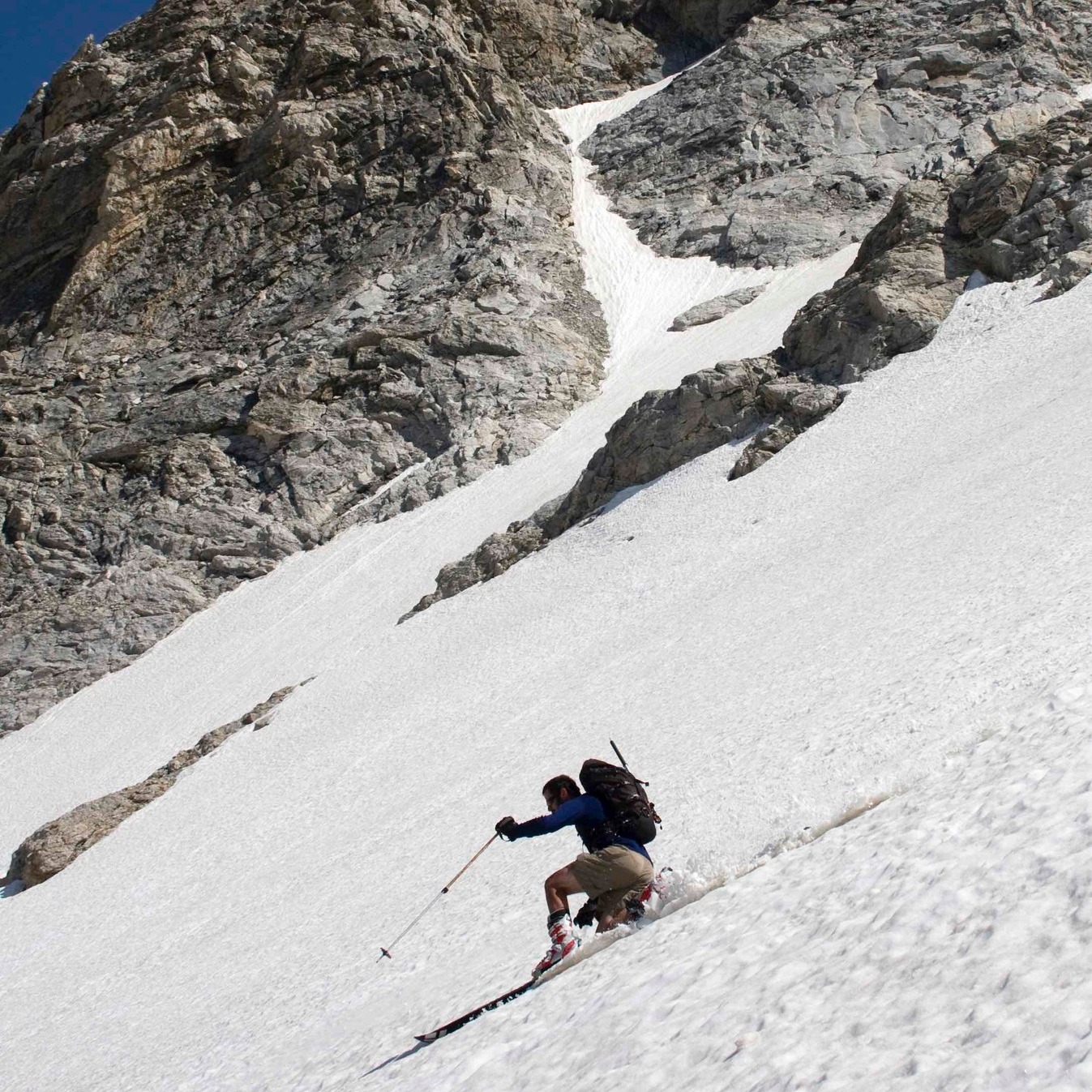
Grand Teton National Park Backcountry Skiing & Snowboarding Safety:
Skiers and snowboarders are reminded that your safety is your responsibility. You must rely on your own good judgment, adequate preparation and constant awareness. Backcountry users should be in good physical condition and stick to routes that are within their ability and comfort levels. Hypothermia and frostbite can set in quickly, and are difficult to care for in the backcountry. Take preventative measures to avoid the dangers of cold weather; look for signs of hypothermia and frostbite on members of your group. Traveling alone can be especially dangerous; always give friends or family a detailed itinerary and stick to your plan. Permits are required for all overnight backcountry trips.
Avalanche Hazard
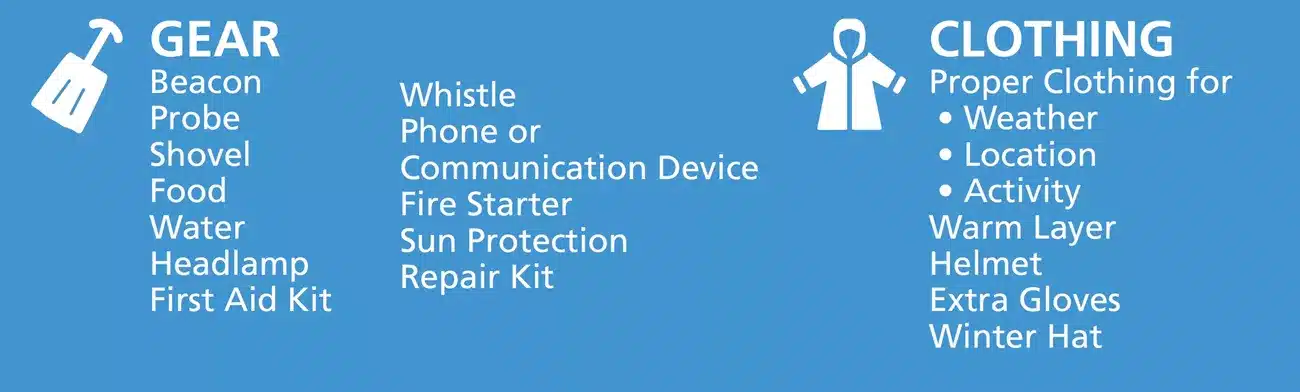
Avoid known avalanche paths. All skiers, snowboarders, and climbers traveling in avalanche terrain should be equipped with, and know how to use, an avalanche beacon, probe pole, and shovel. For the Bridger-Teton Avalanche Center current weather forecast and avalanche hazard advisory call 307–733–2664 or check the Bridger-Teton Avalanche Center website.
Hypothermia
Hypothermia is caused by exposure to cold and is aggravated by wind and wet clothing. Warning signs include: uncontrollable shivering, reduced coordination, and incoherent speech. Get the victim inside as soon as possible. If necessary, seek medical attention by calling 911.