

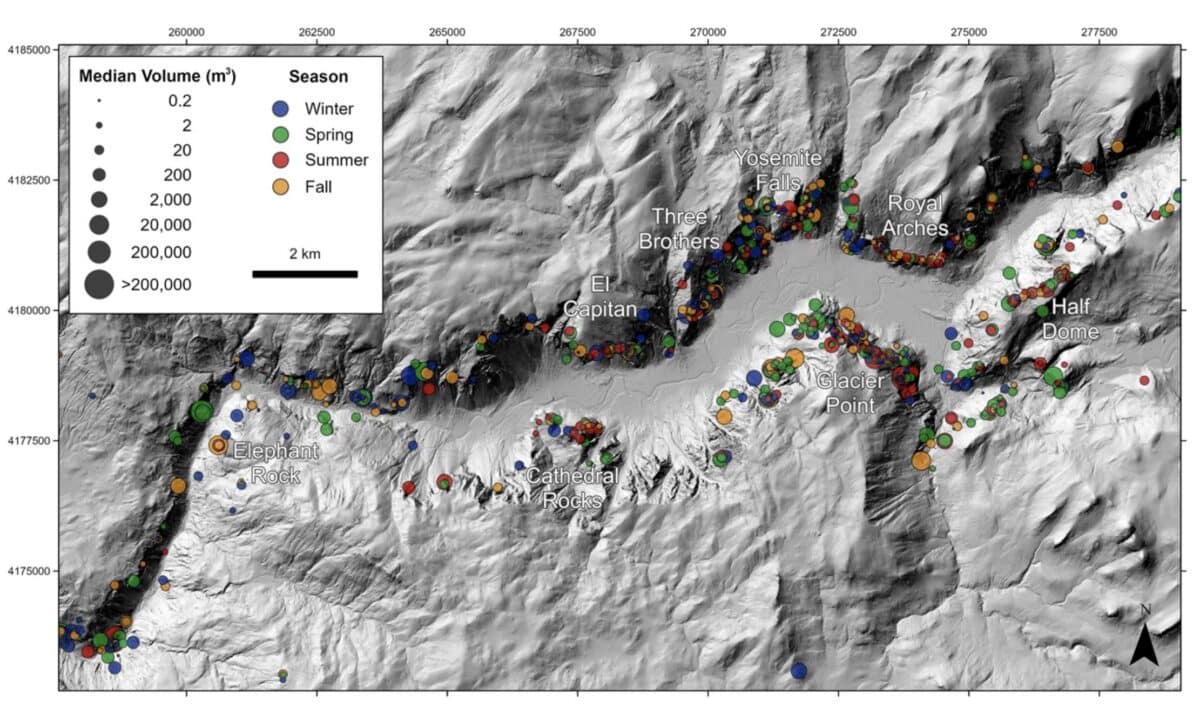
YOSEMITE NATIONAL PARK, California — Rockfalls are a regular part of Yosemite Valley’s dramatic landscape, and park scientists closely track each event to better understand the natural process and help protect visitors.
The towering cliffs that define Yosemite Valley were carved by glaciers and remain steep and constantly changing. As a result, rockfalls happen every year, ranging from small rocks landing on trails to large collapses involving massive boulders. Park staff document and analyze each event as part of an ongoing effort to monitor hazards in one of the nation’s most visited national parks.
In 2025, Yosemite experienced a relatively quiet year for rockfalls. Park officials documented 43 events totaling about 478 cubic meters, or roughly 1,423 tons, of rock. Most incidents involved smaller rocks falling onto park roadways during winter storms.
The two largest rockfalls occurred at night when no hikers were present in the affected areas. The first and largest event happened around 9:30 p.m. on March 31. Visitors in Curry Village reported hearing a deep rumble coming from the area of Grizzly Peak near Vernal Fall. The following morning, hikers on the Mist Trail discovered large boulders blocking the route on the north side of the Vernal Fall footbridge. About 150 cubic meters, or roughly 446 tons, of rock had fallen more than 1,000 feet onto the trail. Crews spent several weeks blasting and clearing the debris before the trail could reopen.
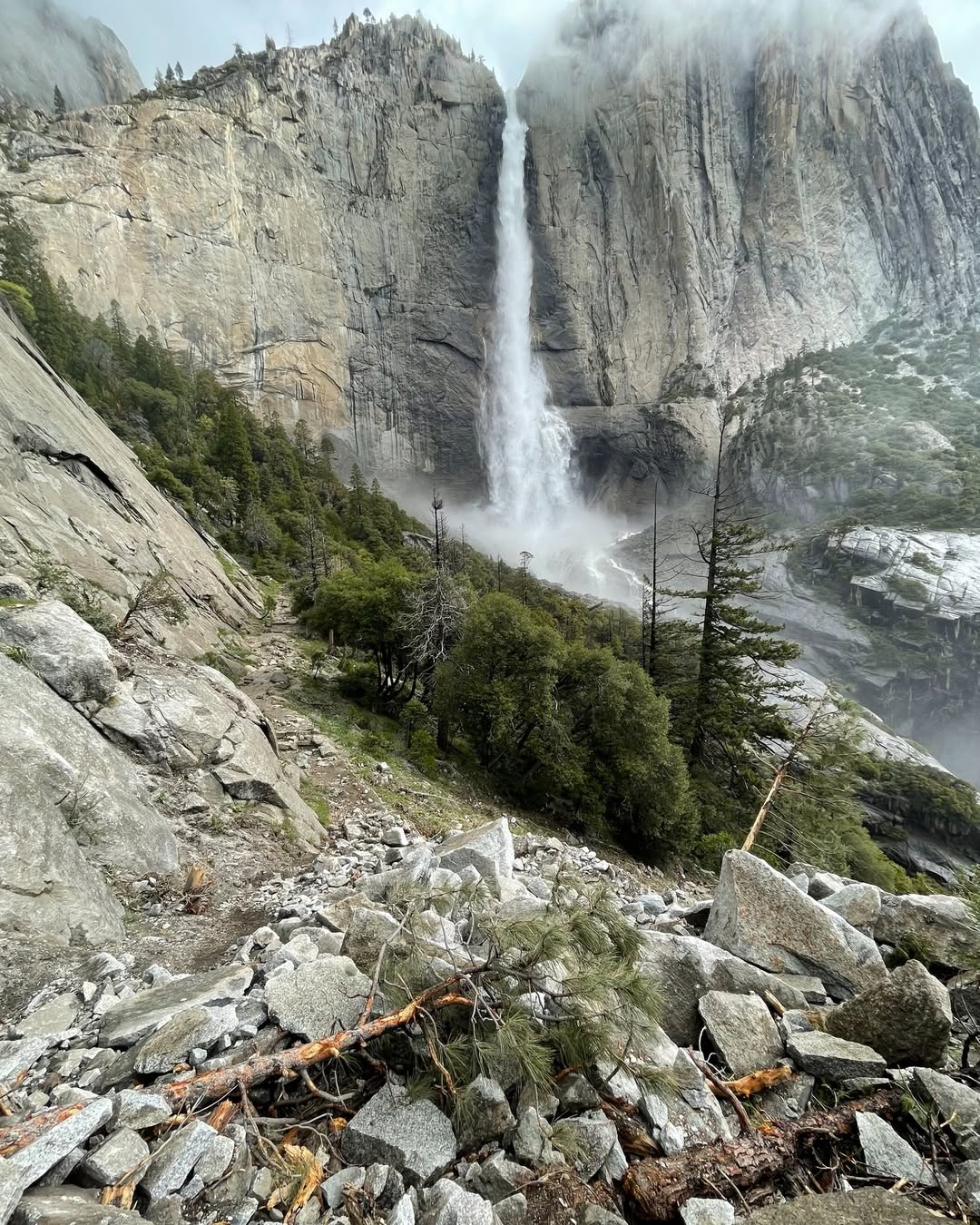
A second notable rockfall occurred at about 1:25 a.m. on May 8, when residents of Yosemite Village heard rocks tumbling during the night. The next morning, hikers on the Yosemite Falls Trail found fresh debris between Columbia Rock and the base of Upper Yosemite Fall. About 80 cubic meters, or roughly 238 tons, of rock had broken loose from beneath an overhang and fallen about 180 feet onto the trail.
All documented rockfalls are added to a park database that allows geologists to track patterns over time and better understand the forces shaping Yosemite’s iconic cliffs while helping improve safety for visitors. If you witness a rockfall of any size or encounter fresh rock debris, please contact park geologist Greg Stock at 209/768-1028 or by email, or contact park dispatch by calling or texting 911 within the park.
What Is a Rockfall?
Rockfalls are a natural and dynamic geologic process involving the detachment and rapid downard movement of rock. Due to its steep, glacier-carved cliffs, Yosemite Valley experiences many rockfalls each year. Historical records indicate that more than 1,000 rockfalls have occurred in the park during the past 150 years. Massive piles of “talus” or rock debris at the base of Yosemite Valley’s cliffs are reminders of these dramatic events. Natural processes like rockfall help to create the beautiful and changing scenery in Yosemite National Park, but they also present potential hazards.
What Causes Rockfall?
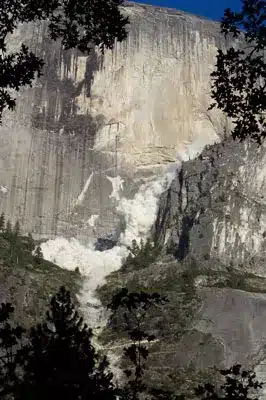
A number of geologic processes set the stage for rockfalls, including glaciation, weathering, and bedrock fractures. Tectonic stresses and erosion cause granite rock to fracture. Rockfalls later occur along these fractures. Fractures that develop parallel to the surface are called sheeting joints. Sheeting joints create large slabs of rock that ultimately fall away in a process known as exfoliation. In Yosemite Valley, Royal Arches and the face of Half Dome are examples of landforms that have resulted from this process. Over long periods, water flowing through fractures decomposes the bedrock in a process called weathering. Weathering loosens bonds that hold rocks in place.
Triggering mechanisms like water, ice, earthquakes, and vegetation growth are among the final forces that cause unstable rocks to fall. If water enters fractures in the bedrock, it can build up pressure behind unstable rocks. Water also may seep into cracks in the rock and freeze, causing those cracks to grow. This process is called “frost wedging” or “freeze-thaw” and can incrementally lever loose rocks away from cliff faces. Recent research suggests that daily temperature variations and extreme heat can also cause rock slabs to become unstable. Ground shaking during earthquakes often triggers rockfalls. Additionally, a variety of vegetation-most notably firs, pines, and canyon live oaks-grow into the sheer rock faces where their roots expand and pry apart joints in the granite. Most rockfalls in Yosemite occur in the winter and early spring, during periods of intense rainfall, snow melt, and/or subfreezing temperatures, but many large rockfalls have also occurred during periods of warm, stable weather.
For any given rockfall, there is always a large degree of uncertainty about what exactly triggered it; historical records indicate that more than half of all documented rockfalls in Yosemite were not associated with a recognizable trigger.
Predicting actual rockfall events is not yet possible, but understanding the forces that trigger rockfalls is an important step toward this goal.
How Does Yosemite Address Rockfall?
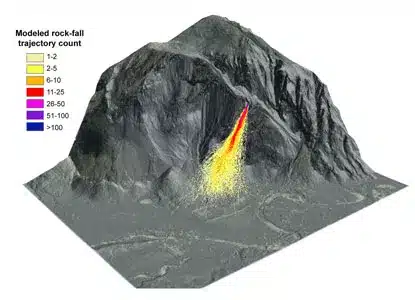
The National Park Service in Yosemite is responding to rockfall in a variety of ways. Park scientists, in collaboration with the U.S. Geological Survey (USGS) and academic researchers, are actively studying rockfalls through the use of new technology, such as high resolution digital photography, laser mapping of cliffs, and exposure dating of boulders. These tools offer vast improvement in resolution from previously available data, allowing geologists to accurately map rockfall zones and to study rockfall source areas. Additionally, new computer modeling technology shows promise in simulating future rockfall behavior. The park is also actively investigating methods for monitoring rockfall activity.
The National Park Service has produced a report quantifying rockfall hazard and risk in Yosemite Valley to help improve safety and guide future park-planning efforts: Quantitative rock-fall hazard and risk assessment for Yosemite Valley, Yosemite National Park, California. Based on the results of this study, the National Park Service reduced rockfall-related risk in Yosemite Valley by removing or repurposing high-risk buildings within hazardous areas. These actions reduced rockfall-related risk by 95%.
Additionally, park rangers have developed emergency plans for rockfall events, and may close trails and post warning signs in particularly hazardous areas.
What Should I do in the Event of a Rockfall?
- Be aware of your surroundings. Rockfall hazard zones occur throughout the park near any cliff faces. If you witness a rockfall from the Valley floor, quickly move away from the cliff toward the center of the Valley. If you are near the base of a cliff or talus slope when a rockfall occurs above, immediately seek shelter behind the largest nearby boulder. After rocks have stopped falling, move quickly away from the cliff toward the center of the Valley. Be aware that rockfalls are inherently unpredictable and may happen at any time. Pay attention to warning signs, stay off of closed trails, and, if unsure, keep away from the cliffs.
- Inform park staff if you witness a rockfall. If you witness or hear a rockfall of any size, please report it by calling 209/379-1420 or reporting it at one of the park Visitor Centers. This information is useful for assessing rockfall hazards and adds to the growing knowledge base of rockfall activity in the park.
- Understand this dynamic natural process. Remember that Yosemite is a wild place. Rockfall is the most powerful geologic agent acting today in Yosemite. The dramatic cliffs of Yosemite are constantly being shaped by this potent natural force.
