

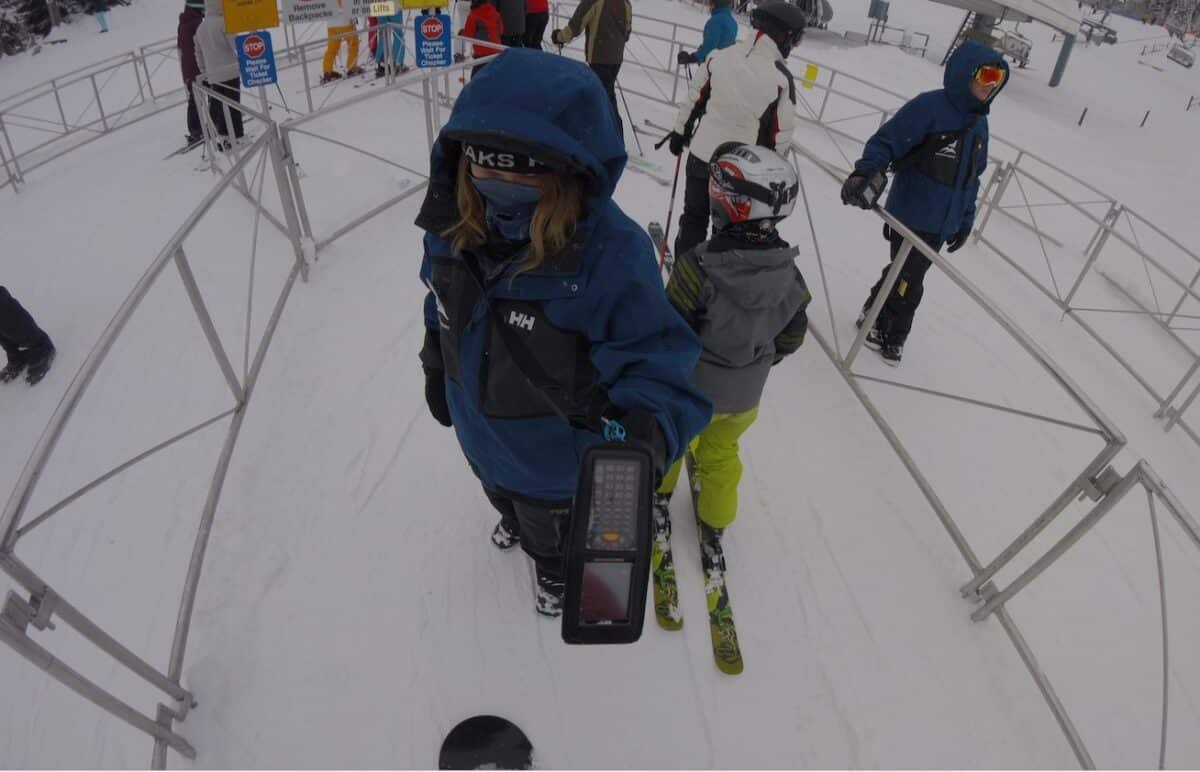
Let’s be honest: nearly everyone knows someone who’s “borrowed a buddy’s pass” at least once.
Not you, obviously. But you’ve heard the story. The cousin is visiting for the weekend. The friend was “just trying to get one day in.” Someone swapping the hoodie used on photo day, like that’s the part that matters.
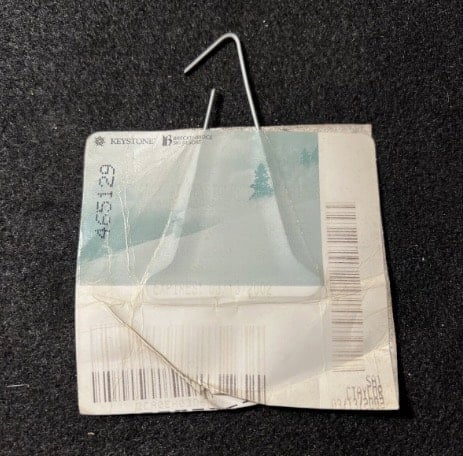
For years, the system relied on one underpaid liftie squinting at a tiny photo on a well worn pass. Before that, it was the green pass and the clipped wicket. And now? Resorts are quietly upgrading that whole dynamic with AI-powered photo checks and cameras aimed right at the scanners.
The question is… is this just basic fairness for people paying $1,500+ for a pass—or are resorts turning lift gates into mini Communist China checkpoints?
What’s changing: from “liftie eyeball test” to AI photo checks
A growing number of resorts and access-system companies are pushing tech that makes pass-sharing harder to pull off.
At Mt. Bachelor, the resort began testing new cameras at select lifts that use photo comparison technology—essentially comparing images taken at the gate to previous scans to flag suspicious use. The resort’s marketing director said similar tech is being used at other resorts globally.
Bachelor also isn’t shy about why: pass fraud is pass sharing—someone using a pass that isn’t theirs—and the adult full-season pass price listed for 2024–2025 was $1,549.
Meanwhile, access tech companies are going even further. Axess (a major player in lift access systems) describes a system that takes a photo at each gate entry and uses AI scoring to detect “similarity,” while emphasizing it does not rely on biometric facial recognition—instead looking at non-invasive features like colors, patterns, equipment, and body shapes.
Teton Gravity Research also reported on SKIDATA testing an AI “Photo Check” approach in Austrian resorts, saying it uses a similarity check rather than standard facial recognition (which can struggle with helmets/goggles), and that resorts using it have seen manual checks drop dramatically—from huge daily volumes to a small number of targeted inspections.
Why resorts want it: “Everyone pays… except the cheaters.”
There’s a straightforward argument for this stuff:
- Pass prices keep climbing.
- Resorts argue fraud is a direct hit to revenue.
- Fraud also feels like a slap in the face to people who did pay full freight.
And it’s not just a “policy” issue anymore. In North Lake Tahoe, ski resorts reportedly partnered with the Placer County Sheriff’s Office in response to an increase in season pass fraud, with the sheriff’s office stating they were working with resorts to crack down.
That’s a big vibe shift: pass-sharing moving from “mountain mischief” to “law enforcement announcement.”
Why people hate it: “I came to ski, not get scanned”
Now for the other camp.
Even if a resort says, “Relax, it’s not facial recognition,” a lot of skiers hear: cameras + AI + tracking at every lift.
And once you normalize that kind of access control, it’s hard to un-normalize it.
The ACLU has been warning for years about face recognition (especially in entertainment venues) becoming a routine part of access, calling it a uniquely powerful surveillance technology and drawing a sharp distinction between face recognition you choose to use versus systems used on you.
To be clear: most ski-resort systems being marketed right now are often described as “photo comparison” and “non-biometric” rather than full-blown face recognition. But the cultural concern is the same: the mountain starts to feel less like a freewheeling playground and more like an airport.
Bottom line: fair play… or too far?
If you’ve ever waited behind someone arguing with a liftie while the line piles up, you can see the appeal of faster, more accurate checks.
But if you’ve ever gone to the mountains specifically to not feel monitored, you can see why cameras at the gate hit a nerve—especially as other industries normalize face-based access controls.
Should ski resorts use AI camera systems to crack down on pass sharing—yes or no?
And if you’re in the “yes” camp… what kind of privacy limits should resorts be required to follow?