

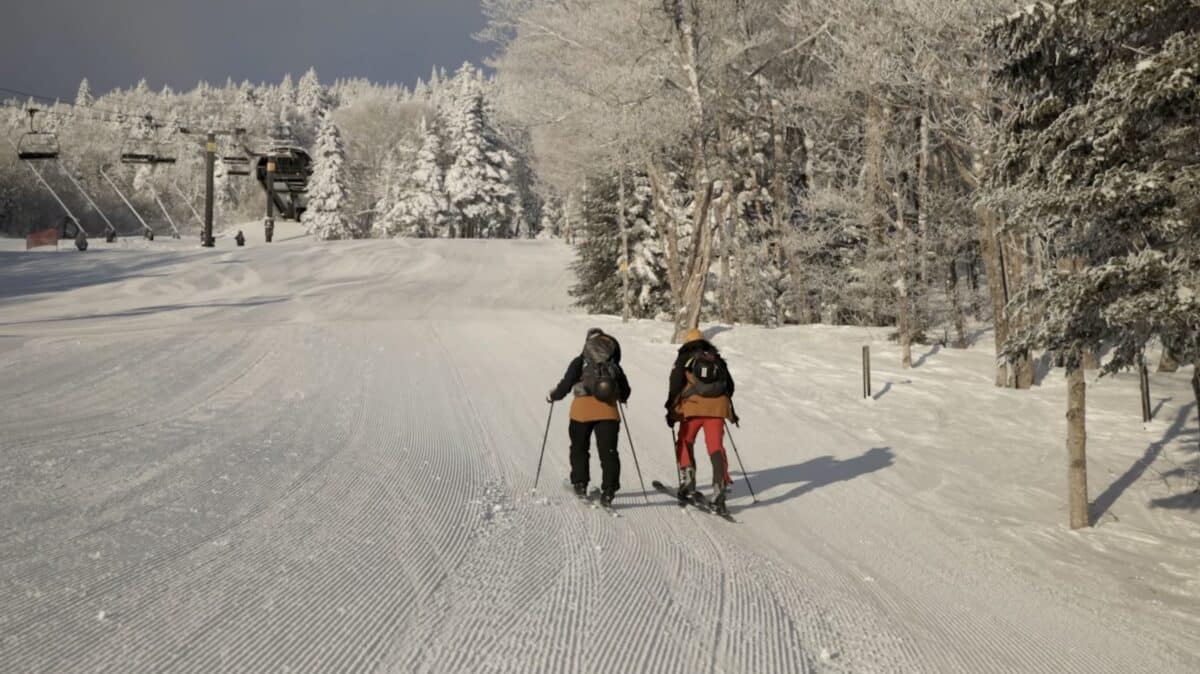
Ski touring and backcountry skiing is meant to be fun, but errors in preparation, education, and safety can quickly lead to a dangerous experience in the wilderness. During a season of frequent search and rescue events in the backcountry of North America, Killington Ski Resort in Vermont is sharing some safety tips from the Killington Search and Rescue team, a group of about two dozen members who handle the rescue missions in the area. Josh, a volunteer with the team, explains how one should prepare for uphill travel and what to do in an emergency.
The number one step to staying safe while ski touring or splitboarding is making sure you prepare. Tell someone your plan before you head out, including your route and when you expect to return. Bring any essential gear like a fully charged cell phone with at least a backup battery, warm extra layers, mittens and a hat, two headlamps, food, at least a bottle of water, an emergency space blanket, and a small first aid kit. Mountain conditions can change quickly, and you need to ensure you’re prepared for that possibility.
If there’s an emergency, call 911 as soon as possible. Be ready to share your exact location by using your phone’s Compass app and sending a screenshot with GPS coordinates. Tell dispatchers about your condition, including when you last ate, your water supply, and whether you are cold or wet, so rescuers can prepare properly.
If there’s an emergency, call 911 as soon as possible.
To preserve phone battery life, keep your phone warm in a pocket close to your body and follow dispatch instructions, which may include turning it off periodically. Avoid unnecessary phone use. While waiting for rescue, focus on self care by eating, hydrating, and putting on dry, warm layers to stay as comfortable and safe as possible until help arrives.
Never attempt to head into the backcountry or participate in uphill travel without the proper gear, education, and preparation.
