

We all love big days on the mountain. Whether its ripping groomers, bell-to-bell powder laps or bump runs until the legs shake (don’t forget sneaking in that last chair when patrol’s already giving you that side-eye look).
But if you want to keep stacking those days all season long, you’ve got to take care of your body once the ski boots come off. In the video below, Emily from Outdoor Adventure Training walks through a simple, 10-minute après ski stretch routine she filmed after a full day at Panorama Mountain Resort up in British Columbia. It’s quick, it’s effective, and it targets exactly what skiing beats up the most: hips, hamstrings, back, and feet.
Remember you don’t need a big fancy gym to cover your bases with this après ski body maintenance routine, any hotel room or living room is more than enough. Word to the wise, the skiers who take care of themselves off the mountain are the ones you see are the ones you see consistently on the mountain:
Why Après Ski Stretching Matters
Skiing loads your body in very specific ways:
- Deep hip flexion
- Constant ankle restriction inside stiff boots
- Eccentric quad and hamstring work
- Rotational forces through the spine
- Adductor engagement for edge control
After hours in ski boots, your hips get tight, your hamstrings guard up, and your lower back takes on more tension than you realize.
A short, focused mobility session:
- Reduces next-day soreness
- Improves range of motion
- Helps maintain proper ski stance
- Promotes long-term joint health
- Mentally resets you for the next day
You don’t need 45 minutes. You need consistency. This routine takes 10 minutes.
What This 10-Minute Routine Targets
Emily’s flow is designed specifically for skiers. Here’s what it hits:
1. Child’s Pose (Hips + Upper Back)
Starting in a wide-knee child’s pose opens the hips while decompressing the spine. Think about melting your chest toward the floor and letting the shoulder blades slide down your back. After a day of forward-flexed ski posture, this feels incredible.
2. Cat-Cow (Spinal Mobility)
A few controlled cat-cows restore movement through the spine:
- Drop the belly gently (don’t overextend the neck).
- Round through the upper back.
- Spread the fingers and push through the shoulder blades.
This wakes up the entire posterior chain and gets blood flowing.
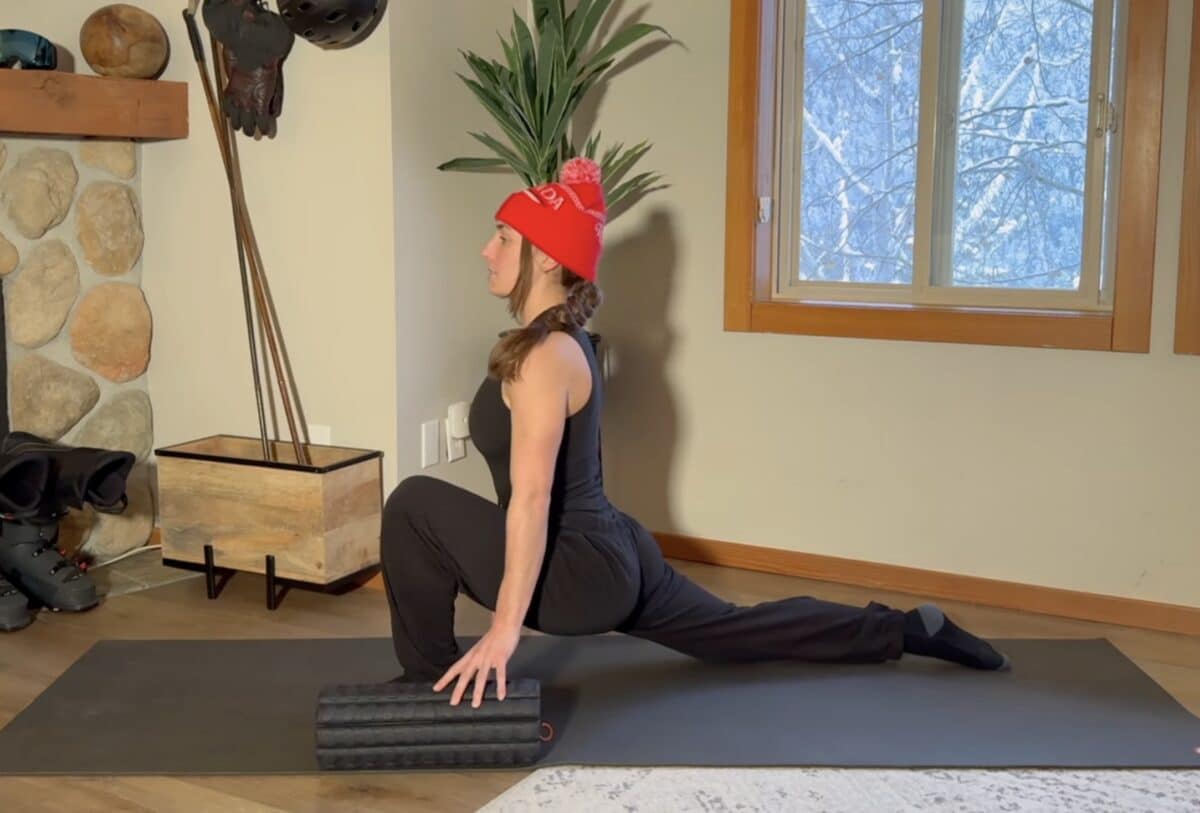
3. Low Lunge + Half Splits (Hip Flexors + Hamstrings)
Low Lunge
Sink into the front hip while keeping the hips squared (think train tracks, not a tightrope). Use an optional block or foam roller if you need to prop yourself up. If you don’t have one of those you can you use any sturdy household items (think rolled up towel or a stack of books)
Skiing keeps you in hip flexion all day. This reverses that pattern.
Half Splits
Rock back, flex the front foot, and allow the spine to round slightly for a more passive hamstring stretch. This is where you’ll really feel it after moguls or long groomer laps.
Bonus: tuck the toes under and sit back for a foot stretch. After a long day in ski boots your feet will be grateful.
Repeat both on the other side.
4. Reclined Pigeon (Glutes + Deep Hip Rotators)
Lying on your back, cross one ankle over the opposite knee.
- Stay upright and gently press the knee away
- Or grab the back of the hamstring for a deeper stretch
Focus on grounding the lower back. If you’re curling into a ball, dial it back a bit.
Skiers rely heavily on glute engagement for edge control and stability. Keeping these muscles mobile is huge for injury prevention.
Switch sides.
5. Knee Hugs → Happy Baby (Lower Back + Hips)
Start with gentle knee hugs, rocking side to side to release the lower back.
Then move into Happy Baby:
- Grab the outer edges of the feet
- Pull knees toward the armpits
- Keep the low back grounded
This is a full reset for hips and hamstrings after a hard day on the slopes.
6. Supine Twist (Spinal Rotation Reset)
Cross one knee over your body and extend the opposite arm out to the side.
Skiing involves constant rotational control. This stretch helps “unwind” the spine and restore balance.
Go only as far as comfortable. Shoulder or knee not touching the ground? No sweat, totally fine.
Switch sides and breathe.
Make Recovery a Habit
Even after 10 minutes, you’ll feel the difference.
But mobility is just one piece of the recovery equation, here’s a few more pieces to the puzzle:
- Hydrate (electrolytes > plain water after big days)
- Hit the hot tub or sauna if you have access
- Refuel properly
- Sleep
Stack enough quality ski days and recovery stops being optional.
It becomes part of the system.
The Big Picture: Ski More, Hurt Less
The goal isn’t to be the most flexible person in the lodge.
The goal is:
- More days on snow
- Fewer rest days forced by soreness
- Better performance late season
- A body that still feels good in April
If you’re serious about skiing all winter, treat recovery with the same intention you bring to your line choice. Long story short, don’t make stretching a once in while type thing, make it an ingrained part of your après ski ritual.
