

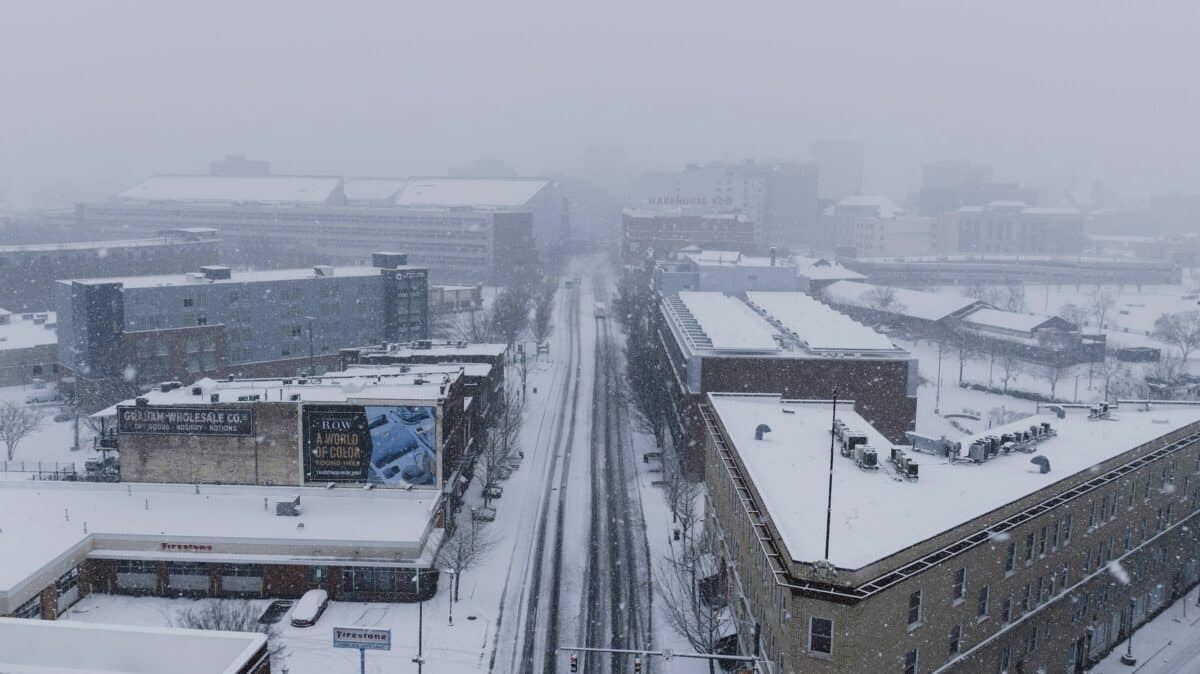
NOAA’s Climate Prediction Center expects La Niña to fade in the coming months, potentially impacting late-season snow conditions across North America.
The National Oceanic and Atmospheric Administration’s Climate Prediction Center released its latest ENSO diagnostic discussion this week, signaling an end to the current La Niña event that has influenced weather patterns throughout the 2025-26 winter season.
According to NOAA, La Niña conditions persisted through January 2026, with the latest weekly Niño-3.4 index reading -0.9°C. However forecasters now expect a transition from La Niña to ENSO-neutral conditions during the February-April 2026 window with a 60% probability.
What’s Changing Beneath the Surface
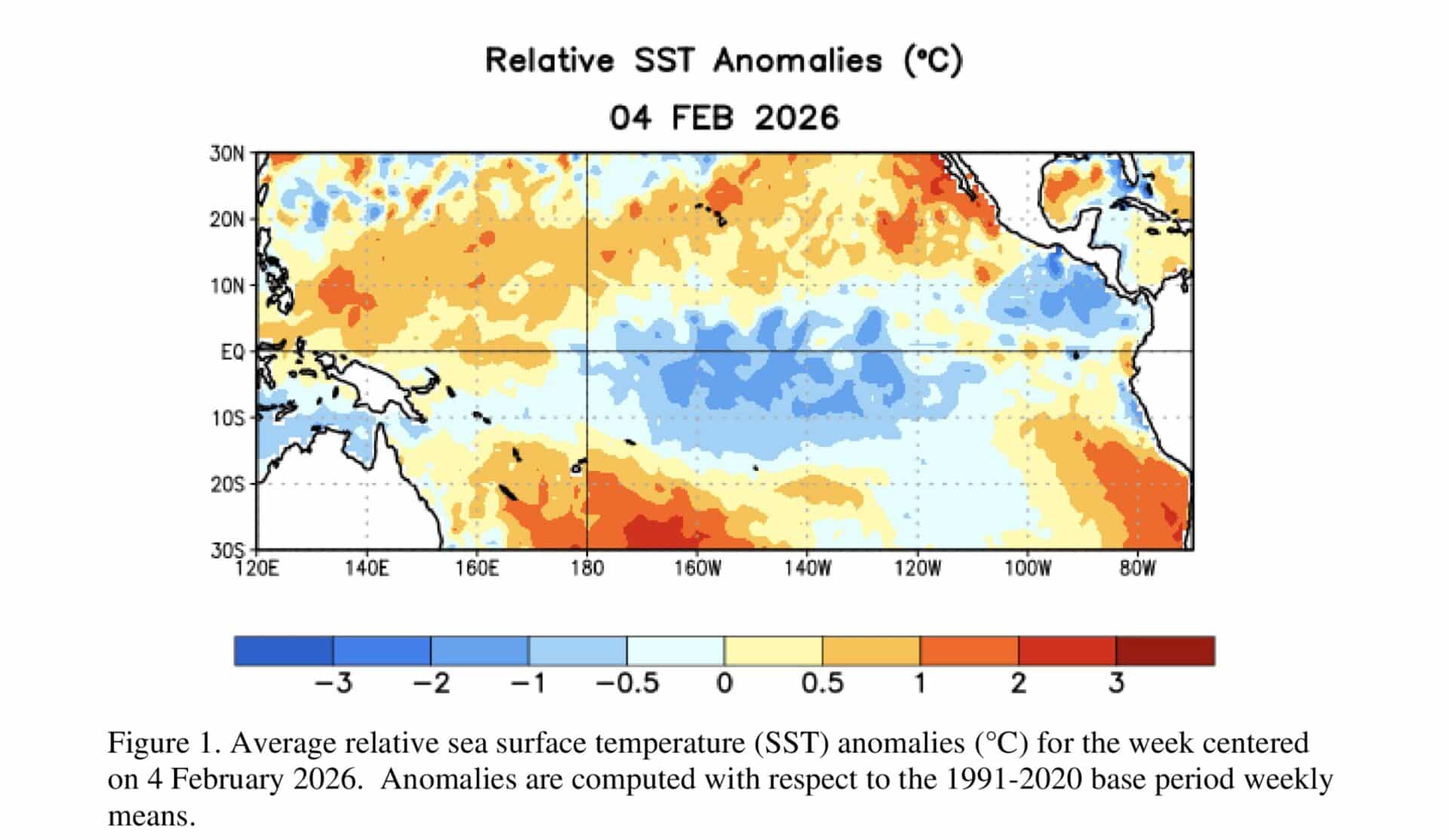
The most significant development lies below the ocean’s surface. NOAA reports that the equatorial subsurface temperature index has significantly increased, reflecting strengthening above-average temperatures expanding across the Pacific Ocean. This warming trend at depth typically precedes changes at the surface.
While atmospheric patterns still reflect La Niña characteristics, including low-level westerly wind anomalies over the western equatorial Pacific and suppressed convection near the Date Line, these signals have weakened due to subseasonal variability.
What This Means for Weather Patterns
The transition to neutral conditions could have notable implications for North American weather as winter transitions to spring. La Niña winters typically bring cooler, wetter conditions to the Pacific Northwest and Northern Rockies while delivering drier weather to the Southwest and warmer conditions across the southern United States. As La Niña fades, these characteristic patterns are expected to weaken, potentially affecting late-season snowfall patterns in mountain regions.
Looking Ahead
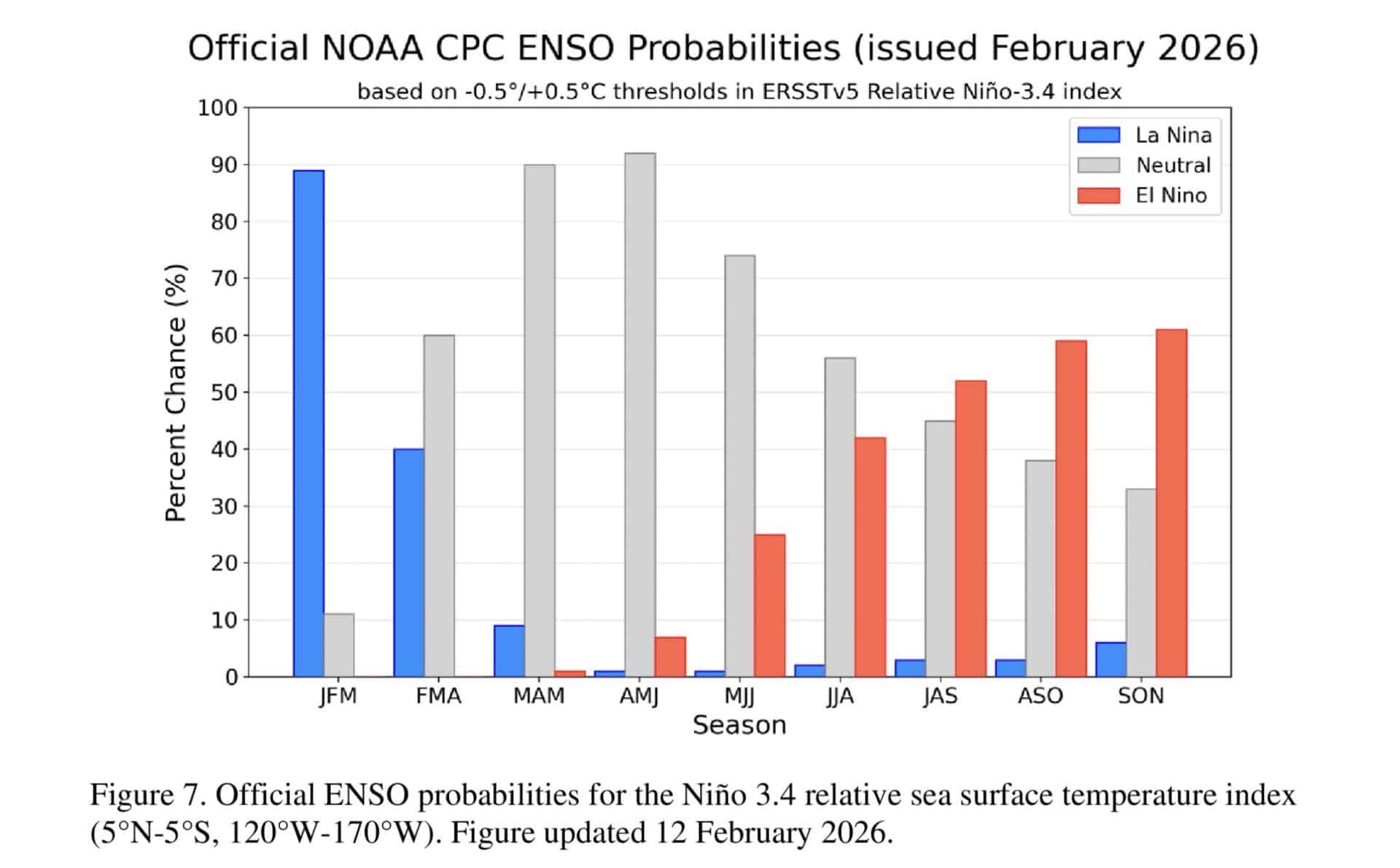
NOAA’s North American Multi-Model Ensemble forecasts ENSO-neutral conditions persisting through Northern Hemisphere summer 2026, with a 56% chance from June through August. Beyond that, forecasters assign a 50-60% probability for El Niño development in late summer, though model uncertainty remains considerable for predictions extending that far into the future.
