


AccuWeather 2025 – 2026 Winter Forecast: Heavy snow, stormy conditions, and fluctuating temperatures forecasted across the United States.
AccuWeather’s long-range forecast for the 2025-26 winter season, released on October 2nd, 2025, paints a picture of stormy conditions, heavy snow in some regions, and fluctuating temperatures across the United States. Here’s a breakdown of what to expect.
Storms to Bookend the Season
The central and eastern U.S. are in for a “bookend winter,” with the most intense storm activity expected at the start and end of the season. Early winter storms will sweep from Canada into the Midwest, then push toward the mid-Atlantic and New England, potentially intensifying into nor’easters. By late winter, the storm track is predicted to shift, bringing systems from the Plains and Mississippi Valley into the Appalachians, Midwest, and Northeast. This pattern could deliver significant snowfall to ski resorts early on, setting up a promising start for slopes in these regions.
Snowfall Outlook
Snow lovers in the Midwest, Great Lakes, Ohio Valley, and parts of the Northeast can anticipate a snowier winter than last year, though totals in cities like Philadelphia, New York City, and Boston may still fall short of historical averages due to mixed precipitation events later in the season. Buffalo, New York, is poised for a hefty 90–100 inches of snow, close to its typical seasonal average, driven by intense lake-effect snow around the Great Lakes in December. Out west, areas like Washington, Oregon, Idaho, and Montana are forecast to see snowy conditions, particularly in the Cascades, Rockies, and northern Sierra.
A Chilly Central U.S.
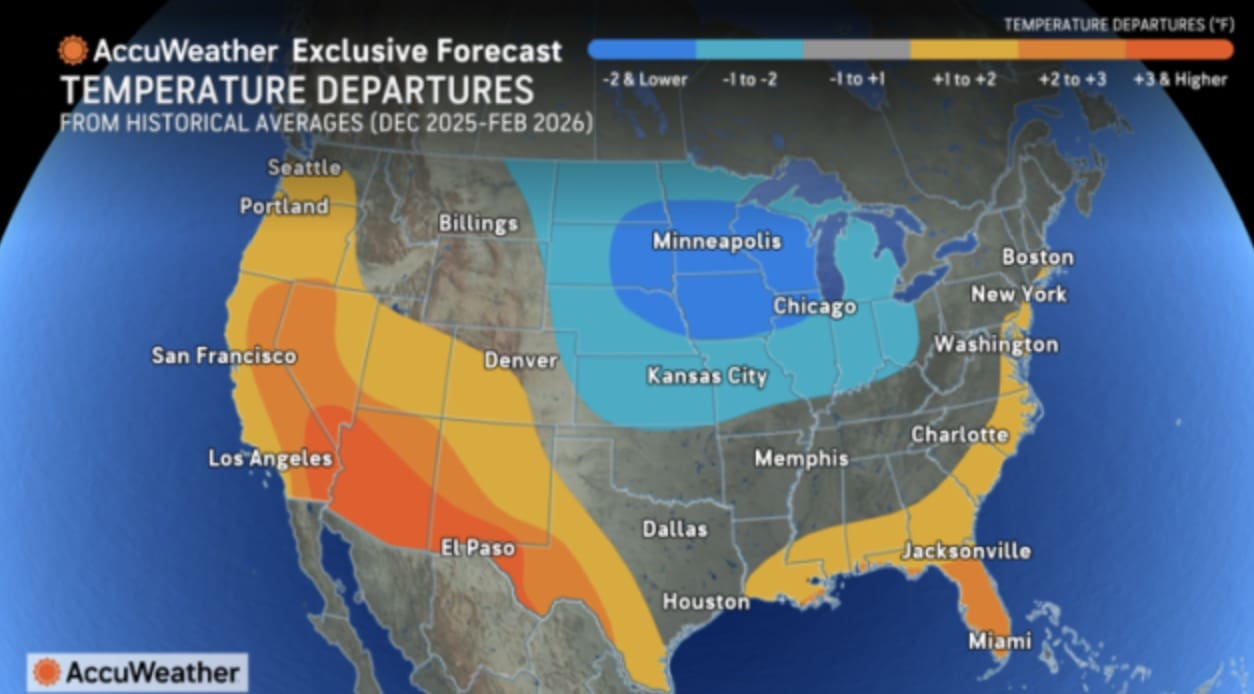
Brace for cold snaps, especially in the Plains and Midwest, where Arctic air is expected to dominate early in December and return with force in February. More than a dozen states could see higher-than-usual heating bills as frigid temperatures settle in. A brief thaw in January might bring a mix of rain and snow, but the polar vortex could shift south around late January or early February, unleashing some of the season’s coldest air across North America. Southern states, including Texas and the Gulf Coast, may also experience a rare but significant blast of cold air during this period, potentially accompanied by snow or ice.
West Coast Woes
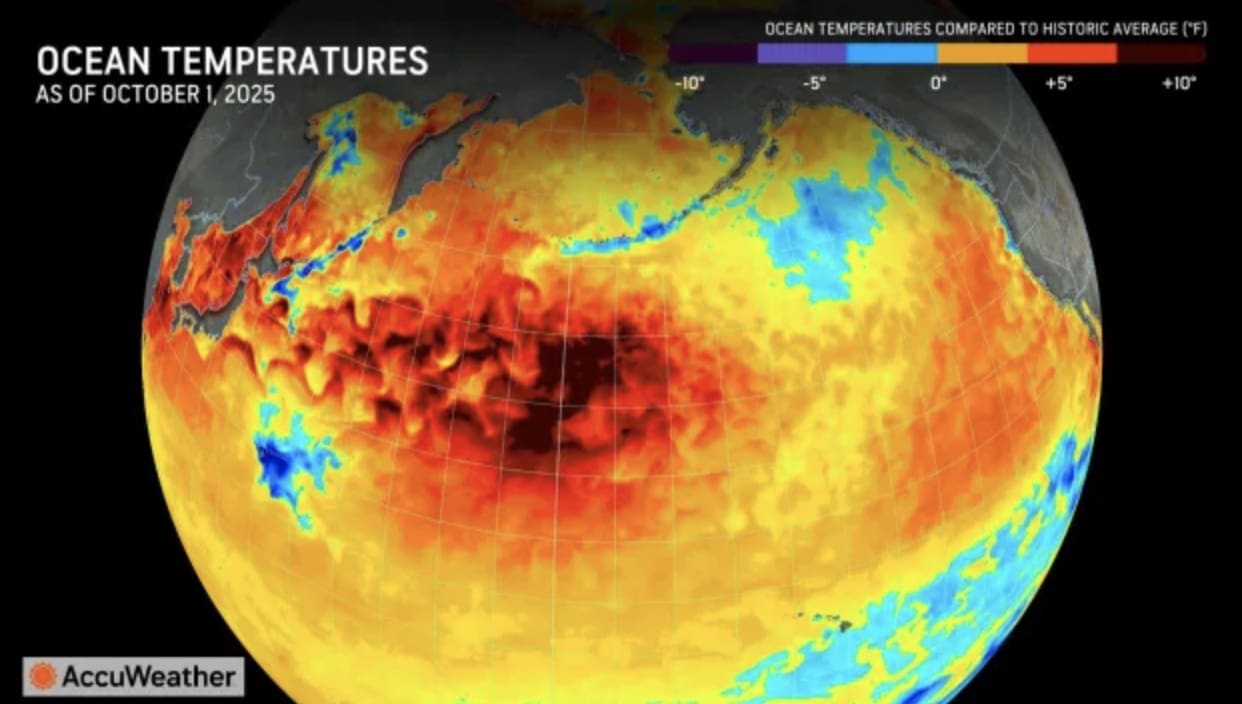
The West Coast and Rockies face a different story, influenced by unusually warm Pacific Ocean waters. This marine heat wave could lead to warmer-than-average temperatures and reduced precipitation, particularly in California and the Southwest, raising concerns about worsening drought and out-of-season wildfires. While December may bring some storms to the Northwest and northern Rockies, helping build snowpack, the overall number of atmospheric rivers is expected to be lower than last winter. January could offer some relief with rainfall in Southern California, but by February, the storm track is likely to shift north, leaving much of the West Coast and Rockies warm and dry.
La Niña’s Uncertain Role
AccuWeather’s forecasters note that La Niña, a climate pattern often influencing winter weather, may not officially develop this season. However, weather patterns could occasionally mimic La Niña’s effects, particularly in the warmer conditions expected across the Southeast and Gulf Coast. If La Niña does emerge, it could amplify these patterns, further shaping storm tracks and temperature trends. The Gulf Coast and Southeast are forecast to see above-average temperatures and below-average precipitation, though warm Gulf waters could fuel severe thunderstorms, bringing risks of damaging winds, lightning, and even tornadoes.
What It Means for Winter Enthusiasts
For skiers and snowboarders, the forecast offers both opportunities and challenges. Early storms could provide a solid base for resorts in the Northeast, Midwest, and parts of the Northwest, but a midwinter dry spell may test snowmaking capabilities. Late-season storms could extend the season, particularly in the Northeast and northern Rockies. Meanwhile, those in California and the Southwest may need to travel north to find consistent powder.
