

Why Some U.S. States Have More Men Than Women: A Geographic Deep Dive
By Tim Konrad | September 16, 2025 | Unofficial Networks
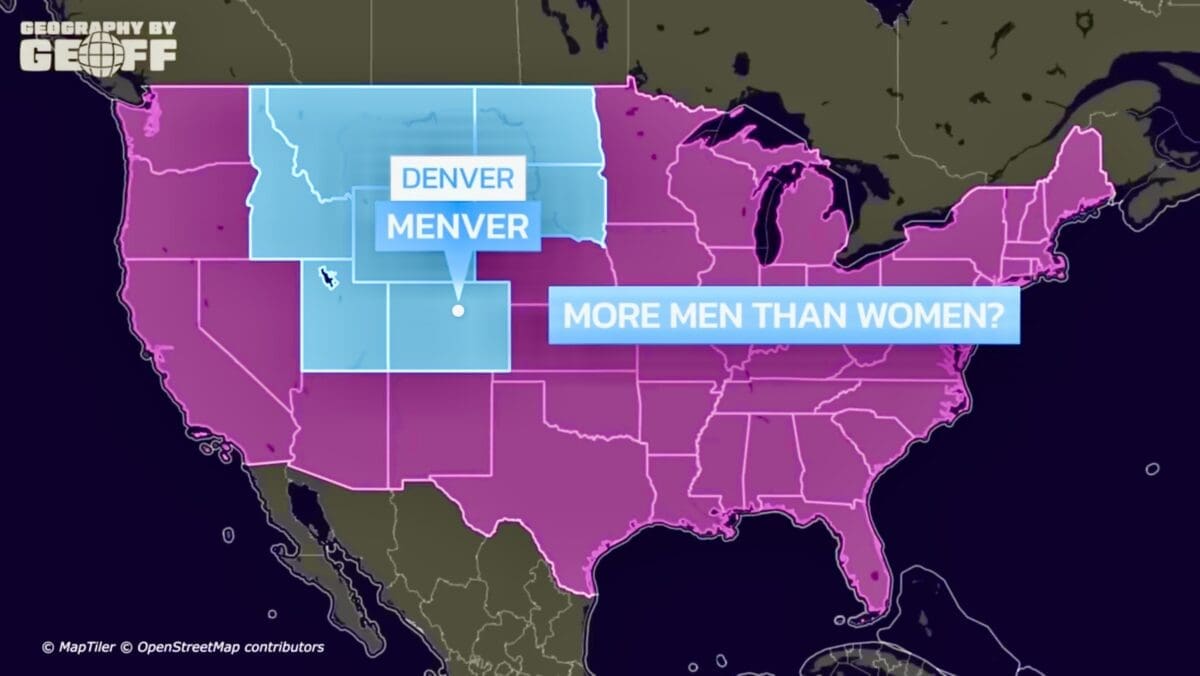
Have you ever wondered why certain U.S. states have more men than women, defying the national trend where women outnumber men by about 3.5 million? In a fascinating YouTube video by Geography By Geoff, we explore the surprising gender imbalances in the Mountain West states and Hawaii. From rugged landscapes to booming industries, geography plays a pivotal role in shaping these demographics. Below, we examine the reasons behind this curious trend, supported by data, charts, and some interesting facts.
The National Gender Trend: Why Women Usually Outnumber Men
Across the United States, women tend to outnumber men due to differences in life expectancy. Women, on average, live longer than men, a trend influenced by several factors:
- Historical Context: Wars, like the World Wars, significantly reduced male populations, particularly among younger men in their prime reproductive years.
- Occupational Hazards: Men have historically dominated high-risk industries like mining, construction, and resource extraction, which contribute to higher mortality rates.
- Biological and Lifestyle Factors: Men are more susceptible to certain diseases, engage in riskier behaviors (e.g., smoking, heavy drinking, reckless driving), and are less likely to seek timely medical care.
For every 100 female births in the U.S., there are approximately 105 male births. However, by age 50, women outnumber men due to these factors. So, why do some states buck this trend?
The Mountain West: A Haven for Men
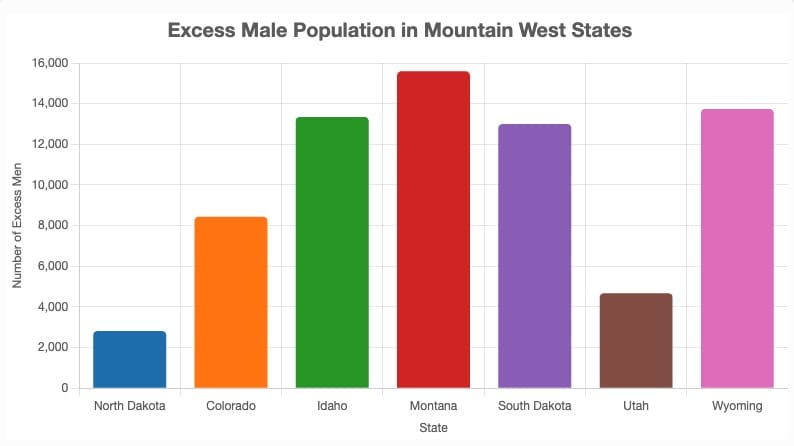
The Mountain West states—Colorado, Idaho, Montana, North Dakota, South Dakota, Utah, and Wyoming—stand out for having more men than women. These states, home to about 14.2 million people, have a combined excess of 210,000 men. Here’s a breakdown of the excess male population in each state:
- North Dakota: 2,816 more men
- Colorado: 8,438 more men
- Idaho: 13,347 more men
- Montana: 15,592 more men
- South Dakota: 13,000 more men
- Utah: 4,669 more men
- Wyoming: 13,741 more men
To visualize this, here’s a bar chart showing the excess male population in these states:
Why the Mountain West?
The gender imbalance in these states is deeply tied to their geography and history:
- Rugged Terrain and Resource Extraction: The Rocky Mountains and vast plains have historically attracted male-dominated industries like mining, ranching, and oil extraction. In the 1800s, the promise of gold and silver led to the founding of mining towns like Denver, Colorado, and Boise, Idaho, drawing adventurers and workers, mostly men.
- North Dakota’s Oil Boom: The recent oil boom in North Dakota’s Bakken oil fields, especially during the Great Recession, brought a surge of male workers to towns like Williston. The physically demanding and hazardous nature of oil jobs continues to attract a predominantly male workforce.
- Agriculture and Ranching: States like Idaho, Montana, South Dakota, and Wyoming rely heavily on labor-intensive farming and ranching, industries traditionally dominated by men. Cities like Billings, Montana, and Cheyenne, Wyoming, developed as ranching hubs, further skewing demographics.
- Outmigration of Women: Women in these states are more likely to leave for college and gravitate toward urban areas for work, leading to a relative decrease in female populations.
- Colorado’s Outdoor Lifestyle: Colorado, nicknamed “Menver” for Denver, stands out due to its thriving outdoor sports culture. Ski resorts like Aspen and Vail, along with mountain sports, attract adventure-seeking men, particularly from states like Texas, Florida, New York, and Illinois. The Rocky Mountain counties show a particularly pronounced male surplus.
Utah: A Mystery in the Mix
Utah’s gender imbalance is less clear. While one might assume the influence of the Mormon Church, there are actually more registered Mormon women than men. The video suggests a combination of Utah’s outdoor lifestyle and growing tech industry may contribute, but the exact reasons remain elusive.
Hawaii: A Tropical Anomaly
Surprisingly, Hawaii also has more men than women, with an excess male population of 13,531 out of 1.5 million people. Unlike the Mountain West, Hawaii’s gender imbalance is driven by a single factor: the U.S. military. Major installations like Joint Base Pearl Harbor-Hickam and Schofield Barracks bring a significant number of young, male service members to Oahu, the only island showing this imbalance. Other islands, like Maui, have more women.
Here’s a pie chart illustrating Hawaii’s gender distribution:

Fun Facts and Nicknames
To lighten the mood, Geography By Geoff gave each state a playful nickname based on their male-heavy population:
- North Dakota and South Dakota: The “Dude-kotas”
- Montana: “Mantana”
- Idaho: “Ida-bro”
- Wyoming: “Guy-oming”
- Utah: “Utahh” (for the Y chromosome)
- Colorado: “Colo-fella” (though “Menver” for Denver is a fan favorite)
These nicknames reflect the unique demographic quirk of these states, making the topic engaging and memorable.
The Dating Game: A Challenge for Men
For men in these states, the dating scene can feel like an uphill battle. With about 210,000 more men than women in the Mountain West, and an even more pronounced imbalance in prime dating age ranges, finding a partner can be tough. Conversely, women looking for an active dating life might find Denver particularly appealing!
Why Geography Matters
This gender imbalance isn’t just a quirk—it’s a testament to how geography shapes human behavior and demographics. From the rugged peaks of the Rockies to the oil fields of North Dakota and the military bases of Hawaii, physical landscapes and economic opportunities continue to influence who lives where. The Mountain West’s harsh terrain and resource-driven economy have created an environment that historically and currently attracts more men, while Hawaii’s military presence adds a unique twist.
Explore More with Geography By Geoff
If you’re intrigued by how geography shapes our world, check out the full video on Geography By Geoff’s YouTube channel. You can also support the creator by visiting their map store for beautiful state maps or exploring their Substack for more geographic insights.
