


Why America’s Most Crowded Corner Has a Surprisingly Empty North
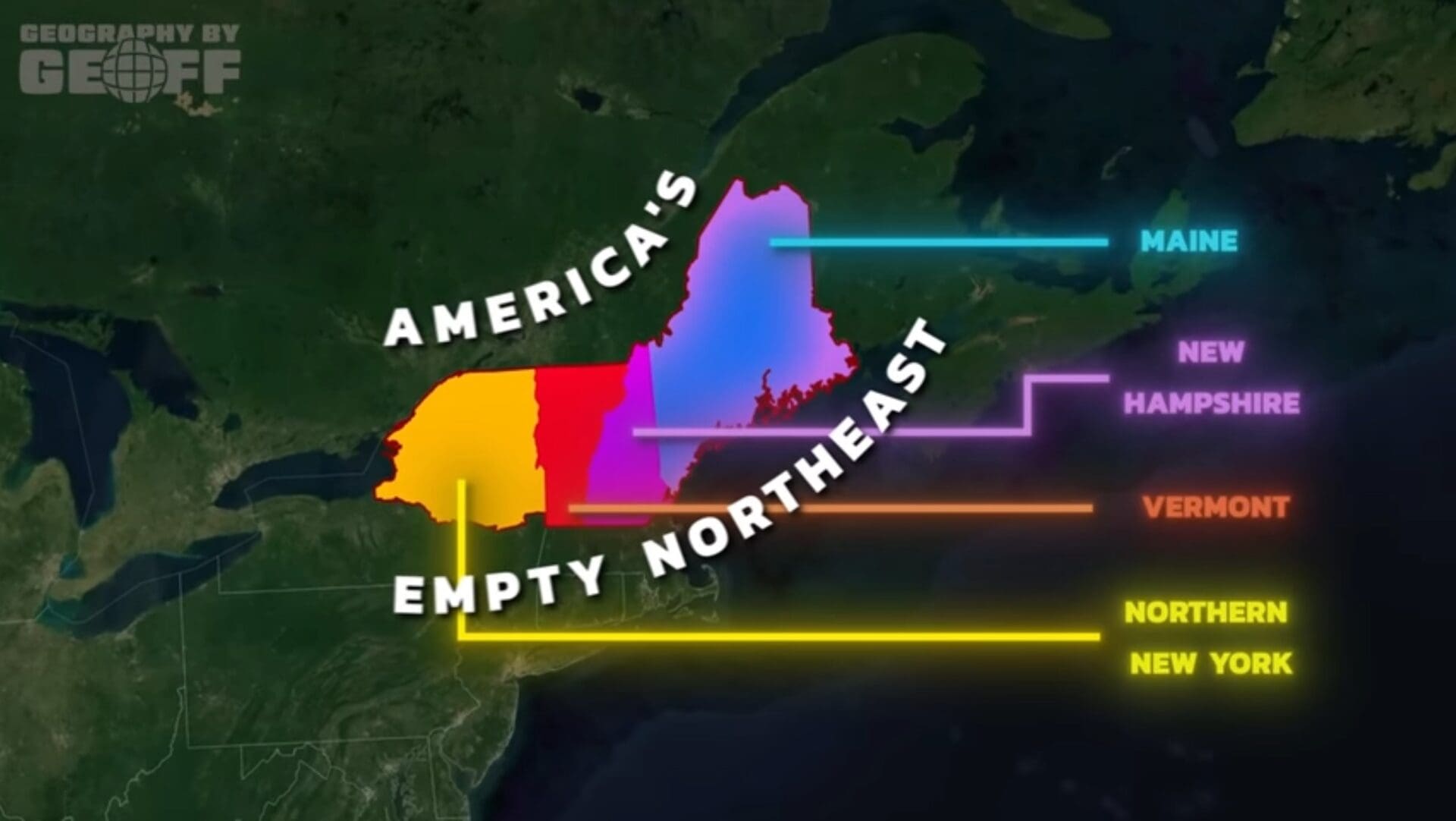
The Northeast of the United States is a bustling hub, home to over 50 million people crammed into some of the country’s most iconic urban centers—think New York City and Boston. Yet, venture just a bit farther north, and the landscape transforms dramatically. The northern reaches of New York, Vermont, New Hampshire, and Maine form what’s been dubbed “America’s Empty Northeast,” a vast, rugged expanse that feels worlds apart from its crowded southern neighbors. A fascinating video by Geography By Geoff explores this geographic paradox, diving into why this sparsely populated frontier persists in one of the nation’s most densely packed regions.
A Rugged Landscape Shaped by Nature
The video kicks off by painting a vivid picture of the Northeast’s physical geography, and it’s clear this region is no gentle stroll. Unlike the rolling hills and fertile plains of southern New England or downstate New York, the Empty Northeast is defined by its formidable terrain. The Adirondacks in northern New York boast countless peaks, lakes, and dense forests. To the east, Vermont’s Green Mountains stretch into Quebec, while New Hampshire’s White Mountains, home to the infamous Mount Washington, claim the highest peaks in the Northeast. Maine, meanwhile, is a mosaic of rugged western mountains and unbroken forests stretching to the Canadian border. These aren’t just hills—they’re significant barriers, often compared to the Rockies for their impact on settlement.
Glaciation adds another layer to this story. The last Ice Age left its mark, scouring the region with massive ice sheets that carved out thousands of lakes, deepened valleys, and deposited rocky, thin soils. Unlike the fertile Connecticut River Valley or central New York’s plains, this glacial legacy made large-scale farming a tough sell. The abundance of water bodies—Lake Champlain and countless smaller lakes—adds beauty but further complicates agriculture. Then there’s the forest cover: a near-continuous blanket of boreal and temperate forests, especially in northern Maine and the Adirondacks, forms one of the largest unbroken forest tracts in the eastern U.S. Even after centuries of logging, these woods dominate, supporting timber industries but discouraging settlement. And don’t forget the climate—longer, colder winters and heavier snowfall than the south shorten the growing season and raise the cost of living.
Why So Empty? A Perfect Storm
The video nails the core question: why does this region, nestled in the populous Northeast, have just 4.9 million people—roughly equal to Boston’s metro area—while southern New England and New York pack in 46 million? It’s a perfect storm of geography, history, and economics. The mountains, poor soils, and dense forests made farming and settlement a slog compared to the south’s fertile valleys. The region’s contested history—indigenous resistance, French-British rivalries, and the American Revolution—kept it a dangerous frontier for over a century. Even after stabilization, the U.S. prioritized westward expansion post-1803 Louisiana Purchase, leaving the north’s marginal lands overlooked.
Economically, the Empty Northeast never had the industrial pull of southern New England’s factories. Its economy leaned on extractive industries—timber, granite, fishing—that don’t support dense populations. Today, tourism and recreation (think skiing in Vermont or hiking in the Adirondacks) draw seasonal crowds, not permanent residents. With few major urban centers—Portland, Burlington, and Manchester are small fries compared to Boston or NYC—the region lacks the job markets and institutions to attract young families. Maine and Vermont even offer incentives to lure new residents, a sign of their struggle to grow.
The Takeaway: A Unique Corner of America
Geography By Geoff‘s video is a compelling deep dive into why America’s Empty Northeast remains so sparsely populated. It’s not just about mountains or cold winters—it’s the cumulative weight of a challenging landscape, a turbulent history, and economic realities that favored other regions. Yet, this emptiness is also its charm. The vast forests, pristine lakes, and rugged peaks offer a wild, untamed beauty that’s rare in the crowded Northeast. Whether you’re a history buff, a geography nerd, or just love a good story about why places are the way they are, this video is worth a watch. Check it out, and maybe plan a trip to explore this quiet frontier yourself—just don’t expect a metropolis.
Want to dig deeper? Subscribe to Geo by JFF’s channel for more geographic gems, or check out their video on America’s Empty Appalachia for another take on the country’s hidden corners.
